Argyrotaenia provana
Provana Leafroller
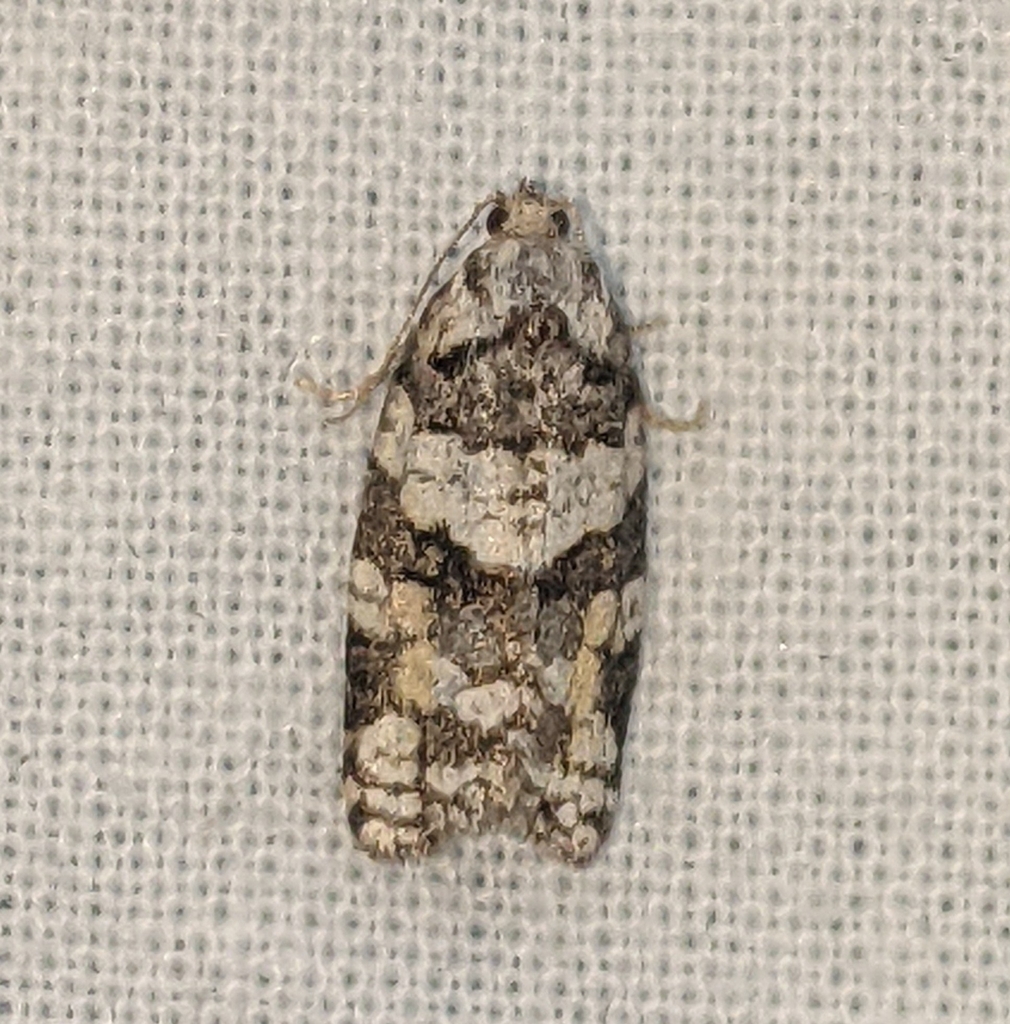
no rights reserved · CC0
Family: Tortricidae · Class: Insecta · Order: Lepidoptera
Argyrotaenia provana (Provana Leafroller) is a California animal in the Tortricidae family.
The Provana leafroller is a small tortricid moth in the family Tortricidae, subfamily Tortricinae. Adults have a wingspan of 22 mm, with forewing length ranging from 8.5 to 11 mm (BugGuide). The species was originally described by Kearfott in 1907 as Olethreutes provana and is catalogued as Hodges number 3609. Argyrotaenia provana has a documented range throughout the western United States and southwestern Canada (BugGuide). The holotype male was collected from Wellington, British Columbia in April. In the United States, the species occurs in habitat conservation plan areas within Washington state, including lands managed under the WDNR Forest Lands HCP, Thurston County HCP, and Tacoma Water HCP. The species is associated with U.S. Fish and Wildlife Service refuges including Billy Frank Jr. Nisqually National Wildlife Refuge, Conboy Lake National Wildlife Refuge, and Klamath Marsh National Wildlife Refuge. The Provana leafroller inhabits coniferous forest ecosystems where its host plants occur. Larval development takes place on white fir (Abies concolor) and Douglas fir (Pseudotsuga menziesii), making the species dependent on mixed conifer and montane forest habitats (BugGuide). Adults are active during spring months, with the type specimen collected in April, suggesting emergence coincides with warming temperatures in coniferous forest environments. As with most tortricid moths, larvae likely feed within rolled or folded leaves of their conifer hosts, creating shelters where they complete development. The association with white fir and Douglas fir indicates adaptation to Pacific Northwest and western montane forest ecosystems. Adult flight period and specific reproductive behaviors have not been extensively documented in available literature. The conservation status of Argyrotaenia provana presents some uncertainty. NatureServe lists the species with a global rank of GNR (Global Not Ranked), indicating insufficient data for assessment. However, some sources suggest the species may be presumed extinct (GX) or possibly extirpated from portions of its range, though this status requires verification. The California Department of Fish and Wildlife includes this species on their Special Animals List, which tracks taxa regardless of legal protection status, suggesting potential conservation concern within California. The species' dependence on specific conifer hosts and forest habitats makes it potentially vulnerable to habitat modification, forest management practices, and climate change impacts on montane forest ecosystems. The lack of recent verified sightings reported in lepidopteran databases raises questions about current population status and distribution. Conservation assessment is hindered by limited ecological data and uncertain taxonomic status within the Argyrotaenia complex. Scientific documentation for this species remains limited beyond basic taxonomic and host plant information. The above description synthesizes available data from taxonomic databases and federal wildlife records. Additional field surveys and taxonomic research would help clarify the current status and conservation needs of the Provana leafroller.
Classification
Class: Insecta · Order: Lepidoptera · Family: Tortricidae
Frequently asked questions
How is Argyrotaenia provana classified?
Argyrotaenia provana belongs to class Insecta, order Lepidoptera, family Tortricidae.
What family does Argyrotaenia provana belong to?
Argyrotaenia provana is in the Tortricidae family.
What is Argyrotaenia provana?
The Provana leafroller is a small tortricid moth in the family Tortricidae, subfamily Tortricinae.
Is Argyrotaenia provana found in California?
Yes. Argyrotaenia provana is recorded in California in The California Species Project's catalogue.
Related species
Other California species in the same genus, family, or bioregion.
Data from The California Species Project — 14,000+ California species with verified data from CNPS, CDFW, USFWS, and more.