Ariolimax californicus
California Banana Slug
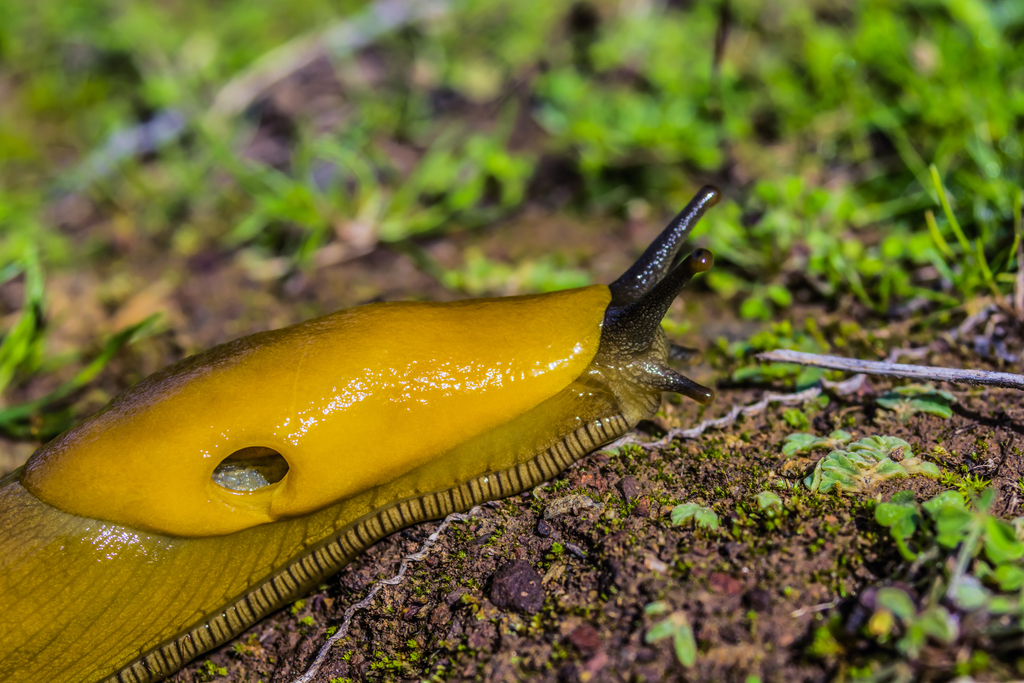
(c) Jeremiah Degenhardt, some rights reserved (CC BY) · licence
Family: Arionidae · Class: Gastropoda · Order: Stylommatophora
Ariolimax californicus (California Banana Slug) is a California animal in the Arionidae family.
The California banana slug is a large terrestrial gastropod mollusk native to the Pacific Coast region. Adults can reach lengths of 150 to 254 millimeters (6 to 10 inches), making them among the largest terrestrial gastropods in North America. The species exhibits variable coloration, ranging from bright yellow to green, brown, or mottled patterns. The body is elongated and soft, lacking an external shell, with a distinctive pneumostome (breathing pore) located on the right side of the mantle. Two pairs of tentacles extend from the head, with the upper pair bearing eyes and the lower pair used for chemoreception. The California banana slug occurs along the Pacific Coast from central California northward through Oregon and Washington. Within California, the species is found in coastal counties from Monterey County north to the Oregon border, with populations documented in the Coast Ranges and extending inland to areas with suitable moisture conditions. The species shows some taxonomic complexity, with Ariolimax californicus brachyphallus having a disjunct distribution on the northern tip of the San Francisco Peninsula, the Monterey Peninsula in Monterey County, and Cambria in San Luis Obispo County. This species inhabits moist forest environments, particularly coast redwood and mixed evergreen forests. Banana slugs require high humidity and are typically found under logs, among leaf litter, and in areas with dense canopy cover that maintains moisture levels. They are most active during periods of high humidity, such as foggy conditions or after rainfall. The species is intolerant of dry conditions and will estivate in protected locations during periods of drought. California banana slugs are herbivorous and detritivorous, feeding on decomposing plant material, fungi, lichens, and occasionally fresh vegetation. They play an important ecological role as decomposers in forest ecosystems, helping to break down organic matter and recycle nutrients. The species is hermaphroditic, with individuals capable of both male and female reproduction. Mating typically occurs during the moist season, with individuals depositing clusters of translucent eggs in protected locations such as under logs or in soil crevices. Development is direct, with young slugs emerging as miniature versions of adults. The California banana slug has no federal or state conservation listing and is not considered threatened. However, like many forest-dependent species, populations may be affected by habitat loss, forest fragmentation, and climate change. The species serves as prey for various forest animals, including salamanders, birds, and small mammals. Forest management practices that maintain moist understory conditions and preserve coarse woody debris support banana slug populations. The species has cultural significance as the mascot of the University of California, Santa Cruz, reflecting its iconic status in California's coastal forests.
Classification
Class: Gastropoda · Order: Stylommatophora · Family: Arionidae
Frequently asked questions
How is Ariolimax californicus classified?
Ariolimax californicus belongs to class Gastropoda, order Stylommatophora, family Arionidae.
What family does Ariolimax californicus belong to?
Ariolimax californicus is in the Arionidae family.
What is Ariolimax californicus?
The California banana slug is a large terrestrial gastropod mollusk native to the Pacific Coast region.
Is Ariolimax californicus found in California?
Yes. Ariolimax californicus is recorded in California in The California Species Project's catalogue.
Related species
Other California species in the same genus, family, or bioregion.
Data from The California Species Project — 14,000+ California species with verified data from CNPS, CDFW, USFWS, and more.