Ariolimax dolichophallus
Slender Banana Slug
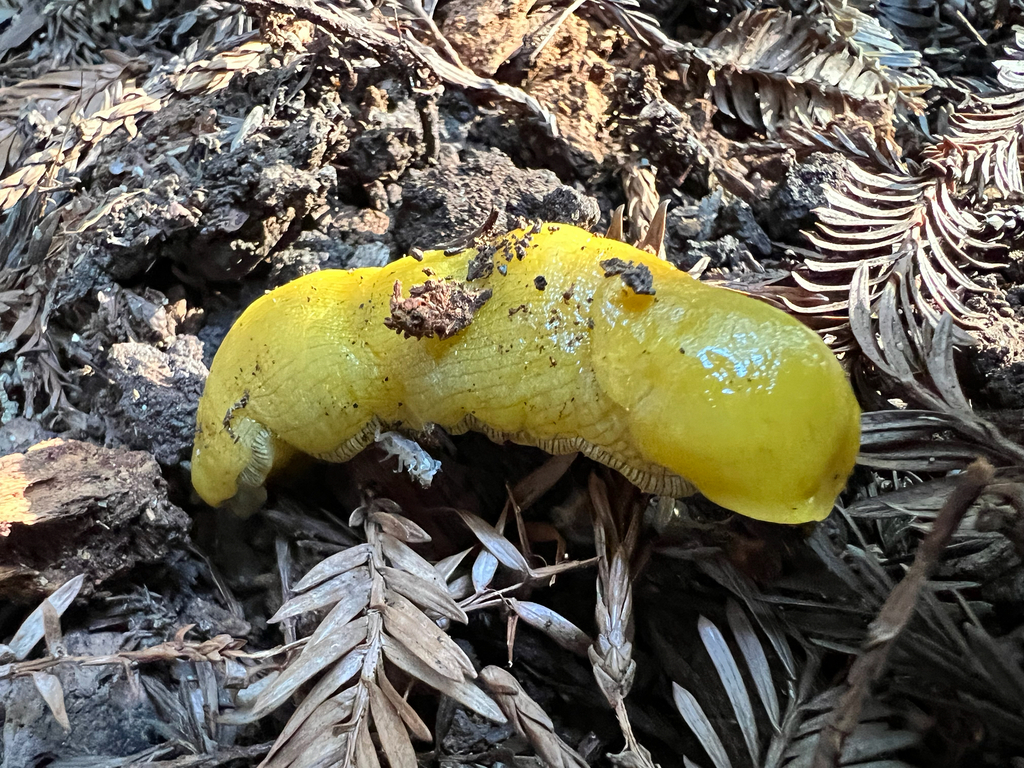
(c) Ryan Donnelly, some rights reserved (CC BY) · licence
Family: Arionidae · Class: Gastropoda · Order: Stylommatophora
Ariolimax dolichophallus (Slender Banana Slug) is a California animal in the Arionidae family.
The slender banana slug (Ariolimax dolichophallus) is a terrestrial gastropod mollusk in the family Arionidae. This species represents one of several banana slug species native to the Pacific Coast region, distinguished by its elongated body form that gives rise to its common name. Physical characteristics of A. dolichophallus include the typical slug morphology with a soft, muscular body lacking an external shell. The species exhibits the characteristic banana-like coloration ranging from pale yellow to greenish-yellow, though specific size measurements and detailed morphological descriptions for this particular species are not well documented in current literature. Like other members of the genus Ariolimax, the slender banana slug possesses a single pneumostome (breathing pore) and exhibits hermaphroditic reproduction. The range and distribution of Ariolimax dolichophallus in California requires further documentation through systematic surveys. While the species is recognized by the U.S. Fish and Wildlife Service taxonomic database, specific locality records and county-level distribution data are limited in available sources. The species likely occurs in coastal and near-coastal regions consistent with other Ariolimax species, but precise geographic boundaries remain poorly defined. Habitat requirements for the slender banana slug typically include moist, cool environments characteristic of Pacific coastal forests. Based on ecological patterns observed in related species, A. dolichophallus likely inhabits areas with high humidity, organic-rich soil, and adequate leaf litter or decaying plant matter. These slugs generally require protection from desiccation and are most active during periods of high moisture availability, such as fog events or following precipitation. Behavioral ecology and life history details for A. dolichophallus are not extensively documented in current scientific literature. As with other banana slugs, this species likely functions as a detritivore, feeding on decomposing plant material, fungi, and organic debris found in forest floor environments. Reproduction probably follows the hermaphroditic pattern typical of terrestrial gastropods, with individuals capable of both egg production and sperm transfer during mating encounters. Seasonal activity patterns and specific dietary preferences require further research. Conservation status information for Ariolimax dolichophallus is notably absent from federal and state listing databases as of December 2025. The species does not appear on the Federal List of Endangered and Threatened Wildlife, nor does it carry state-level protection status in California. However, the lack of comprehensive population data and distribution information makes it difficult to assess current conservation needs. Climate change impacts on coastal fog patterns and forest moisture regimes could potentially affect habitat suitability for this and other moisture-dependent gastropod species. Scientific documentation for this species remains limited despite its recognition in federal taxonomic databases. The information presented here synthesizes available data from USFWS taxonomic records and ecological patterns observed in related species. Detailed studies of population status, habitat requirements, and ecological role are needed to fully understand the conservation status and management needs of the slender banana slug in California ecosystems.
Classification
Class: Gastropoda · Order: Stylommatophora · Family: Arionidae
Frequently asked questions
How is Ariolimax dolichophallus classified?
Ariolimax dolichophallus belongs to class Gastropoda, order Stylommatophora, family Arionidae.
What family does Ariolimax dolichophallus belong to?
Ariolimax dolichophallus is in the Arionidae family.
What is Ariolimax dolichophallus?
The slender banana slug (Ariolimax dolichophallus) is a terrestrial gastropod mollusk in the family Arionidae.
Is Ariolimax dolichophallus found in California?
Yes. Ariolimax dolichophallus is recorded in California in The California Species Project's catalogue.
Related species
Other California species in the same genus, family, or bioregion.
Data from The California Species Project — 14,000+ California species with verified data from CNPS, CDFW, USFWS, and more.