Arion subfuscus
Western Dusky Slug
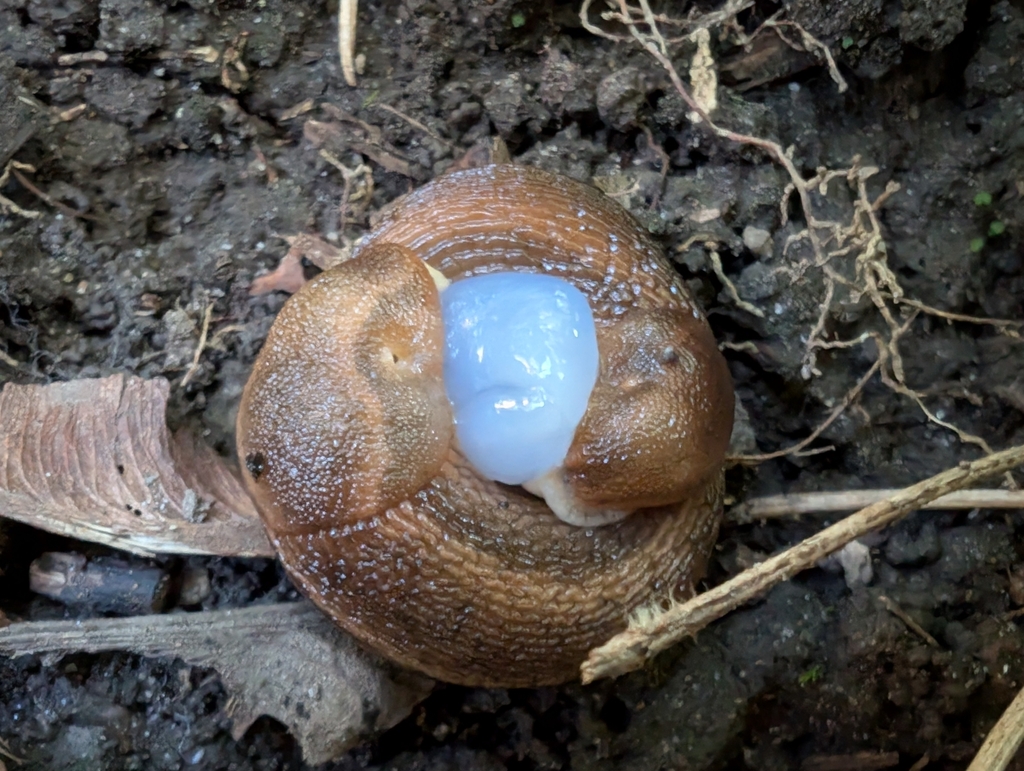
(c) Zachary M.C., some rights reserved (CC BY) · licence
Family: Arionidae · Class: Gastropoda · Order: Stylommatophora
Arion subfuscus (Western Dusky Slug) is a California animal in the Arionidae family.
The Western Dusky Slug (Arion subfuscus) is a terrestrial gastropod mollusk in the family Arionidae. Adults typically measure 30-60 mm in length when extended, with a brownish to dusky coloration that gives the species its common name. The body is elongated and soft, lacking an external shell, with the characteristic pneumostome (breathing pore) located on the right side of the mantle. Like other arionid slugs, this species produces copious amounts of mucus for locomotion and protection. Arion subfuscus has a complex taxonomic history and distribution. Recent molecular studies indicate that A. subfuscus represents a cryptic species complex containing at least two distinct species: A. subfuscus sensu stricto and A. fuscus, which can only be reliably distinguished through genetic analysis (Oxford Academic 2012). The species is native to Europe but has been introduced to North America, where it has established populations in various regions. In Europe, the species occurs across Central Europe, though populations are scattered and considered rare due to habitat destruction. This slug inhabits a variety of terrestrial environments and can survive in diverse soils and microhabitats including soil layers, plant litter, and vegetation (Animal Diversity Web). The species demonstrates considerable ecological plasticity, adapting to different moisture levels and substrate types. Western Dusky Slugs are typically found in areas with adequate moisture retention, as they require humid conditions to prevent desiccation of their permeable skin. As generalist herbivores, Western Dusky Slugs feed on a wide variety of plant materials including dead and decaying organic matter, fungi, and living plant tissue (Animal Diversity Web). Their feeding behavior can make them significant agricultural pests in certain contexts, particularly in no-till farming systems where plant residue provides abundant food sources and shelter. Terrestrial gastropods like A. subfuscus generally exhibit limited mobility, moving primarily to locate food sources or during reproductive periods. Olfaction serves as the primary sensory mechanism for navigation and locating resources (NatureServe Explorer). Reproduction in A. subfuscus follows the typical pattern of terrestrial slugs, with individuals being hermaphroditic and capable of both self-fertilization and cross-fertilization. Eggs are typically deposited in soil or under organic debris during favorable moisture conditions. The conservation status of A. subfuscus varies by region. In Europe, the species is considered scattered and rare in Central Europe due to massive habitat destruction, and it is listed as endangered in Germany (GBIF). However, comprehensive conservation assessments for introduced populations in North America have not been well documented. The species' taxonomic complexity, with multiple cryptic species within what was traditionally considered A. subfuscus, complicates conservation efforts and population monitoring. No federal or state listing status exists for this species in California, though local populations may face threats from habitat modification and agricultural practices.
Classification
Class: Gastropoda · Order: Stylommatophora · Family: Arionidae
Frequently asked questions
How is Arion subfuscus classified?
Arion subfuscus belongs to class Gastropoda, order Stylommatophora, family Arionidae.
What family does Arion subfuscus belong to?
Arion subfuscus is in the Arionidae family.
What is Arion subfuscus?
The Western Dusky Slug (Arion subfuscus) is a terrestrial gastropod mollusk in the family Arionidae.
Is Arion subfuscus found in California?
Yes. Arion subfuscus is recorded in California in The California Species Project's catalogue.
Related species
Other California species in the same genus, family, or bioregion.
Data from The California Species Project — 14,000+ California species with verified data from CNPS, CDFW, USFWS, and more.