Aristotelia bifasciella
Two-banded Aristotelia
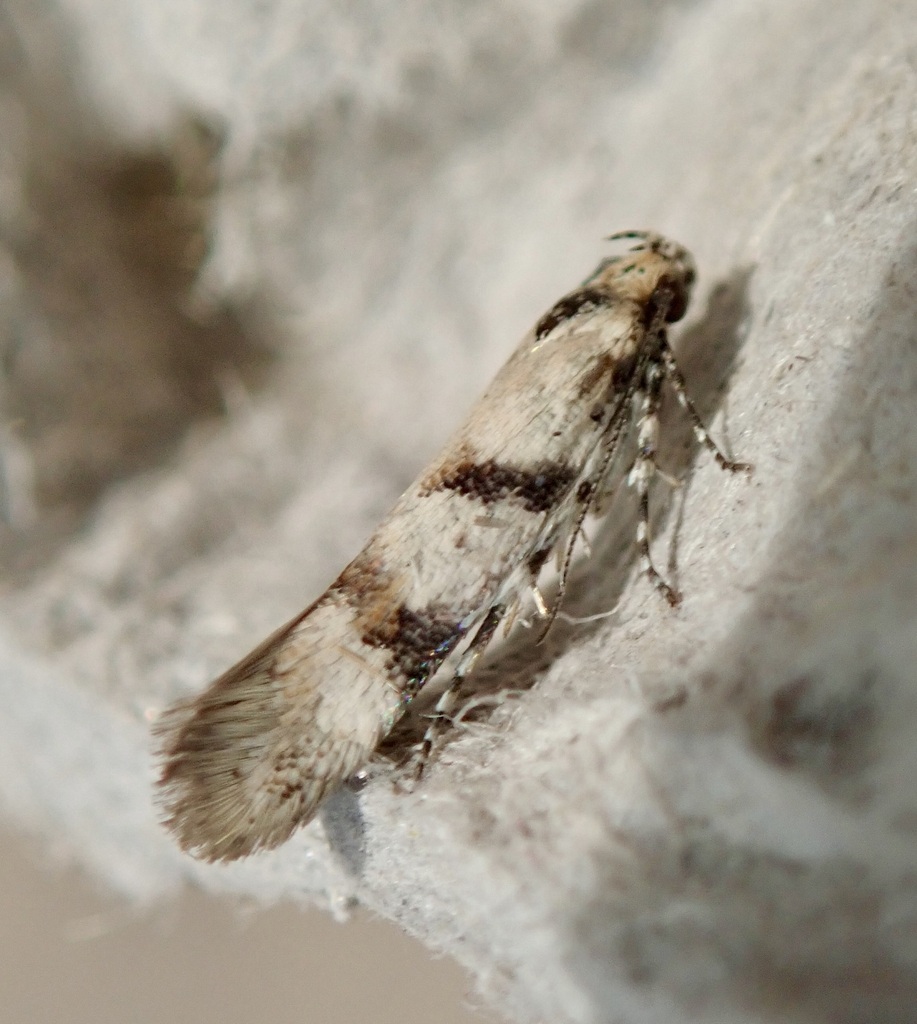
(c) Cricket Raspet, some rights reserved (CC BY) · licence
Family: Gelechiidae · Class: Insecta · Order: Lepidoptera
Aristotelia bifasciella (Two-banded Aristotelia) is a California animal in the Gelechiidae family.
Aristotelia bifasciella, commonly known as the Two-banded Aristotelia, is a small moth in the family Gelechiidae, subfamily Anomologinae. This species was originally described by Busck in 1903 and is designated as Hodges number 1731 in the standard North American moth classification system (BugGuide). The moth displays the typical gelechiid characteristics of narrow forewings and slender build, though specific morphological details for this species remain poorly documented in the scientific literature. The distribution of A. bifasciella spans multiple regions of North America. According to the Moth Photographers Group database, specimens have been recorded from various states, though the complete range extent requires further documentation. The species appears to occur across temperate regions where suitable habitat conditions exist, though specific distributional limits have not been comprehensively mapped. Habitat preferences for the Two-banded Aristotelia have not been extensively studied or documented. Like many gelechiid moths, this species likely occupies specific microhabitats associated with its larval host plants, though these associations remain largely unknown. Many members of the genus Aristotelia are associated with particular plant families during their larval development, suggesting that A. bifasciella may have similar specialized requirements. The life history and ecological behavior of A. bifasciella remain largely unstudied. Adult flight periods and seasonal activity patterns have not been well documented, though scattered collection records suggest the species is active during typical moth flight seasons. Larval biology, including host plant relationships, feeding behavior, and development timing, represents a significant knowledge gap for this species. The number of broods per year, overwintering stage, and specific habitat requirements for reproduction are unknown. No specific conservation status has been assigned to Aristotelia bifasciella at federal or state levels. The species does not appear on any threatened or endangered species lists, though this may reflect limited survey effort rather than actual population stability. Like many small moth species, A. bifasciella likely faces potential threats from habitat modification, pesticide use, and climate change, though the magnitude of these impacts cannot be assessed without better baseline data on distribution and abundance. Recent taxonomic work on the genus Aristotelia has revealed the complexity of species relationships within this group. Lee and Brown (2022) described new Aristotelia species from sandy habitats in Colorado, Kansas, and Texas, highlighting the ongoing need for systematic study of this genus. The taxonomic status and relationships of A. bifasciella within the broader Aristotelia complex may benefit from molecular analysis and morphological revision. Scientific documentation for this species remains extremely limited despite its formal taxonomic recognition. The information presented here synthesizes available data from taxonomic databases and collection records. Additional field studies, life history research, and systematic surveys are needed to develop a comprehensive understanding of this species' biology, distribution, and conservation needs.
Classification
Class: Insecta · Order: Lepidoptera · Family: Gelechiidae
Frequently asked questions
How is Aristotelia bifasciella classified?
Aristotelia bifasciella belongs to class Insecta, order Lepidoptera, family Gelechiidae.
What family does Aristotelia bifasciella belong to?
Aristotelia bifasciella is in the Gelechiidae family.
What is Aristotelia bifasciella?
Aristotelia bifasciella, commonly known as the Two-banded Aristotelia, is a small moth in the family Gelechiidae, subfamily Anomologinae.
Is Aristotelia bifasciella found in California?
Yes. Aristotelia bifasciella is recorded in California in The California Species Project's catalogue.
Related species
Other California species in the same genus, family, or bioregion.
Data from The California Species Project — 14,000+ California species with verified data from CNPS, CDFW, USFWS, and more.