Aristotelia psoraleae
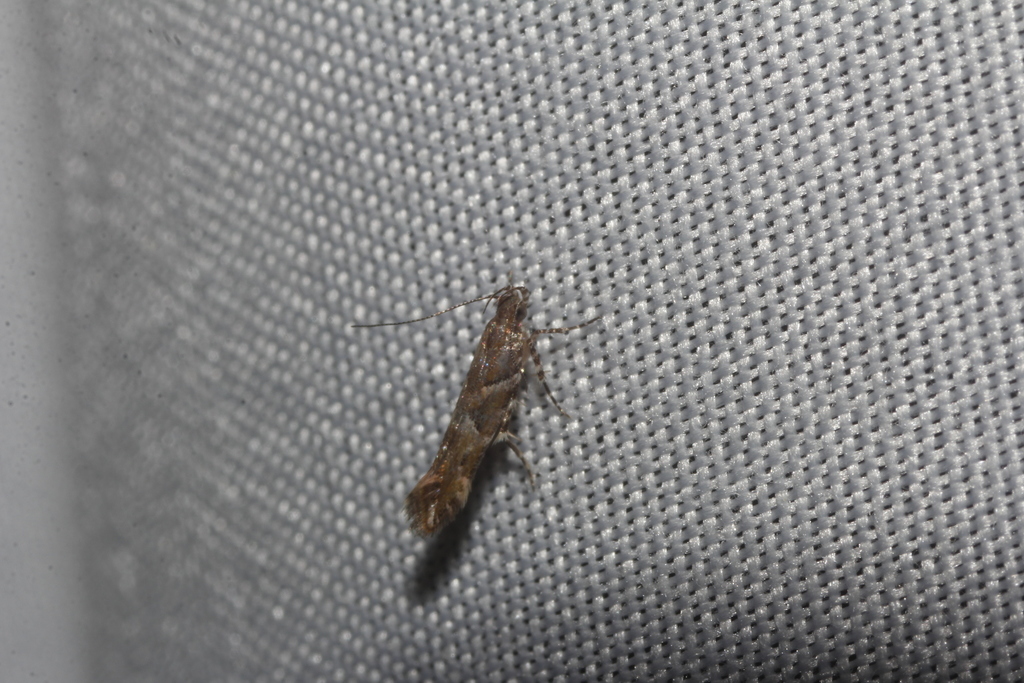
(c) Juan Cruzado Cortés, some rights reserved (CC BY-SA) · licence
Family: Gelechiidae · Class: Insecta · Order: Lepidoptera
Aristotelia psoraleae is a California animal in the Gelechiidae family.
Aristotelia psoraleae is a small moth in the family Gelechiidae, described by Annette Frances Braun in 1930. This North American species represents one of many specialized microlepidoptera with limited host plant associations and restricted distributions. Physical characteristics of A. psoraleae have not been extensively documented in the scientific literature. Like other members of the genus Aristotelia, it likely exhibits the typical gelechiid moth morphology with narrow forewings and reduced hindwings. Adult moths are presumably small, as is characteristic of the family Gelechiidae, though specific measurements have not been published. The species occurs across a disjunct range in North America, with confirmed records from California, Kentucky, Montana, and Ohio (Wikipedia). This scattered distribution pattern suggests either historical fragmentation of suitable habitat or incomplete survey coverage across the continent. The presence of populations in both western and eastern North America indicates the species may have broader ecological tolerance than initially apparent, though specific habitat requirements remain poorly documented. Habitat preferences for A. psoraleae have not been well characterized in the scientific literature. The species name "psoraleae" suggests an association with plants in the genus Psoralea (now largely reclassified under Psorothamnus and related genera), which are leguminous shrubs and herbs typically found in arid and semi-arid environments. These host plants commonly occur in grasslands, prairies, and desert margins, suggesting A. psoraleae may inhabit similar dry, open habitats. However, the moth's documented presence across diverse geographic regions from California to Ohio indicates it may utilize multiple host plant species or habitat types. Ecological information about A. psoraleae remains extremely limited. If the species does indeed specialize on Psoralea or related legumes, larval development likely occurs within the flowers, seeds, or stems of these plants, as is common among gelechiid moths. The timing of adult emergence, number of annual generations, and specific larval feeding behaviors have not been documented. The scattered geographic records suggest adults may be active during different seasons depending on local climate conditions. A. psoraleae currently holds no formal conservation listing at federal or state levels. However, its apparent association with specialized host plants may influence its long-term conservation prospects. Many Psoralea species face threats from habitat conversion, climate change, and overexploitation (PMC 2020). If A. psoraleae depends on specific leguminous host plants, conservation of these plant communities would be essential for maintaining moth populations. The species' disjunct distribution pattern may indicate vulnerability to habitat fragmentation, though population trends and specific threats have not been assessed. Scientific documentation for this species remains limited. The information presented here is based on available taxonomic records and general knowledge of gelechiid ecology. Additional research is needed to document the species' life history, host plant relationships, and conservation status across its range.
Classification
Class: Insecta · Order: Lepidoptera · Family: Gelechiidae
Frequently asked questions
How is Aristotelia psoraleae classified?
Aristotelia psoraleae belongs to class Insecta, order Lepidoptera, family Gelechiidae.
What family does Aristotelia psoraleae belong to?
Aristotelia psoraleae is in the Gelechiidae family.
What is Aristotelia psoraleae?
Aristotelia psoraleae is a small moth in the family Gelechiidae, described by Annette Frances Braun in 1930.
Is Aristotelia psoraleae found in California?
Yes. Aristotelia psoraleae is recorded in California in The California Species Project's catalogue.
Related species
Other California species in the same genus, family, or bioregion.
Data from The California Species Project — 14,000+ California species with verified data from CNPS, CDFW, USFWS, and more.