Aristotelia roseosuffusella
Pink-washed Aristotelia Moth
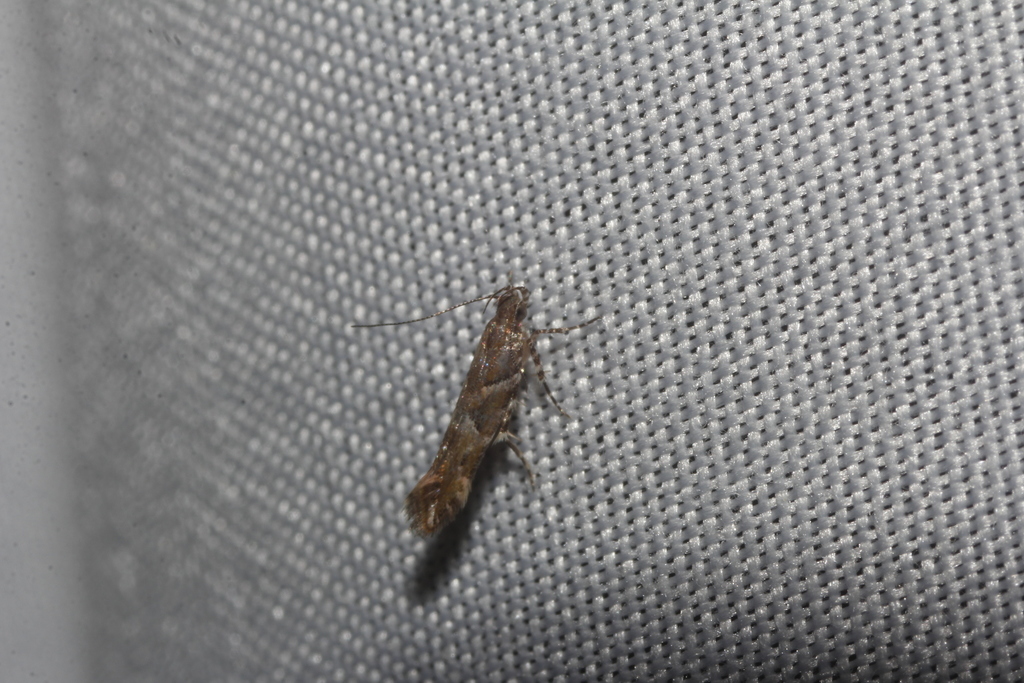
(c) Juan Cruzado Cortés, some rights reserved (CC BY-SA) · licence
Family: Gelechiidae · Class: Insecta · Order: Lepidoptera
Aristotelia roseosuffusella (Pink-washed Aristotelia Moth) is a California animal in the Gelechiidae family.
The Pink-washed Aristotelia Moth (Aristotelia roseosuffusella) is a small member of the twirler moth family Gelechiidae. This species is also known as the Clover Aristotelia Moth, reflecting its association with leguminous host plants (BugGuide). Adults are characterized by their distinctive pink-washed coloration, which gives the species its common name. The moth is assigned Hodges number 1761 in the standard classification system for North American moths. The species occurs across much of North America, with documented records from eastern regions extending westward to California. According to the Moth Photographers Group, the species has been recorded in various western states, including California, where it appears in multiple counties. Specific California records include observations in Fresno County at elevations around 7,500 feet, as documented in lepidopterological surveys (Lepidoptera Society 2013). Aristotelia roseosuffusella inhabits areas where its host plants occur, primarily in habitats supporting leguminous vegetation. The species shows a broad host plant range within the families Fabaceae and Salicaceae (Moth Photographers Group). Documented host genera include Dalea, Desmodium, Lespedeza, Salix, and Trifolium. Historical records also suggest possible association with Rhus species, though this requires verification (Forbes 1923). The moth's distribution appears closely tied to the availability of these host plants across different elevational zones. Adults exhibit diurnal behavior and are frequently observed visiting flowers during daylight hours. Field observations from Colorado documented individuals active on flowers at high elevations, including records from Mount Elbert Trail at 9,750 feet (Lepidoptera Society 2013). The species also comes to artificial lights, with specimens collected at mercury vapor and ultraviolet light traps in California locations. Flight periods appear to extend from spring through fall, with records from March through October depending on elevation and geographic location. The larvae feed on the host plants, though detailed biological information about larval development and specific feeding habits remains limited in the literature. The Pink-washed Aristotelia Moth currently holds no special conservation status at federal or state levels. The species appears to maintain stable populations across its range, with regular documentation by lepidopterists and citizen scientists. Its broad host plant range and occurrence across diverse elevational zones suggest ecological adaptability. However, like many specialized herbivorous insects, populations may be vulnerable to habitat modification affecting host plant communities. The species benefits from conservation of native plant communities, particularly those containing leguminous species that serve as larval hosts. Detailed ecological studies of this species remain limited, with most information derived from field observations and collection records. The taxonomy was established by Clemens in 1860, with the species originally described in the genus Gelechia. Continued monitoring through citizen science platforms and lepidopterological surveys provides ongoing documentation of distribution and abundance patterns across the species' range.
Classification
Class: Insecta · Order: Lepidoptera · Family: Gelechiidae
Frequently asked questions
How is Aristotelia roseosuffusella classified?
Aristotelia roseosuffusella belongs to class Insecta, order Lepidoptera, family Gelechiidae.
What family does Aristotelia roseosuffusella belong to?
Aristotelia roseosuffusella is in the Gelechiidae family.
What is Aristotelia roseosuffusella?
The Pink-washed Aristotelia Moth (Aristotelia roseosuffusella) is a small member of the twirler moth family Gelechiidae.
Is Aristotelia roseosuffusella found in California?
Yes. Aristotelia roseosuffusella is recorded in California in The California Species Project's catalogue.
Related species
Other California species in the same genus, family, or bioregion.
Data from The California Species Project — 14,000+ California species with verified data from CNPS, CDFW, USFWS, and more.