Arizona elegans occidentalis
California Glossy Snake
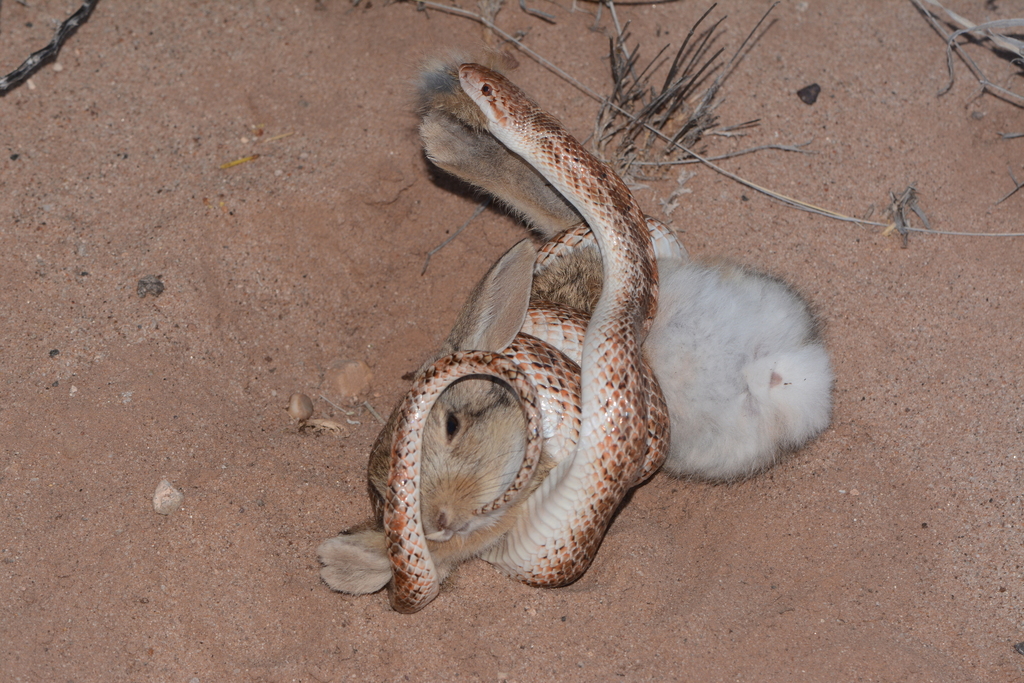
(c) Brian Finzel, some rights reserved (CC BY-SA) · licence
Family: Colubridae · Class: Reptilia · Order: Squamata
Conservation status: G5T2 S2
Arizona elegans occidentalis (California Glossy Snake) is a California animal in the Colubridae family.
The California glossy snake is a medium-sized, nonvenomous serpent distinguished by its smooth, glossy scales and distinctive coloration pattern. Adults typically measure 0.6 to 1.4 meters (2 to 4.6 feet) in total length, with a relatively slender build. The dorsal surface displays a pattern of brown or gray-brown blotches outlined in black against a cream, tan, or light gray background. The ventral surface is cream to white, often with small dark spots. The scales are notably smooth and shiny, giving the species its common name. The head is relatively narrow with large eyes and round pupils. This subspecies occurs from the eastern San Francisco Bay Area south through California to northwestern Baja California, Mexico (californiaherps.com). Populations are notably absent along the central coast. The elevational range extends from below sea level to approximately 2,200 meters (7,218 feet). Historical records suggest the subspecies may have a more restricted current distribution than previously documented. California glossy snakes inhabit arid scrublands, rocky washes, grasslands, and chaparral communities. They demonstrate a preference for open areas with loose, sandy, or gravelly soils that facilitate burrowing behavior. The species shows particular affinity for alluvial fans, desert flats, and areas with scattered rocks or low vegetation that provide cover while maintaining the open microhabitats essential for their fossorial lifestyle. This primarily nocturnal species is highly fossorial, spending much of its time underground in burrows they excavate or appropriate from other animals. California glossy snakes are constrictors that feed predominantly on small mammals, particularly pocket mice, kangaroo rats, and other rodents, as well as lizards and occasionally bird eggs. They are oviparous, with females depositing 3 to 23 eggs in underground nests during late spring to early summer. Eggs incubate for approximately 60 to 80 days, with hatching typically occurring in late summer or early fall. Juveniles emerge at 15 to 20 centimeters (6 to 8 inches) in length. The California glossy snake holds a global rank of G5T2 and state rank of S2, indicating the subspecies is imperiled in California with 6 to 20 occurrences or few remaining individuals. While the full species Arizona elegans remains widespread across the southwestern United States, the California subspecies faces significant conservation challenges. Primary threats include habitat loss due to urban development, particularly in coastal and foothill areas, agricultural conversion, and habitat fragmentation. The species is recognized as a Species of Special Concern by the California Department of Fish and Wildlife, reflecting concerns about population declines and habitat degradation. Climate change may further impact populations through altered precipitation patterns and increased temperatures in their arid habitats. Conservation efforts focus on habitat preservation and restoration, particularly in areas where development pressures are greatest.
Classification
Class: Reptilia · Order: Squamata · Family: Colubridae
Conservation status
G5T2 S2
Frequently asked questions
How is Arizona elegans occidentalis classified?
Arizona elegans occidentalis belongs to class Reptilia, order Squamata, family Colubridae.
What family does Arizona elegans occidentalis belong to?
Arizona elegans occidentalis is in the Colubridae family.
Is Arizona elegans occidentalis protected or of conservation concern?
Arizona elegans occidentalis carries the following status: G5T2 S2.
What is Arizona elegans occidentalis?
The California glossy snake is a medium-sized, nonvenomous serpent distinguished by its smooth, glossy scales and distinctive coloration pattern.
Is Arizona elegans occidentalis found in California?
Yes. Arizona elegans occidentalis is recorded in California in The California Species Project's catalogue.
Related species
Other California species in the same genus, family, or bioregion.
Data from The California Species Project — 14,000+ California species with verified data from CNPS, CDFW, USFWS, and more.