Artedius lateralis
Smoothhead Sculpin
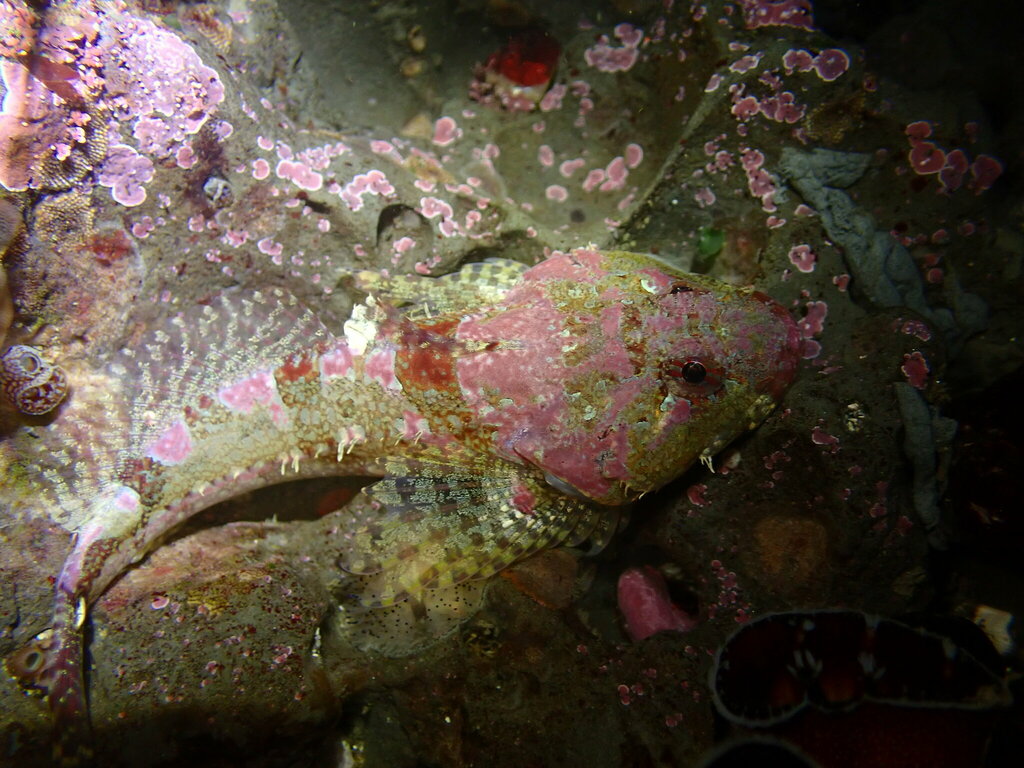
(c) Cricket Raspet, some rights reserved (CC BY) · licence
Family: Psychrolutidae · Class: Actinopterygii · Order: Perciformes
Artedius lateralis (Smoothhead Sculpin) is a California animal in the Psychrolutidae family.
The smoothhead sculpin is a small marine fish native to the eastern Pacific Ocean. Adults typically measure 5 to 10 centimeters (2 to 4 inches) in length, with a laterally compressed body and smooth head lacking the prominent spines found in many other sculpin species. The body coloration varies from brown to olive-green with darker mottling that provides effective camouflage against rocky substrates. The species possesses large pectoral fins and a broad mouth adapted for benthic feeding. The smoothhead sculpin ranges along the Pacific coast from Kodiak Island, Alaska, to northern Baja California, Mexico (NatureServe). Within California, the species occurs in nearshore marine waters along the entire coastline, including areas around rocky outcrops such as False Klamath Rock in northern California. The species inhabits the Strait of Juan de Fuca and has been documented in various coastal marine environments throughout its range. This sculpin primarily inhabits rocky intertidal and shallow subtidal zones, typically at depths ranging from the low intertidal to approximately 50 meters. The species shows a strong association with rocky substrates, kelp beds, and areas with complex bottom topography that provide shelter and foraging opportunities. Smoothhead sculpins are commonly found in tidepools and among rocky crevices where they can take refuge during low tide periods. Smoothhead sculpins are benthic predators that feed primarily on small crustaceans, including gammarid amphipods, mysid shrimp, and isopods. Their feeding behavior is opportunistic, targeting epibenthic invertebrates found within their rocky habitat. Like many sculpins, this species exhibits limited mobility and tends to remain within a relatively small home range. Reproduction typically occurs during spring and early summer months, with females depositing adhesive eggs in protected rocky crevices. The species demonstrates typical sculpin behavior of remaining motionless for extended periods while waiting for prey to approach. The smoothhead sculpin currently holds no federal or state conservation listing status in California. The species appears to maintain stable populations throughout its range, benefiting from its association with rocky habitats that are less susceptible to certain human impacts compared to soft-bottom environments. However, the species may face localized pressures from coastal development, pollution, and climate change effects on nearshore marine ecosystems. Ocean acidification and warming temperatures could potentially affect prey availability and habitat quality. The species' presence in marine protected areas, including waters around False Klamath Rock, provides some conservation benefit. Continued monitoring of nearshore fish communities helps track population trends and habitat conditions for this and other rocky intertidal species along the California coast.
Classification
Class: Actinopterygii · Order: Perciformes · Family: Psychrolutidae
Frequently asked questions
How is Artedius lateralis classified?
Artedius lateralis belongs to class Actinopterygii, order Perciformes, family Psychrolutidae.
What family does Artedius lateralis belong to?
Artedius lateralis is in the Psychrolutidae family.
What is Artedius lateralis?
The smoothhead sculpin is a small marine fish native to the eastern Pacific Ocean.
Is Artedius lateralis found in California?
Yes. Artedius lateralis is recorded in California in The California Species Project's catalogue.
Related species
Other California species in the same genus, family, or bioregion.
Data from The California Species Project — 14,000+ California species with verified data from CNPS, CDFW, USFWS, and more.