Artemia monica
Mono Lake Brine Shrimp
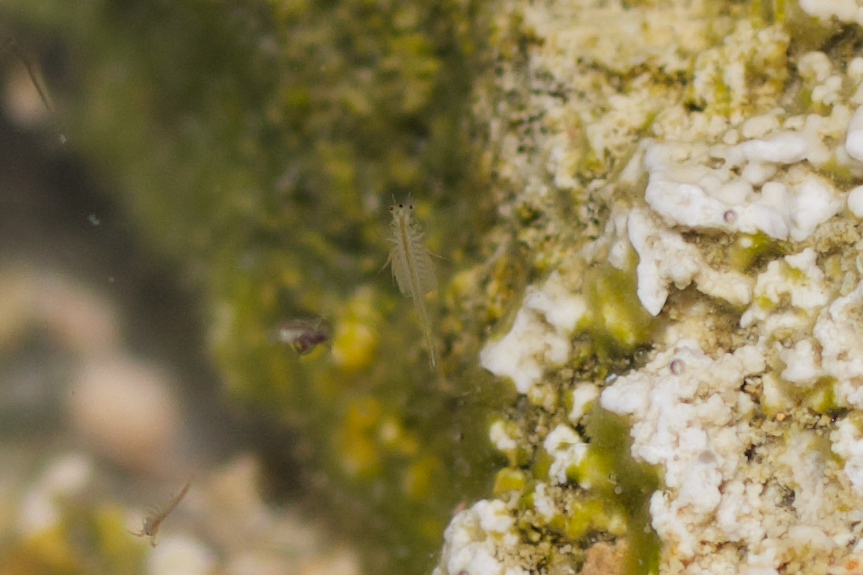
(c) Arvel Hernandez, some rights reserved (CC BY) · licence
Family: Artemiidae · Class: Branchiopoda · Order: Anostraca
Conservation status: G3 S3
Artemia monica (Mono Lake Brine Shrimp) is a California animal in the Artemiidae family.
The Mono Lake brine shrimp is a small crustacean endemic to Mono Lake in eastern California. Adults typically measure 8-10 millimeters (0.3-0.4 inches) in length, with females generally larger than males. The species exhibits sexual dimorphism, with males possessing enlarged claspers used for grasping females during mating. Both sexes have a segmented body with numerous swimming appendages called phyllopods that create feeding currents and provide locomotion. The body is translucent to pale orange, becoming more reddish during reproductive periods due to increased hemoglobin production in low-oxygen conditions. Artemia monica occurs exclusively in Mono Lake, located in Mono County, California, east of the Sierra Nevada mountain range. This ancient saline lake represents the species' entire global range, making it one of the most geographically restricted crustaceans in North America. The lake sits at an elevation of approximately 1,945 meters (6,380 feet) and covers roughly 180 square kilometers (70 square miles), though historical water diversions have significantly reduced its size. The species inhabits the hypersaline waters of Mono Lake, which maintains salinity levels typically ranging from 50-90 parts per thousand, nearly three times saltier than seawater. Mono Lake's unique chemistry, characterized by high concentrations of carbonates, chlorides, and sulfates, creates an extreme environment that excludes most other aquatic life. The lake lacks fish predators, allowing brine shrimp populations to flourish. Water temperatures range from near-freezing in winter to over 20°C (68°F) in summer, with the species showing documented tolerance to these fluctuations. Mono Lake brine shrimp are filter feeders that consume algae, bacteria, and organic detritus suspended in the water column. They use their phyllopods to create feeding currents that direct food particles toward their mouths. Reproduction involves both sexual and asexual strategies. During favorable conditions, females produce live nauplii through parthenogenesis. Under stress conditions such as increased salinity, temperature extremes, or reduced food availability, females switch to sexual reproduction and produce drought-resistant cysts that can remain dormant for decades. These cysts are dispersed by wind and can survive extreme desiccation and temperature fluctuations. The U.S. Fish and Wildlife Service designated Mono Lake brine shrimp as a Species of Concern, reflecting its vulnerability due to its extremely limited range. The species faces significant threats from water diversions that have historically lowered lake levels and increased salinity beyond optimal ranges. As of December 2025, the species maintains a Global/State Rank of G3 S3, indicating it is vulnerable to extirpation. Conservation efforts focus on maintaining adequate water levels in Mono Lake through management of tributary diversions. The California State Water Resources Control Board has established minimum lake levels to protect the ecosystem. Climate change poses additional challenges through altered precipitation patterns and increased evaporation rates, potentially affecting the delicate balance of lake chemistry essential for the species' survival.
Classification
Class: Branchiopoda · Order: Anostraca · Family: Artemiidae
Conservation status
G3 S3
Frequently asked questions
How is Artemia monica classified?
Artemia monica belongs to class Branchiopoda, order Anostraca, family Artemiidae.
What family does Artemia monica belong to?
Artemia monica is in the Artemiidae family.
Is Artemia monica protected or of conservation concern?
Artemia monica carries the following status: G3 S3.
What is Artemia monica?
The Mono Lake brine shrimp is a small crustacean endemic to Mono Lake in eastern California.
Is Artemia monica found in California?
Yes. Artemia monica is recorded in California in The California Species Project's catalogue.
More California species
This species has no close relatives in our California data — here are other species to explore.
Data from The California Species Project — 14,000+ California species with verified data from CNPS, CDFW, USFWS, and more.