Asagena fulva
Red-and-white Asagena
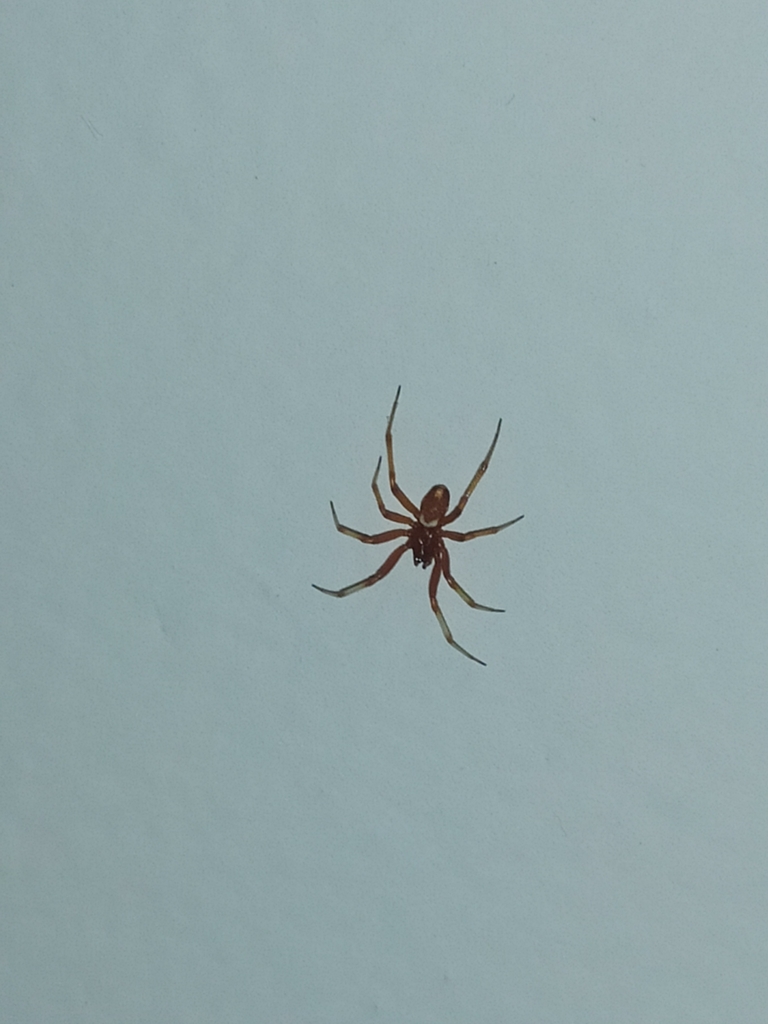
(c) Daniela Gámez, some rights reserved (CC BY) · licence
Family: Theridiidae · Class: Arachnida · Order: Araneae
Asagena fulva (Red-and-white Asagena) is a California animal in the Theridiidae family.
Asagena fulva, commonly known as the red-and-white asagena, is a small cobweb spider in the family Theridiidae. This species exhibits the characteristic red and white coloration pattern that gives it its common name, with females typically displaying more pronounced markings than males. Like other theridiid spiders, A. fulva constructs irregular, three-dimensional webs composed of sticky capture threads. Asagena fulva has been documented in California, specifically in Riverside County. According to BugGuide observations, the species has been recorded from Desert Hot Springs in Riverside County, suggesting a distribution in the desert regions of southern California. The full extent of the species' California range remains poorly documented, and it may occur more broadly across suitable habitat in the southwestern United States. This species appears to inhabit arid and semi-arid environments typical of California's desert regions. Based on its documented occurrence in Desert Hot Springs, A. fulva likely occupies desert scrub communities and associated habitats at elevations consistent with the Sonoran Desert ecosystem. The species may utilize both natural substrates such as shrubs and rocky crevices, as well as artificial structures in developed areas for web construction. As a member of the cobweb spider family, A. fulva constructs irregular webs to capture prey. These spiders are generally sit-and-wait predators that detect prey vibrations through their webs. Theridiid spiders typically feed on small flying insects and other arthropods that become entangled in their sticky capture threads. Reproductive biology and seasonal activity patterns for this species have not been well documented in the scientific literature. Like most temperate zone spiders, activity likely peaks during warmer months when prey availability is highest. Asagena fulva currently lacks formal conservation status at both federal and state levels. According to NatureServe Explorer, the species has a global conservation status of GNR (Global Not Ranked), indicating insufficient information to assign a conservation rank. This data-poor status is common among many arachnid species, which often receive limited scientific attention compared to vertebrates and certain charismatic invertebrates. The species does not appear on current California Department of Fish and Wildlife species of special concern lists or federal endangered species lists. The conservation status of A. fulva reflects broader challenges in invertebrate conservation, where many species lack sufficient biological and ecological data to assess population trends or conservation needs. Limited research on spider communities in California's desert regions means that the population status, habitat requirements, and potential threats to this species remain largely unknown. Climate change impacts on desert ecosystems, habitat modification from development, and other anthropogenic factors may affect spider communities, but species-specific impacts on A. fulva have not been studied. Enhanced survey efforts and taxonomic research would improve understanding of this species' distribution, ecology, and conservation requirements.
Classification
Class: Arachnida · Order: Araneae · Family: Theridiidae
Frequently asked questions
How is Asagena fulva classified?
Asagena fulva belongs to class Arachnida, order Araneae, family Theridiidae.
What family does Asagena fulva belong to?
Asagena fulva is in the Theridiidae family.
What is Asagena fulva?
Asagena fulva, commonly known as the red-and-white asagena, is a small cobweb spider in the family Theridiidae.
Is Asagena fulva found in California?
Yes. Asagena fulva is recorded in California in The California Species Project's catalogue.
Related species
Other California species in the same genus, family, or bioregion.
Data from The California Species Project — 14,000+ California species with verified data from CNPS, CDFW, USFWS, and more.