Ascaphus truei
Pacific Tailed Frog
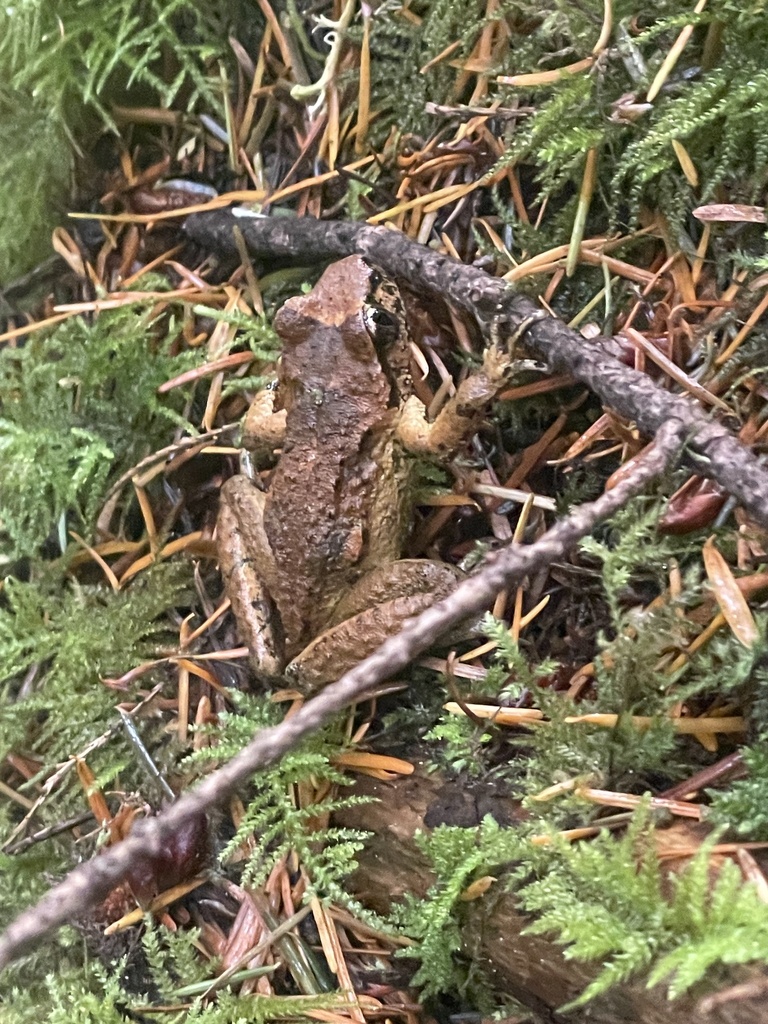
(c) Michele Wiseman, some rights reserved (CC BY) · licence
Family: Ascaphidae · Class: Amphibia · Order: Anura
Conservation status: G4 S3S4
Ascaphus truei (Pacific Tailed Frog) is a California animal in the Ascaphidae family.
The Pacific tailed frog is a small, primitive amphibian endemic to the Pacific Northwest. Adults measure 25 to 51 mm (1.0 to 2.0 inches) in snout-vent length, with females typically larger than males. The dorsal coloration ranges from gray, brown, or olive to reddish-brown, often with darker blotches or mottling that provides camouflage against rocky substrates. The ventral surface is white or pale yellow with dark speckling. Males possess a distinctive tail-like copulatory organ, which is actually an extension of the cloaca used for internal fertilization - a unique feature among North American frogs. The skin is relatively smooth with small tubercles, and the pupils are vertical. Toe pads are absent, but the toes have slight webbing. In California, Pacific tailed frogs occur in the northwestern counties, including Humboldt, Del Norte, Siskiyou, and portions of Mendocino and Lake counties. The species extends north through Oregon and Washington to southern British Columbia. California populations represent the southern edge of the species' range and are found primarily in the Klamath Mountains and northern Coast Ranges. Historical records exist from additional locations, but some populations have been extirpated due to habitat loss and degradation. Pacific tailed frogs inhabit cool, clear, permanent streams in old-growth and mature coniferous forests, typically at elevations from sea level to 2,000 meters (6,560 feet). They require streams with rocky substrates, cascades, and seeps, where water temperatures remain below 15°C (59°F) year-round. Adults are found within 3 meters of streams, often hiding under rocks, logs, or vegetation during daylight hours. The species shows strong site fidelity and rarely moves far from natal streams. Pacific tailed frogs are nocturnal and primarily terrestrial as adults, feeding on small invertebrates including flies, beetles, spiders, and moths. Reproduction is highly specialized for cold-water environments. Breeding occurs from late spring through early fall, with males using their tail-like organ for internal fertilization. Females deposit 44 to 96 unpigmented eggs in strings attached to the undersides of rocks in fast-flowing water. The larval stage is exceptionally long, lasting 2 to 4 years in California's cooler streams. Tadpoles have large oral discs that function as suction cups, allowing them to cling to rocks in swift currents while feeding on algae and detritus. The Pacific tailed frog has a California state rank of S3S4, indicating the species is vulnerable to moderately secure in the state. Primary threats include timber harvest practices that alter stream temperature and flow regimes, sedimentation from logging and road construction, and climate change effects on stream hydrology. The species' dependence on cold water makes it particularly vulnerable to warming temperatures. Conservation efforts focus on maintaining riparian buffers, implementing sustainable forestry practices, and protecting watersheds with intact old-growth forest cover.
Classification
Class: Amphibia · Order: Anura · Family: Ascaphidae
Conservation status
G4 S3S4
Frequently asked questions
How is Ascaphus truei classified?
Ascaphus truei belongs to class Amphibia, order Anura, family Ascaphidae.
What family does Ascaphus truei belong to?
Ascaphus truei is in the Ascaphidae family.
Is Ascaphus truei protected or of conservation concern?
Ascaphus truei carries the following status: G4 S3S4.
What is Ascaphus truei?
The Pacific tailed frog is a small, primitive amphibian endemic to the Pacific Northwest.
Is Ascaphus truei found in California?
Yes. Ascaphus truei is recorded in California in The California Species Project's catalogue.
More California species
This species has no close relatives in our California data — here are other species to explore.
Data from The California Species Project — 14,000+ California species with verified data from CNPS, CDFW, USFWS, and more.