Asciodes gordialis
Bougainvillea Caterpillar Moth
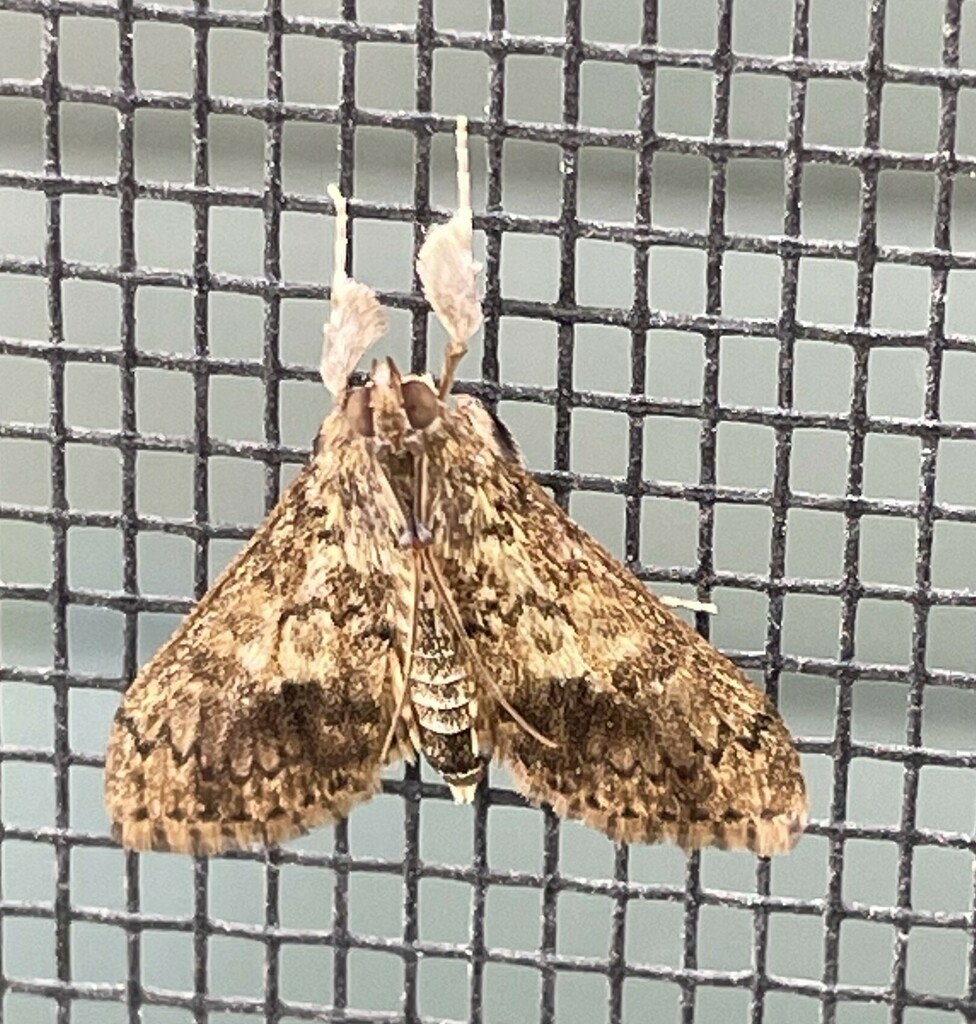
(c) Mary Beth Stowe, some rights reserved (CC BY) · licence
Family: Crambidae · Class: Insecta · Order: Lepidoptera
Asciodes gordialis (Bougainvillea Caterpillar Moth) is a California animal in the Crambidae family.
The Bougainvillea Caterpillar Moth (Asciodes gordialis) is a small moth in the family Crambidae, subfamily Spilomelinae. Adults are typically brownish with subtle wing patterns, measuring approximately 15-20 mm in wingspan. The species is closely related to Asciodes quietalis, and the two species can be difficult to distinguish morphologically, requiring careful examination of genitalic structures for definitive identification. This moth occurs in southern California, with documented populations in Imperial, Los Angeles, Orange, Riverside, San Bernardino, San Diego, and Ventura counties (USFWS ECOS database). The species represents part of a broader southwestern United States fauna, with related species extending into Mexico and the desert Southwest. Asciodes gordialis inhabits warm, arid environments typical of southern California's Mediterranean and desert climates. The species is associated with areas where its host plants occur, particularly in urban and suburban landscapes where ornamental plantings are common. Adults are active during warmer months, though specific flight periods have not been well documented in the scientific literature. The larvae are known to feed on Bougainvillea species (Nyctaginaceae), an introduced ornamental plant widely cultivated throughout southern California. This host plant relationship has given the moth its common name. The caterpillars likely feed on leaves and may cause minor damage to ornamental plantings, though they are not considered a significant pest. Adult moths are presumed to be nocturnal, following typical patterns for the Crambidae family, and likely feed on nectar from various flowering plants. Like many small moth species, detailed life history information for Asciodes gordialis remains limited. The species appears to have multiple generations per year in the warm climate of southern California, with breeding likely occurring throughout much of the growing season when host plants are actively growing. Asciodes gordialis does not appear on federal or state endangered species lists and is not considered threatened. As an introduced host plant specialist, the moth may have benefited from the widespread cultivation of Bougainvillea in urban landscapes throughout its California range. However, comprehensive population monitoring has not been conducted, and the species' conservation status has not been formally assessed. The taxonomic relationship between A. gordialis and A. quietalis requires further study, as some sources suggest these may represent regional forms of a single widespread species. Current understanding of the genus Asciodes in North America would benefit from additional morphological and molecular systematic research to clarify species boundaries and distributions. Scientific documentation for this species remains limited compared to more prominent Lepidoptera. The information presented here synthesizes available data from taxonomic databases and regional surveys. Additional field studies would help clarify the species' ecology, distribution patterns, and conservation needs within California's rapidly changing urban and suburban environments.
Classification
Class: Insecta · Order: Lepidoptera · Family: Crambidae
Frequently asked questions
How is Asciodes gordialis classified?
Asciodes gordialis belongs to class Insecta, order Lepidoptera, family Crambidae.
What family does Asciodes gordialis belong to?
Asciodes gordialis is in the Crambidae family.
What is Asciodes gordialis?
The Bougainvillea Caterpillar Moth (Asciodes gordialis) is a small moth in the family Crambidae, subfamily Spilomelinae.
Is Asciodes gordialis found in California?
Yes. Asciodes gordialis is recorded in California in The California Species Project's catalogue.
Related species
Other California species in the same genus, family, or bioregion.
Data from The California Species Project — 14,000+ California species with verified data from CNPS, CDFW, USFWS, and more.