Asemosyrphus polygrammus
Common Sickleleg
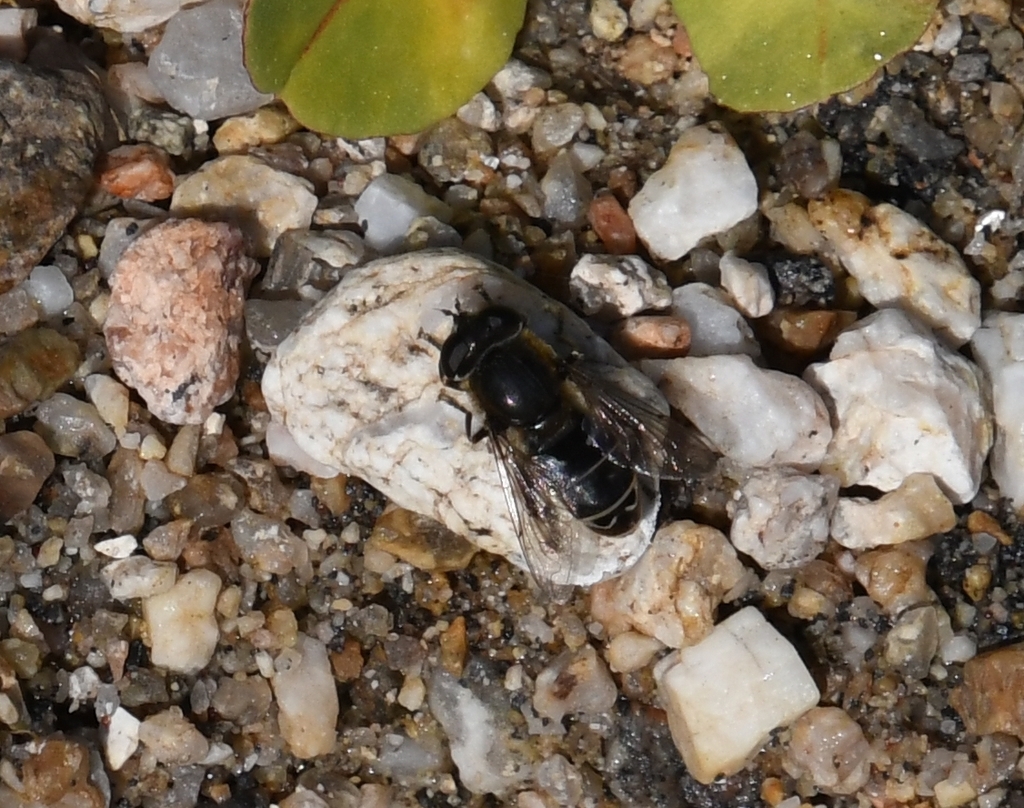
(c) Mike Ostrowski, some rights reserved (CC BY-SA) · licence
Family: Syrphidae · Class: Insecta · Order: Diptera
Asemosyrphus polygrammus (Common Sickleleg) is a California animal in the Syrphidae family.
The Common Sickleleg (Asemosyrphus polygrammus) is a hoverfly in the family Syrphidae, distinguished by its characteristic curved hind legs that give the species its common name. This dipteran exhibits the typical syrphid body plan with a relatively robust thorax and large compound eyes. The wings display distinctive venation patterns that aid in field identification, and males can be distinguished from females by their holoptic eyes (eyes meeting at the top of the head) while females have dichoptic eyes (eyes separated) (BugGuide 2025). Asemosyrphus polygrammus has a broad distribution across North America. The species occurs throughout much of the western United States, with documented populations extending from the Pacific Coast inland. Records exist from Washington state, including specimens collected in Lincoln County (BugGuide 2025), indicating the species' presence in the inland regions of the Pacific Northwest. The species has also been documented in California, Oregon, and other western states. The species inhabits diverse environments from sea level to moderate elevations, demonstrating considerable ecological flexibility. Common Sickleleg flies are frequently observed in open habitats including meadows, gardens, parks, and forest clearings where flowering plants are abundant. They have been documented visiting composite flowers, including cultivated Gazania species (iNaturalist 2025), suggesting they utilize both native and non-native flowering resources. The species appears to favor sunny, open areas with diverse flowering plants, though it may also occur in partially shaded woodland edges. Adults are commonly found on flowers during the warmer parts of the day when temperatures favor flight activity. As with most hoverflies, Asemosyrphus polygrammus adults are important pollinators, transferring pollen between flowers during nectar feeding activities. The flies exhibit typical syrphid flight patterns, including the ability to hover in place and make rapid directional changes. Seasonal activity patterns show the species is active during warmer months, with records extending from late spring through fall. October records from Washington indicate extended flight periods in favorable climates (BugGuide 2025). Larval ecology and development requirements have not been well-documented in the scientific literature, representing a knowledge gap common to many syrphid species. The conservation status of Asemosyrphus polygrammus appears stable based on available information. NatureServe assigns the species a global rank of G5, indicating a large range, many recent occurrences, and apparently stable populations (NatureServe Explorer 2025). This ranking suggests the species faces no immediate conservation concerns at the continental scale. The Common Sickleleg does not appear on federal or state endangered species lists, and its broad distribution and apparent ecological adaptability likely contribute to its stable status. However, like many pollinating insects, the species may face localized pressures from habitat modification and pesticide use, though specific population trend data are not available. The species' ability to utilize both native and cultivated flowering plants may provide some resilience against habitat changes in human-modified landscapes.
Classification
Class: Insecta · Order: Diptera · Family: Syrphidae
Frequently asked questions
How is Asemosyrphus polygrammus classified?
Asemosyrphus polygrammus belongs to class Insecta, order Diptera, family Syrphidae.
What family does Asemosyrphus polygrammus belong to?
Asemosyrphus polygrammus is in the Syrphidae family.
What is Asemosyrphus polygrammus?
The Common Sickleleg (Asemosyrphus polygrammus) is a hoverfly in the family Syrphidae, distinguished by its characteristic curved hind legs that give the species its common name.
Is Asemosyrphus polygrammus found in California?
Yes. Asemosyrphus polygrammus is recorded in California in The California Species Project's catalogue.
Related species
Other California species in the same genus, family, or bioregion.
Data from The California Species Project — 14,000+ California species with verified data from CNPS, CDFW, USFWS, and more.