Aseptis adnixa
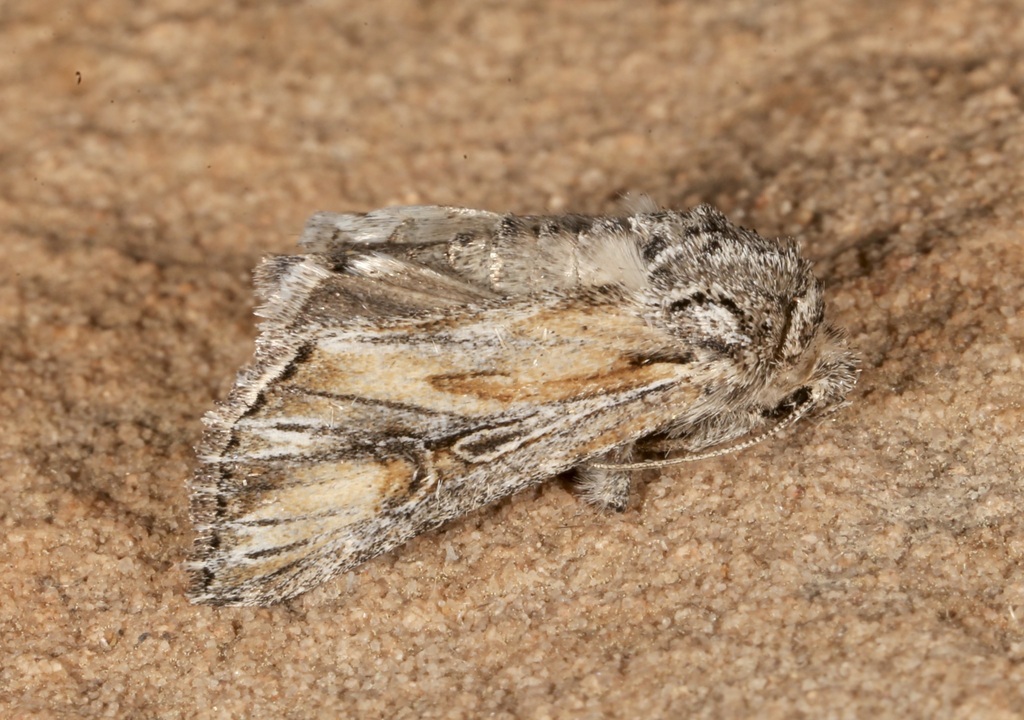
(c) Laura Gaudette, some rights reserved (CC BY) · licence
Family: Noctuidae · Class: Insecta · Order: Lepidoptera
Aseptis adnixa is a California animal in the Noctuidae family.
Aseptis adnixa is a moth species belonging to the family Noctuidae, commonly known as owlet moths or cutworm moths. This species represents one of the lesser-documented members of the genus Aseptis, which comprises several species distributed across western North America. Adult moths typically display the characteristic features of noctuid moths, with forewings that are generally mottled in earth tones of brown and gray, providing effective camouflage when resting on bark or other natural surfaces during daylight hours. The species ranges from California northward through Oregon and Washington to British Columbia, establishing it as a Pacific Northwest endemic with a distribution that follows the coastal and montane regions of western North America. This range encompasses diverse ecological zones from Mediterranean climates in California to temperate rainforests in the Pacific Northwest, suggesting the species may exhibit considerable ecological adaptability across its latitudinal distribution. Aseptis adnixa demonstrates a highly specialized relationship with its host plant, Indian plum (Oemleria cerasiformis), a deciduous shrub in the rose family that is also endemic to the Pacific Northwest. Larvae feed specifically on young terminal leaves of this host, indicating a precise evolutionary adaptation to the plant's phenology and chemistry. Indian plum typically grows in moist woodlands, forest edges, and stream corridors at elevations ranging from sea level to approximately 1,500 meters. The shrub is among the earliest plants to leaf out in spring, often producing new growth in February or March, which likely influences the moth's life cycle timing. The specialized feeding behavior suggests that Aseptis adnixa larvae are active during the spring months when Indian plum produces its tender new growth. Like most noctuids, adults are likely nocturnal, with peak activity periods during evening and nighttime hours when they engage in mating behaviors and egg-laying activities. Females presumably deposit eggs on or near Indian plum shrubs, timing their reproductive cycle to coincide with the availability of suitable larval food resources. The species likely overwinters in the pupal stage, emerging as adults in late winter or early spring to synchronize with host plant phenology. Due to its specialized host relationship and apparently limited distribution, Aseptis adnixa may face conservation challenges related to habitat fragmentation and loss of Indian plum populations. Urban development, agricultural conversion, and forest management practices that reduce understory diversity could potentially impact both the moth and its obligate host plant. Climate change may also affect the synchronization between moth emergence and host plant leafing, particularly at the species' range margins. However, comprehensive population studies and formal conservation assessments appear to be lacking for this species, reflecting the general knowledge gaps that exist for many specialized moth species in North America.
Classification
Class: Insecta · Order: Lepidoptera · Family: Noctuidae
Frequently asked questions
How is Aseptis adnixa classified?
Aseptis adnixa belongs to class Insecta, order Lepidoptera, family Noctuidae.
What family does Aseptis adnixa belong to?
Aseptis adnixa is in the Noctuidae family.
What is Aseptis adnixa?
Aseptis adnixa is a moth species belonging to the family Noctuidae, commonly known as owlet moths or cutworm moths.
Is Aseptis adnixa found in California?
Yes. Aseptis adnixa is recorded in California in The California Species Project's catalogue.
Related species
Other California species in the same genus, family, or bioregion.
Data from The California Species Project — 14,000+ California species with verified data from CNPS, CDFW, USFWS, and more.