Ashmeadiella chumashae
Channel Islands Leaf-cutter Bee
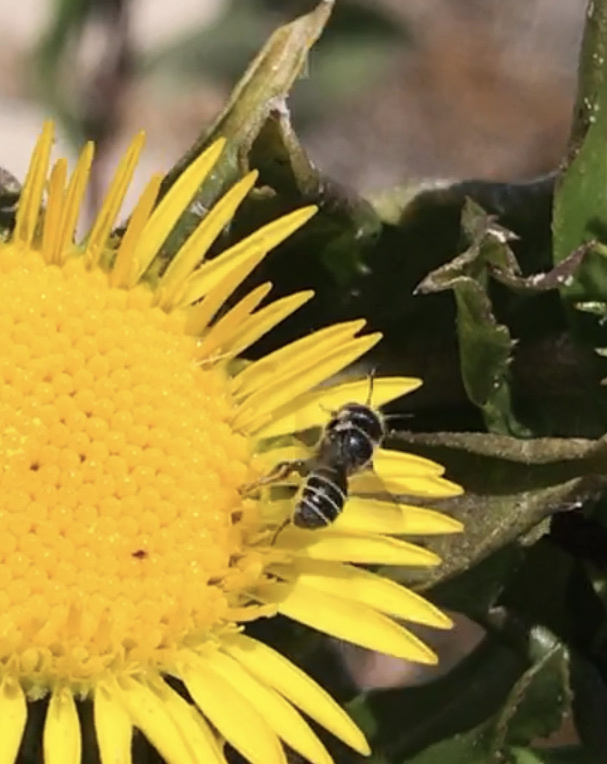
(c) Kylie Etter, some rights reserved (CC BY) · licence
Family: Megachilidae · Class: Insecta · Order: Hymenoptera
Conservation status: G2? S3
Ashmeadiella chumashae (Channel Islands Leaf-cutter Bee) is a California animal in the Megachilidae family.
The Channel Islands Leaf-cutter Bee (Ashmeadiella chumashae) is a solitary bee in the family Megachilidae endemic to California's Channel Islands. Like other members of the genus Ashmeadiella, this species is a nonmetallic, robust bee ranging from 3.5 to 9.5 mm in length, with a black head and thorax (Exotic Bee ID). The abdomen coloration in Ashmeadiella species varies from black to entirely red, though specific coloration details for A. chumashae have not been well documented. This species is endemic to the Channel Islands off the California coast, as indicated by both its common and scientific names. The specific epithet "chumashae" references the Chumash people, the indigenous inhabitants of this region. According to iNaturalist, the species is also known as the Chumash Angled-Mason, reflecting this cultural connection to the Channel Islands area. Specific habitat requirements for A. chumashae have not been thoroughly documented in available scientific literature. As a member of the Megachilidae family, this species likely constructs nests in existing cavities or excavates tunnels in substrates such as wood, stems, or soil. The genus Ashmeadiella typically requires stable nesting sites including holes in wood or appropriate ground conditions for tunnel construction. Like other Ashmeadiella species, A. chumashae is presumed to be a solitary bee with females provisioning individual brood cells. Related species in the genus, such as A. sculleni, have flight seasons extending from June to mid-July, though the specific flight period for A. chumashae remains undocumented. Female leaf-cutter bees typically cut circular pieces from leaves or petals to line their nest cells, creating protective chambers for developing larvae. The foraging preferences and host plant relationships for this species have not been established in available sources. The conservation status of A. chumashae reflects significant concern for its long-term persistence. The species carries a global rank of G2?, indicating it is imperiled globally with 6 to 20 occurrences or few remaining individuals. The state rank of S3 suggests the species is vulnerable in California, typically with 21 to 100 occurrences. These rankings indicate that A. chumashae faces substantial risk due to its restricted range and potentially small population size. The Channel Islands location presents both protection and vulnerability for endemic species. While the islands provide some isolation from mainland habitat destruction and pesticide use, island endemics face heightened extinction risk due to their restricted ranges and small populations. Climate change, invasive species, and any habitat modifications on the islands could significantly impact this species. Scientific documentation for A. chumashae remains extremely limited, with no Wikipedia page existing for this taxon and minimal research published on its biology, distribution, or ecology. The lack of detailed ecological information hampers conservation planning and threat assessment for this apparently rare endemic species. Additional field research is needed to document population size, habitat requirements, foraging behavior, and specific conservation needs.
Classification
Class: Insecta · Order: Hymenoptera · Family: Megachilidae
Conservation status
G2? S3
Frequently asked questions
How is Ashmeadiella chumashae classified?
Ashmeadiella chumashae belongs to class Insecta, order Hymenoptera, family Megachilidae.
What family does Ashmeadiella chumashae belong to?
Ashmeadiella chumashae is in the Megachilidae family.
Is Ashmeadiella chumashae protected or of conservation concern?
Ashmeadiella chumashae carries the following status: G2? S3.
What is Ashmeadiella chumashae?
The Channel Islands Leaf-cutter Bee (Ashmeadiella chumashae) is a solitary bee in the family Megachilidae endemic to California's Channel Islands.
Is Ashmeadiella chumashae found in California?
Yes. Ashmeadiella chumashae is recorded in California in The California Species Project's catalogue.
Related species
Other California species in the same genus, family, or bioregion.
Data from The California Species Project — 14,000+ California species with verified data from CNPS, CDFW, USFWS, and more.