Asphondylia ceanothi
Ceanothus Bud Gall Midge
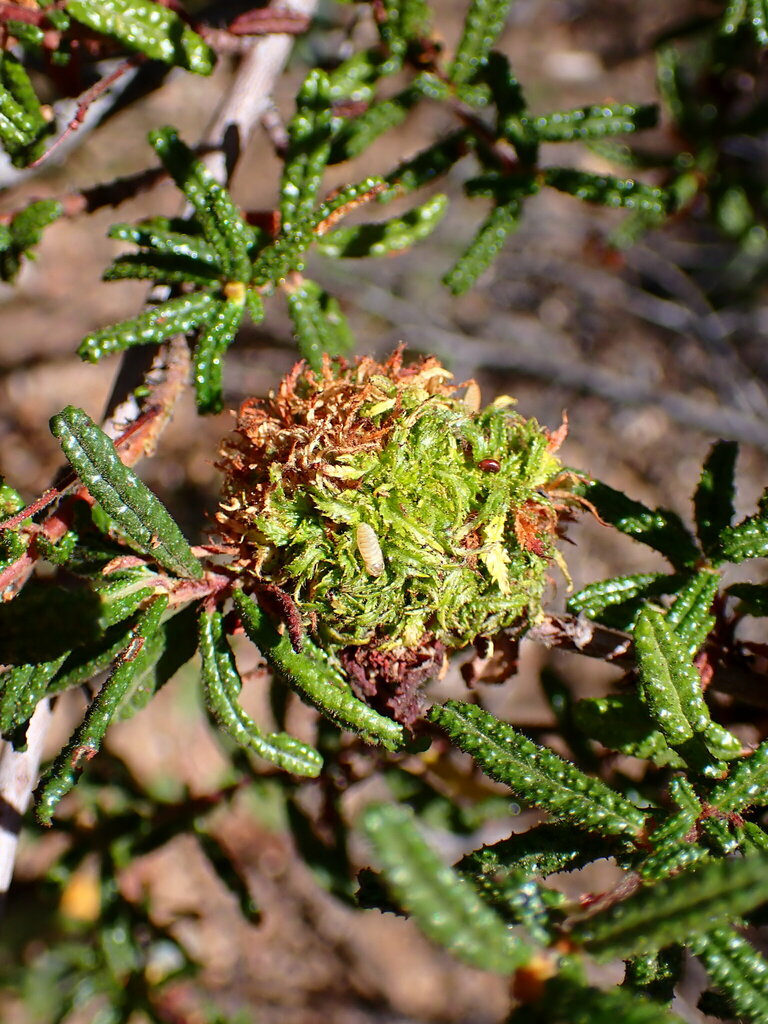
(c) Cricket Raspet, some rights reserved (CC BY) · licence
Family: Cecidomyiidae · Class: Insecta · Order: Diptera
Asphondylia ceanothi (Ceanothus Bud Gall Midge) is a California animal in the Cecidomyiidae family.
The Ceanothus Bud Gall Midge is a small dipteran insect in the family Cecidomyiidae, characterized by its specialized gall-forming behavior on Ceanothus species. Like other gall midges, adults are delicate, mosquito-like flies with long antennae and relatively weak flying ability. The larvae are pale, legless maggots that develop within the plant galls they induce. Based on USFWS data, Asphondylia ceanothi occurs in southern California counties including Imperial, Los Angeles, Orange, Riverside, San Bernardino, San Diego, and Ventura (USFWS ECOS). This distribution aligns with the range of suitable Ceanothus host plants across the region's diverse elevation zones. The species inhabits areas where Ceanothus shrubs occur, ranging from coastal sage scrub to chaparral and montane habitats. Ceanothus species typically grow in well-drained soils on slopes and ridges, often in areas recovering from fire disturbance. The midge's distribution is closely tied to the presence of suitable host plants, which vary by elevation and local climate conditions. Asphondylia ceanothi exhibits highly specialized gall-forming behavior on Ceanothus species. Adult females lay eggs in developing buds of the host plant, and the hatching larvae induce the formation of species-specific galls through chemical interactions with plant tissues. The larvae feed on nutritious gall tissue while protected within these structures. Gall formation represents a complex co-evolutionary relationship between the insect and its host plant, with the midge larvae secreting chemicals that manipulate plant growth responses to create their specialized feeding chambers (BugGuide). Development time from egg to adult varies with temperature and season, but typically requires several months. Adults emerge to mate and continue the cycle, with timing often synchronized to host plant phenology. The species appears to have stable populations within its known range, with no current federal or state conservation listing status. However, like many specialized insects, Asphondylia ceanothi could be vulnerable to habitat loss, particularly in coastal and urban interface areas where Ceanothus habitats face development pressure. Climate change may also affect the species through alterations to host plant distribution and phenology. The midge's conservation status is closely linked to the health of Ceanothus plant communities, which serve as both larval development sites and adult habitat. Detailed ecological studies of this species remain limited. The information presented here synthesizes available data from USFWS records and entomological databases. Additional research on population dynamics, host plant specificity, and ecological relationships would enhance understanding of this specialized gall-forming insect's role in California's native plant communities.
Classification
Class: Insecta · Order: Diptera · Family: Cecidomyiidae
Frequently asked questions
How is Asphondylia ceanothi classified?
Asphondylia ceanothi belongs to class Insecta, order Diptera, family Cecidomyiidae.
What family does Asphondylia ceanothi belong to?
Asphondylia ceanothi is in the Cecidomyiidae family.
What is Asphondylia ceanothi?
The Ceanothus Bud Gall Midge is a small dipteran insect in the family Cecidomyiidae, characterized by its specialized gall-forming behavior on Ceanothus species.
Is Asphondylia ceanothi found in California?
Yes. Asphondylia ceanothi is recorded in California in The California Species Project's catalogue.
Related species
Other California species in the same genus, family, or bioregion.
Data from The California Species Project — 14,000+ California species with verified data from CNPS, CDFW, USFWS, and more.