Asphondylia foliosa
Creosote Leafy Bud Gall Midge
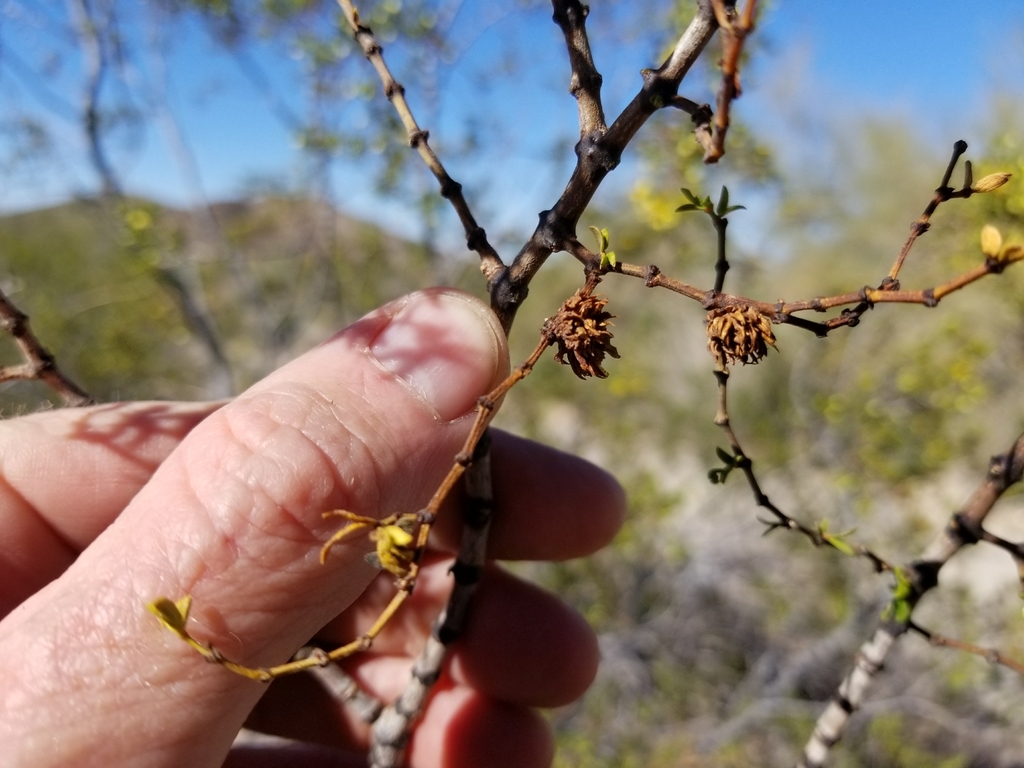
(c) Bob Miller, some rights reserved (CC BY) · licence
Family: Cecidomyiidae · Class: Insecta · Order: Diptera
Asphondylia foliosa (Creosote Leafy Bud Gall Midge) is a California animal in the Cecidomyiidae family.
Asphondylia foliosa, the Creosote Leafy Bud Gall Midge, is a small dipteran insect in the family Cecidomyiidae, commonly known as gall midges. Adult midges in this family typically measure 1-3 mm (0.04-0.12 inches) in length and possess distinctive long, beaded antennae and delicate wings with reduced venation. Like other gall midges, A. foliosa likely exhibits sexual dimorphism, with males having more plumose antennae than females. The species occurs in the southwestern United States, specifically associated with desert regions where its host plant is found. Gall midges in the genus Asphondylia are typically specialized to particular plant species or plant families, suggesting this species has a restricted distribution tied to the availability of suitable host plants. The common name indicates an association with creosote bush (Larrea tridentata), one of the dominant shrubs in the Mojave and Sonoran deserts. As indicated by its common name, A. foliosa inhabits areas where creosote bush grows, primarily in hot desert scrub communities. Creosote bush typically occurs at elevations from below sea level to approximately 1,500 meters (4,900 feet) in well-drained desert soils. The species likely requires specific microhabitat conditions within the creosote bush ecosystem, as gall midges are often highly specialized in their host plant relationships and the particular plant tissues they utilize. The ecology of A. foliosa centers on its gall-forming behavior on leafy buds of its host plant. Gall midges undergo complete metamorphosis, with females laying eggs in or on plant tissues. The developing larvae induce the formation of specialized plant structures called galls, which provide both shelter and nutrition. The "leafy bud" designation suggests this species specifically targets the growing points of shoots or branches, causing the plant to form abnormal leafy growths. This gall formation represents a complex co-evolutionary relationship between the insect and its host plant. The timing of emergence and reproduction is likely synchronized with the host plant's phenology and favorable environmental conditions in the desert ecosystem. Detailed information about the conservation status of A. foliosa is not readily available in standard wildlife databases or federal listing documents. Many invertebrate species, particularly specialized gall-forming insects, remain poorly studied regarding their population status and conservation needs. The species' dependence on creosote bush habitats suggests that threats to desert ecosystems, including habitat fragmentation, urban development, and climate change impacts on desert vegetation, could potentially affect populations. However, creosote bush is generally abundant and widespread across southwestern deserts, which may provide some habitat security for associated specialist insects. Scientific documentation for this species remains limited. The information presented here is based on general knowledge of gall midge biology and ecology. If you have additional verified information about this species' biology, distribution, or ecology, please contact us to help improve this species account.
Classification
Class: Insecta · Order: Diptera · Family: Cecidomyiidae
Frequently asked questions
How is Asphondylia foliosa classified?
Asphondylia foliosa belongs to class Insecta, order Diptera, family Cecidomyiidae.
What family does Asphondylia foliosa belong to?
Asphondylia foliosa is in the Cecidomyiidae family.
What is Asphondylia foliosa?
Asphondylia foliosa, the Creosote Leafy Bud Gall Midge, is a small dipteran insect in the family Cecidomyiidae, commonly known as gall midges.
Is Asphondylia foliosa found in California?
Yes. Asphondylia foliosa is recorded in California in The California Species Project's catalogue.
Related species
Other California species in the same genus, family, or bioregion.
Data from The California Species Project — 14,000+ California species with verified data from CNPS, CDFW, USFWS, and more.