Aspidoscelis tigris
Western Whiptail
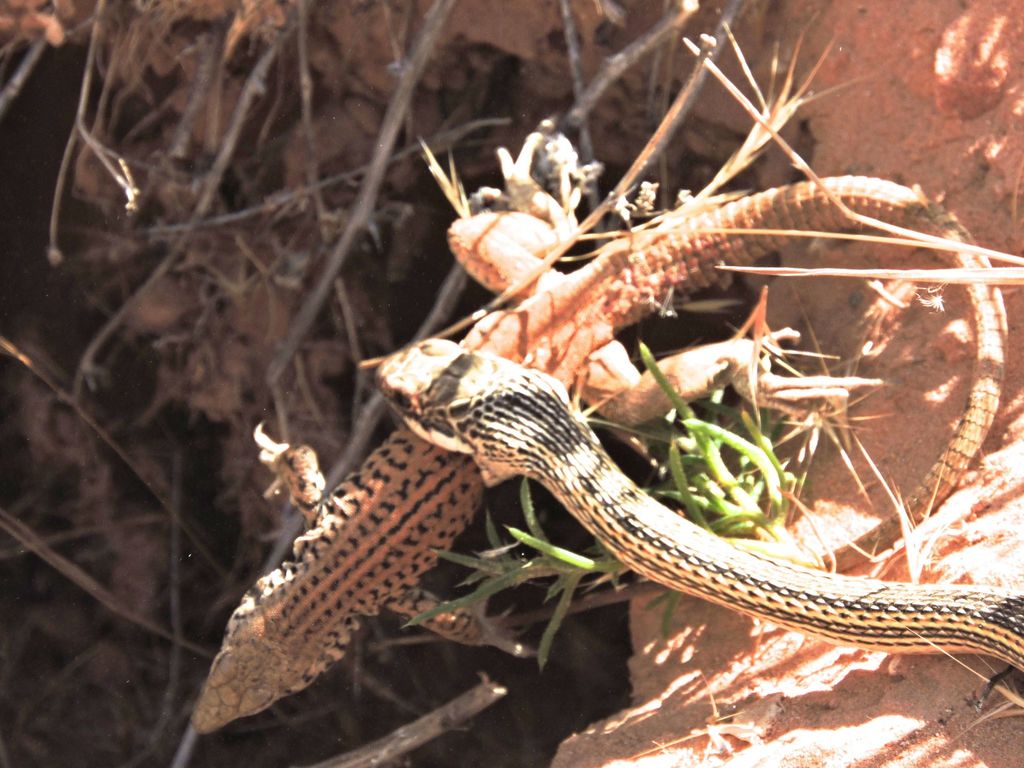
(c) cwwood, some rights reserved (CC BY-SA) · licence
Family: Teiidae · Class: Reptilia · Order: Squamata
Aspidoscelis tigris (Western Whiptail) is a California animal in the Teiidae family.
The Western Whiptail (Aspidoscelis tigris), also known as the Tiger Whiptail, is a medium-sized lizard in the family Teiidae characterized by its elongated body and exceptionally long, thin tail. Adults typically measure 203 to 305 mm (8 to 12 inches) in total length, with the tail comprising approximately two-thirds of this measurement. The species displays sexual dimorphism, with males generally larger and more robust than females. The dorsal surface features a distinctive pattern of dark crossbands or stripes on a lighter background, ranging from gray to brown or yellowish. The ventral surface is typically white or cream-colored. Juveniles exhibit more pronounced banding that may fade with age. The head is relatively small and pointed, with large eyes and external ear openings. The Western Whiptail occupies an extensive range across the southwestern United States and northwestern Mexico. In California, the species occurs throughout much of the southern two-thirds of the state, from the Central Valley southward through the Mojave and Sonoran deserts. The range extends from sea level to elevations of approximately 2,134 meters (7,000 feet). Populations are documented from Kern, Tulare, Kings, and Fresno counties southward through Los Angeles, Orange, Riverside, San Bernardino, and Imperial counties. The species is particularly abundant in desert regions but also inhabits coastal scrub and chaparral communities. Western Whiptails occupy diverse habitats including desert scrub, chaparral, oak woodland, riparian areas, and grasslands. They prefer open areas with sparse vegetation and sandy or rocky substrates that facilitate rapid locomotion and burrowing. The species demonstrates strong associations with washes, arroyos, and areas with scattered rocks or shrubs that provide cover and basking sites. Elevation tolerance ranges from below sea level in desert basins to montane environments exceeding 2,000 meters. This diurnal species is highly active and terrestrial, capable of reaching speeds up to 24 kilometers per hour (15 miles per hour) when pursued. Western Whiptails are primarily insectivorous, consuming beetles, ants, termites, grasshoppers, and spiders. They employ an active foraging strategy, using their acute vision and chemoreception to locate prey items in leaf litter and soil. Reproduction occurs from April through July, with females laying one to four clutches per season. Each clutch contains two to six eggs deposited in sandy soil or beneath rocks. Incubation lasts 60 to 90 days depending on temperature. The species exhibits territorial behavior during breeding season, with males defending areas through aggressive displays and physical confrontations. The Western Whiptail currently holds no federal or state conservation listing in California. The species maintains stable populations throughout most of its range and demonstrates adaptability to habitat modification. However, localized declines may occur due to urban development, habitat fragmentation, and invasive plant species that alter vegetation structure. The species' broad ecological tolerance and reproductive capacity contribute to its current conservation stability, though continued monitoring is warranted in rapidly developing areas of southern California.
Classification
Class: Reptilia · Order: Squamata · Family: Teiidae
Frequently asked questions
How is Aspidoscelis tigris classified?
Aspidoscelis tigris belongs to class Reptilia, order Squamata, family Teiidae.
What family does Aspidoscelis tigris belong to?
Aspidoscelis tigris is in the Teiidae family.
What is Aspidoscelis tigris?
The Western Whiptail (Aspidoscelis tigris), also known as the Tiger Whiptail, is a medium-sized lizard in the family Teiidae characterized by its elongated body and exceptionally long, thin tail.
Is Aspidoscelis tigris found in California?
Yes. Aspidoscelis tigris is recorded in California in The California Species Project's catalogue.
Related species
Other California species in the same genus, family, or bioregion.
Data from The California Species Project — 14,000+ California species with verified data from CNPS, CDFW, USFWS, and more.