Assiminea infima
Badwater Snail
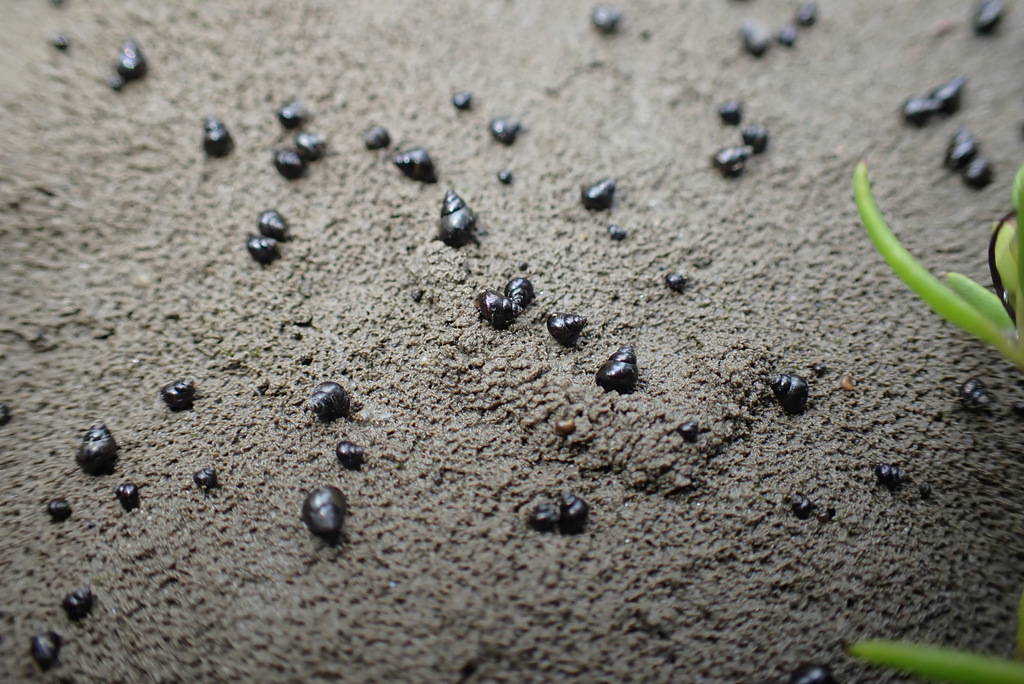
(c) Thomas Gyselinck, some rights reserved (CC BY) · licence
Family: Assimineidae · Class: Gastropoda · Order: Littorinimorpha
Conservation status: G1 S1
Assiminea infima (Badwater Snail) is a California animal in the Assimineidae family.
The Badwater snail (Assiminea infima) is a minute freshwater gastropod endemic to Death Valley, California. This species belongs to the family Assimineidae and represents one of the most geographically restricted snails in North America. Adults are extremely small, measuring less than 3 millimeters in shell height, with a conical to ovate shell shape typical of assimineids. The shell is typically translucent to light brown in coloration with fine spiral striations. The Badwater snail is found exclusively in four spring systems within Death Valley National Park: Badwater, Cottonball Marsh, Nevares Springs, and Travertine Springs (NatureServe Explorer). This represents one of the most restricted ranges of any North American gastropod, confined to an area below sea level in one of the continent's most extreme desert environments. The species was historically documented from these locations, though current population status varies among sites. This species inhabits spring-fed wetlands and seeps in the Death Valley basin, where it occurs in areas with permanent water flow and associated vegetation. The springs provide relatively stable thermal and chemical conditions compared to the surrounding desert environment. Badwater snails are typically found on submerged vegetation, algal mats, and mineral substrates within these spring systems. Water temperatures in occupied habitats can exceed 30°C (86°F), and salinity levels vary considerably among the different spring systems. Little is documented about the specific ecology and behavior of Badwater snails. Like other assimineids, they are presumed to be grazers feeding on algae, bacteria, and organic detritus. Reproduction likely involves direct development without a free-swimming larval stage, which is typical for freshwater members of this family. This reproductive strategy limits dispersal capability, contributing to the species' extremely restricted distribution. The Badwater snail has been designated as a candidate species for federal listing under the Endangered Species Act (USFWS). The species receives a global conservation rank of G1 and state rank of S1, indicating it is critically imperiled. Primary threats include habitat modification, water diversions, and potential impacts from recreational activities within Death Valley National Park. Climate change poses additional risks through altered precipitation patterns and increased temperatures that could affect spring flow rates and water chemistry. The species' extremely limited range makes it particularly vulnerable to localized disturbances or environmental changes. According to USFWS assessments, reduced habitat quality and population size represent ongoing conservation concerns for this species. The isolation of populations among different spring systems further compounds conservation challenges, as genetic exchange between sites is likely minimal or absent.
Classification
Class: Gastropoda · Order: Littorinimorpha · Family: Assimineidae
Conservation status
G1 S1
Frequently asked questions
How is Assiminea infima classified?
Assiminea infima belongs to class Gastropoda, order Littorinimorpha, family Assimineidae.
What family does Assiminea infima belong to?
Assiminea infima is in the Assimineidae family.
Is Assiminea infima protected or of conservation concern?
Assiminea infima carries the following status: G1 S1.
What is Assiminea infima?
The Badwater snail (Assiminea infima) is a minute freshwater gastropod endemic to Death Valley, California.
Is Assiminea infima found in California?
Yes. Assiminea infima is recorded in California in The California Species Project's catalogue.
More California species
This species has no close relatives in our California data — here are other species to explore.
Data from The California Species Project — 14,000+ California species with verified data from CNPS, CDFW, USFWS, and more.