Atagema alba
Hunchback Doris
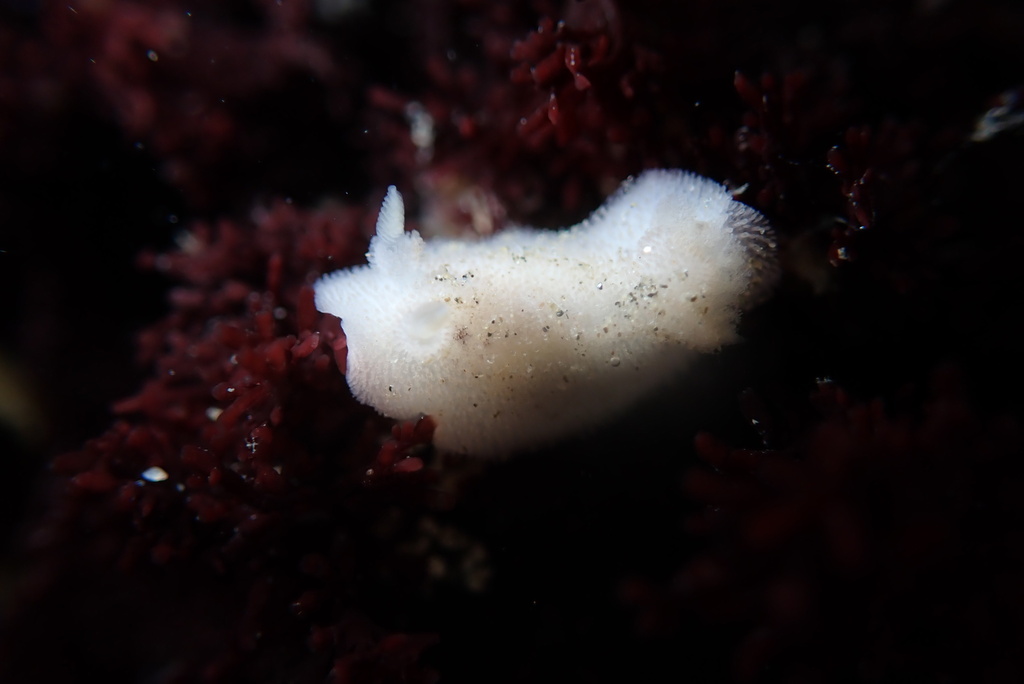
(c) Eric Klug, some rights reserved (CC BY) · licence
Family: Discodorididae · Class: Gastropoda · Order: Nudibranchia
Atagema alba (Hunchback Doris) is a California animal in the Discodorididae family.
The hunchback doris (Atagema alba) is a marine nudibranch mollusk in the family Discodorididae. This sea slug species exhibits the characteristic body plan of dorids, with a flattened, oval body and retractable rhinophores used for chemical detection. The species name 'alba' refers to its pale coloration, though specific morphometric data and detailed physical descriptions are not well documented in current literature. Atagema alba occurs along the Pacific coast of North America, with records from California waters. The species' precise geographic range and distribution patterns within California coastal waters require further documentation. Like other nudibranchs in the genus Atagema, this species is presumed to inhabit subtidal marine environments, though specific depth ranges and habitat preferences have not been comprehensively studied. The habitat requirements of A. alba remain poorly characterized. Most dorid nudibranchs occupy rocky subtidal environments where they feed on specific prey items, typically sponges. The species likely requires hard substrates that support its sponge prey, including rocky reefs, jetties, and similar marine structures. Water temperature, depth, and substrate composition preferences for this species have not been systematically documented. The ecological behavior and life history of the hunchback doris are not well established in scientific literature. Like other members of the Discodorididae family, A. alba is presumed to be a specialist predator, likely feeding on specific sponge species. Nudibranchs in this family typically use their radula to scrape tissue from their sponge prey. Reproductive biology, including spawning behavior, egg mass characteristics, and larval development, has not been described for this species. The duration of larval stages and settlement preferences remain unknown. Atagema alba does not currently hold federal or state conservation status. The species appears on the U.S. Fish and Wildlife Service taxonomic database but is not listed under the Endangered Species Act as of December 2025. The lack of comprehensive population data, distribution studies, and ecological research makes assessment of conservation needs difficult. Marine nudibranchs can be sensitive to water quality changes, ocean acidification, and habitat modification, but specific threats to A. alba populations have not been evaluated. Scientific documentation for this species remains extremely limited despite its inclusion in federal taxonomic databases. The information presented here represents available data from the U.S. Fish and Wildlife Service taxonomic records and general knowledge of nudibranch biology. Detailed studies of A. alba morphology, ecology, distribution, and conservation status are needed. Research priorities should include taxonomic verification, range mapping, habitat characterization, and population assessment. Additional field observations, photographic documentation, and molecular analyses would contribute significantly to understanding this species' biology and conservation requirements.
Classification
Class: Gastropoda · Order: Nudibranchia · Family: Discodorididae
Frequently asked questions
How is Atagema alba classified?
Atagema alba belongs to class Gastropoda, order Nudibranchia, family Discodorididae.
What family does Atagema alba belong to?
Atagema alba is in the Discodorididae family.
What is Atagema alba?
The hunchback doris (Atagema alba) is a marine nudibranch mollusk in the family Discodorididae.
Is Atagema alba found in California?
Yes. Atagema alba is recorded in California in The California Species Project's catalogue.
Related species
Other California species in the same genus, family, or bioregion.
Data from The California Species Project — 14,000+ California species with verified data from CNPS, CDFW, USFWS, and more.