Atalopedes campestris
Sachem
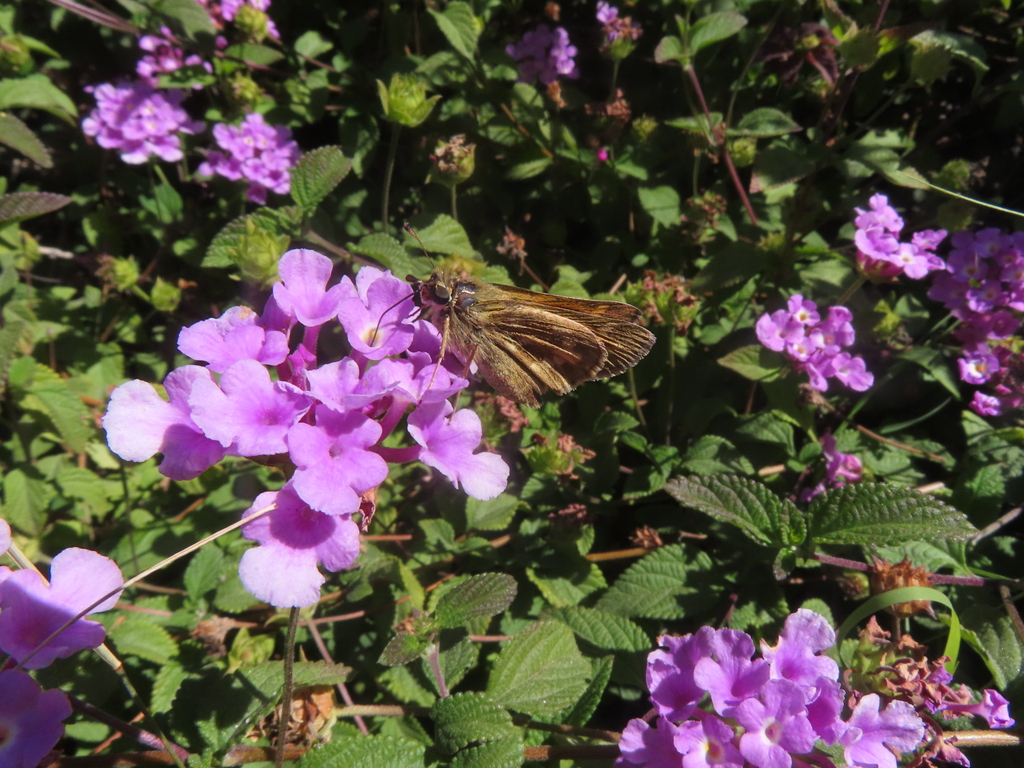
(c) Hawk T., some rights reserved (CC BY) · licence
Family: Hesperiidae · Class: Insecta · Order: Lepidoptera
Atalopedes campestris (Sachem) is a California animal in the Hesperiidae family.
The Sachem is a small to medium-sized skipper butterfly with distinctive sexual dimorphism in wing coloration and markings. Males have orange-brown forewings with a distinctive dark stigma (scent patch) and dark borders, while the hindwings are primarily orange-brown with darker margins. Females are darker overall, displaying brown forewings with scattered light spots and brown hindwings. Both sexes have a wingspan ranging from 25 to 35 mm (1.0 to 1.4 inches). The underside of the hindwings shows pale yellow or cream coloration with small white spots, providing identification characteristics when the butterfly is at rest with wings folded. The Sachem ranges throughout the southern United States from Virginia west to California, extending south through Mexico and Central America to Brazil. The species regularly strays and establishes temporary colonies north to central North Dakota, southern Michigan, Manitoba, and northern Pennsylvania. In California, populations occur primarily in the southern regions and Central Valley, with occasional northward movements during favorable conditions. The species demonstrates strong dispersal capabilities, allowing it to colonize new areas seasonally. This skipper inhabits open, disturbed areas including gardens, parks, agricultural fields, roadsides, and suburban landscapes. The species thrives in environments with abundant grass growth and nectar sources. Elevational range extends from sea level to approximately 1,500 meters (4,920 feet). Sachem butterflies prefer areas with short grasses and open ground for sunbathing and territorial behavior, while requiring nearby flowering plants for adult nectar feeding. Sachem butterflies are multivoltine, producing multiple generations per year in warmer climates, with up to four broods annually in southern regions. Adults are active throughout most of the year in frost-free areas, with peak activity occurring during warmer months. Males exhibit territorial behavior, perching on low vegetation or bare ground to watch for females and chase intruders. Females deposit single eggs on grass blades, typically near the base of host plants. Larvae construct shelters by folding grass blades and feeding within these protective structures. The caterpillars feed on various grass species including Bermuda grass, crabgrass, St. Augustine grass, and goosegrass. Adults nectar on diverse flowering plants including lantana, pentas, asters, and various garden flowers. The Sachem is not listed under federal or state endangered species legislation and maintains stable populations throughout its range. The species benefits from human-modified landscapes that provide suitable grass hosts and nectar sources. Urban and suburban development often creates favorable habitat conditions, contributing to population stability. Climate change may facilitate range expansion northward, as the species demonstrates adaptability to various environmental conditions. No specific conservation measures are required for this adaptable butterfly, though maintaining diverse native plant communities supports overall ecosystem health and pollinator diversity.
Classification
Class: Insecta · Order: Lepidoptera · Family: Hesperiidae
Frequently asked questions
How is Atalopedes campestris classified?
Atalopedes campestris belongs to class Insecta, order Lepidoptera, family Hesperiidae.
What family does Atalopedes campestris belong to?
Atalopedes campestris is in the Hesperiidae family.
What is Atalopedes campestris?
The Sachem is a small to medium-sized skipper butterfly with distinctive sexual dimorphism in wing coloration and markings.
Is Atalopedes campestris found in California?
Yes. Atalopedes campestris is recorded in California in The California Species Project's catalogue.
Related species
Other California species in the same genus, family, or bioregion.
Data from The California Species Project — 14,000+ California species with verified data from CNPS, CDFW, USFWS, and more.