Atherigona reversura
Bermudagrass Stem Maggot
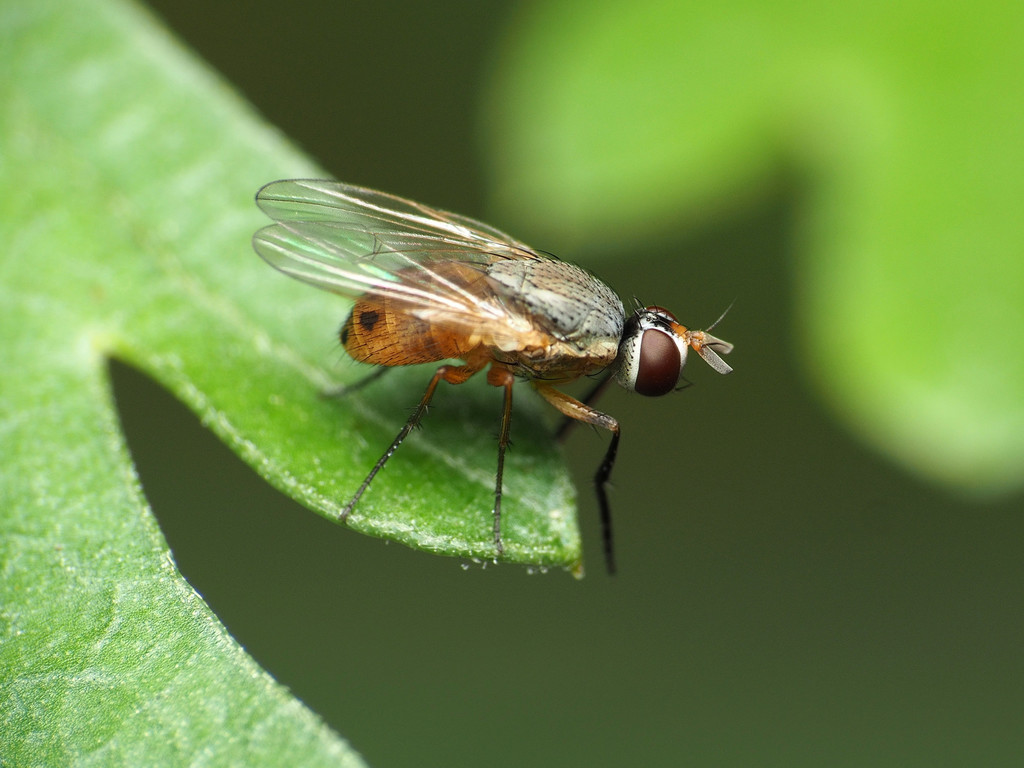
(c) Katja Schulz, some rights reserved (CC BY) · licence
Family: Muscidae · Class: Insecta · Order: Diptera
Atherigona reversura (Bermudagrass Stem Maggot) is a California animal in the Muscidae family.
The Bermudagrass stem maggot (Atherigona reversura) is a small dipteran fly in the family Muscidae. Adults are typically small, measuring 3-5 millimeters in length, with the characteristic muscid fly body plan featuring prominent compound eyes and bristled bodies. The larvae are cream-colored, legless maggots that develop within the stems of their host grasses, creating distinctive feeding tunnels. This species is non-native to North America, having been introduced from the Palaearctic region (BugGuide). The fly has established populations across multiple regions of the United States, including California, where it has become naturalized in suitable grassland habitats. The species' current distribution in California includes both agricultural and natural areas where its host plants occur. Atherigona reversura inhabits areas dominated by warm-season grasses, particularly those in the Poaceae family. The species shows a strong association with Bermudagrass (Cynodon dactylon) and related turf grasses, thriving in managed landscapes, golf courses, athletic fields, and pastures. It occurs from sea level to moderate elevations, preferring open, sunny locations where host grasses grow vigorously. The fly tolerates a range of soil conditions but is most abundant in well-irrigated areas with dense grass coverage. Adult flies are active during warm months, with peak activity typically occurring in late spring through early fall. Females deposit eggs on or near the base of grass stems, particularly targeting young, actively growing tillers. The larvae bore into grass stems, creating feeding galleries that can extend several centimeters in length. This stem-mining behavior distinguishes the species from other grass-feeding insects. Development from egg to adult typically requires 3-4 weeks under optimal conditions, with multiple generations possible per year in warmer climates. Adults feed on nectar and other sugary substances, while larvae are strictly phytophagous, feeding on grass stem tissues. As an introduced species, Atherigona reversura has no formal conservation status under federal or state endangered species legislation. The species is considered established and stable in its introduced range. While not listed as threatened or endangered, the fly can occasionally reach pest status in managed turf systems, where larval feeding may cause visible damage to grass stands. However, populations are generally regulated by natural enemies and environmental factors. The species' establishment in North America represents a successful biological invasion, demonstrating its ability to exploit available ecological niches in non-native environments. Current management approaches focus on integrated pest management in agricultural and turf settings rather than conservation measures. The species serves as an example of how introduced arthropods can become permanent components of North American ecosystems without achieving pest status in most situations.
Classification
Class: Insecta · Order: Diptera · Family: Muscidae
Frequently asked questions
How is Atherigona reversura classified?
Atherigona reversura belongs to class Insecta, order Diptera, family Muscidae.
What family does Atherigona reversura belong to?
Atherigona reversura is in the Muscidae family.
What is Atherigona reversura?
The Bermudagrass stem maggot (Atherigona reversura) is a small dipteran fly in the family Muscidae.
Is Atherigona reversura found in California?
Yes. Atherigona reversura is recorded in California in The California Species Project's catalogue.
Related species
Other California species in the same genus, family, or bioregion.
Data from The California Species Project — 14,000+ California species with verified data from CNPS, CDFW, USFWS, and more.