Atherinops afinis
Topsmelt
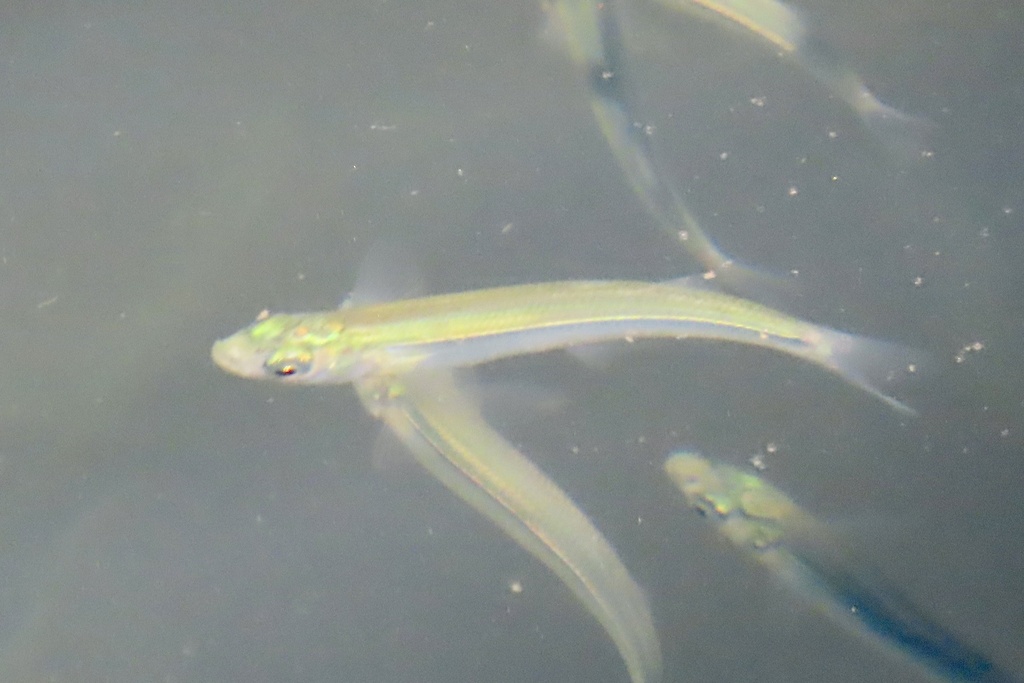
(c) Kat B, some rights reserved (CC BY) · licence
Family: Atherinopsidae · Class: Actinopterygii · Order: Atheriniformes
Atherinops afinis (Topsmelt) is a California animal in the Atherinopsidae family.
The topsmelt (Atherinops affinis) is a slender, schooling fish in the silverside family Atherinopsidae found along the Pacific coast. Adults typically measure 8 to 12 centimeters (3.1 to 4.7 inches) in length, with an elongated, compressed body and translucent appearance. The species exhibits a silvery lateral stripe running along each side, with a greenish back and pale underside. Topsmelt occur along the Pacific coast from Oregon to Baja California, Mexico. In California, they are widely distributed in nearshore marine waters, bays, and estuaries. The species is particularly abundant in major California estuarine systems including San Francisco Bay, Monterey Bay, and southern California coastal lagoons and harbors. This species inhabits diverse marine and estuarine environments, commonly found in shallow bays, muddy and rocky areas, kelp beds, and nearshore waters (FishBase). Topsmelt are highly tolerant of varying salinity conditions, allowing them to thrive in both marine and brackish water environments. They frequently occur in eelgrass beds and other structured habitats that provide cover and feeding opportunities. The species can be observed from the surface to depths of approximately 37 meters (121 feet), though they typically remain in shallower waters. Topsmelt are highly social fish that form large, dense schools throughout most of their life cycle. Adults feed primarily on zooplankton, including copepods, mysid shrimp, and other small planktonic organisms, while juveniles consume smaller zooplankton and phytoplankton (FishBase). The species exhibits seasonal spawning behavior, typically reproducing in shallow, protected waters during warmer months. Females deposit adhesive eggs on aquatic vegetation or hard substrates. Topsmelt serve as an important prey species in California's marine food webs. They constitute a significant food source for numerous predator species, including the federally threatened California least tern (Sternula antillarum browni), which forages for topsmelt in nearshore waters, estuaries, and river mouths (USFWS). The species is also consumed by larger fish, marine mammals, and seabirds. Currently, topsmelt have no special conservation status at federal or state levels. The California Department of Fish and Wildlife has identified this species as ecologically significant due to its dominance in California estuaries and bays and its important role in marine ecosystems (CDFW). While populations appear stable, the species may face localized impacts from habitat modification, water quality degradation, and coastal development. Climate change effects on estuarine systems, including altered salinity patterns and temperature regimes, represent potential future concerns for topsmelt populations. The species' wide distribution and habitat tolerance suggest relatively good resilience to environmental changes compared to more specialized estuarine fish species.
Classification
Class: Actinopterygii · Order: Atheriniformes · Family: Atherinopsidae
Frequently asked questions
How is Atherinops afinis classified?
Atherinops afinis belongs to class Actinopterygii, order Atheriniformes, family Atherinopsidae.
What family does Atherinops afinis belong to?
Atherinops afinis is in the Atherinopsidae family.
What is Atherinops afinis?
The topsmelt (Atherinops affinis) is a slender, schooling fish in the silverside family Atherinopsidae found along the Pacific coast.
Is Atherinops afinis found in California?
Yes. Atherinops afinis is recorded in California in The California Species Project's catalogue.
Related species
Other California species in the same genus, family, or bioregion.
Data from The California Species Project — 14,000+ California species with verified data from CNPS, CDFW, USFWS, and more.