Atherinopsis californiensis
Jack Silverside
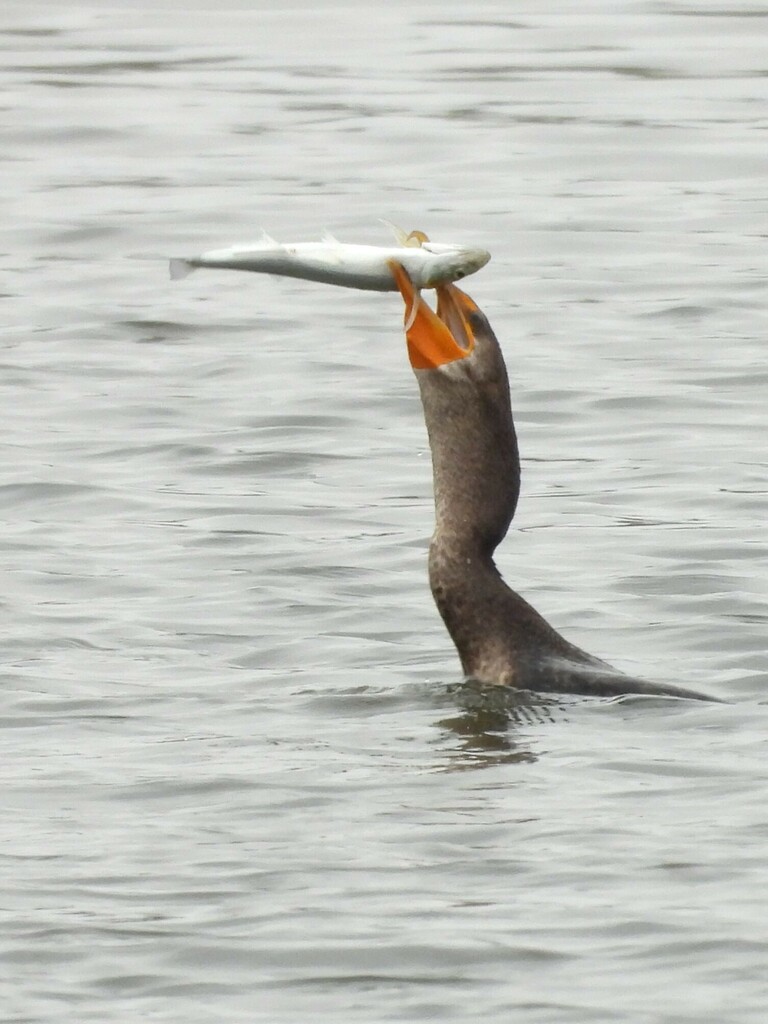
(c) P Holroyd, some rights reserved (CC BY) · licence
Family: Atherinopsidae · Class: Actinopterygii · Order: Atheriniformes
Atherinopsis californiensis (Jack Silverside) is a California animal in the Atherinopsidae family.
The jacksmelt is a slender, elongated marine fish in the silverside family (Atherinopsidae). Adults typically reach lengths of 280 to 430 mm (11 to 17 inches), with a maximum recorded length of 560 mm (22 inches). The body is compressed laterally with a pointed snout and small mouth. Coloration consists of a greenish-blue back, bright silver sides with a distinct silvery lateral stripe, and a white belly. Two separate dorsal fins are present, with the first being small and triangular. Jacksmelt occur along the Pacific Coast from Oregon to Baja California, Mexico. In California waters, they are widely distributed in coastal and estuarine environments from the Oregon border south to Point Conception, with populations extending into Southern California. The species is particularly abundant in San Francisco Bay, Humboldt Bay, and other major estuarine systems along the California coast. This species inhabits shallow nearshore waters, typically found in estuaries, bays, kelp canopy areas, and along sandy beaches. Jacksmelt prefer areas where fresh and salt water mix, making brackish water environments particularly important habitat. They commonly occur in water depths from the surface to approximately 90 meters (295 feet), though they are most abundant in waters less than 30 meters (98 feet) deep. Juveniles and adults form schools in nearshore waters, often seeking shelter among eelgrass beds and kelp forests. Jacksmelt are opportunistic planktivores, feeding primarily on small crustaceans, marine worms, and small fish. Their diet includes copepods, mysid shrimp, amphipods, and larval fish. Spawning occurs primarily from April through September, with peak activity during summer months. Females deposit adhesive eggs on algae, eelgrass, and other submerged vegetation in shallow water. The eggs hatch in approximately two weeks, depending on water temperature. Jacksmelt can live up to nine years, reaching sexual maturity at two to three years of age. Jacksmelt populations are currently considered stable and the species has no federal or state listing status. They support both commercial and recreational fisheries in California, with the species being taken by purse seine, gill net, and hook-and-line methods. According to the California Department of Fish and Wildlife marine species portal, jacksmelt are an important forage species for larger predatory fish, marine mammals, and seabirds. The species demonstrates resilience to environmental variations, though populations can fluctuate in response to oceanographic conditions such as El Niño events. Primary management concerns include habitat protection, particularly of estuarine nursery areas, and monitoring of fishing pressure. Water quality degradation in bays and estuaries poses potential threats to spawning habitat. Climate change impacts on ocean temperature and chemistry may affect prey availability and reproductive success. The species serves as an indicator of estuarine ecosystem health due to its dependence on both marine and brackish water environments during different life stages.
Classification
Class: Actinopterygii · Order: Atheriniformes · Family: Atherinopsidae
Frequently asked questions
How is Atherinopsis californiensis classified?
Atherinopsis californiensis belongs to class Actinopterygii, order Atheriniformes, family Atherinopsidae.
What family does Atherinopsis californiensis belong to?
Atherinopsis californiensis is in the Atherinopsidae family.
What is Atherinopsis californiensis?
The jacksmelt is a slender, elongated marine fish in the silverside family (Atherinopsidae).
Is Atherinopsis californiensis found in California?
Yes. Atherinopsis californiensis is recorded in California in The California Species Project's catalogue.
Related species
Other California species in the same genus, family, or bioregion.
Data from The California Species Project — 14,000+ California species with verified data from CNPS, CDFW, USFWS, and more.