Atypoides riversi
California Turret Spider
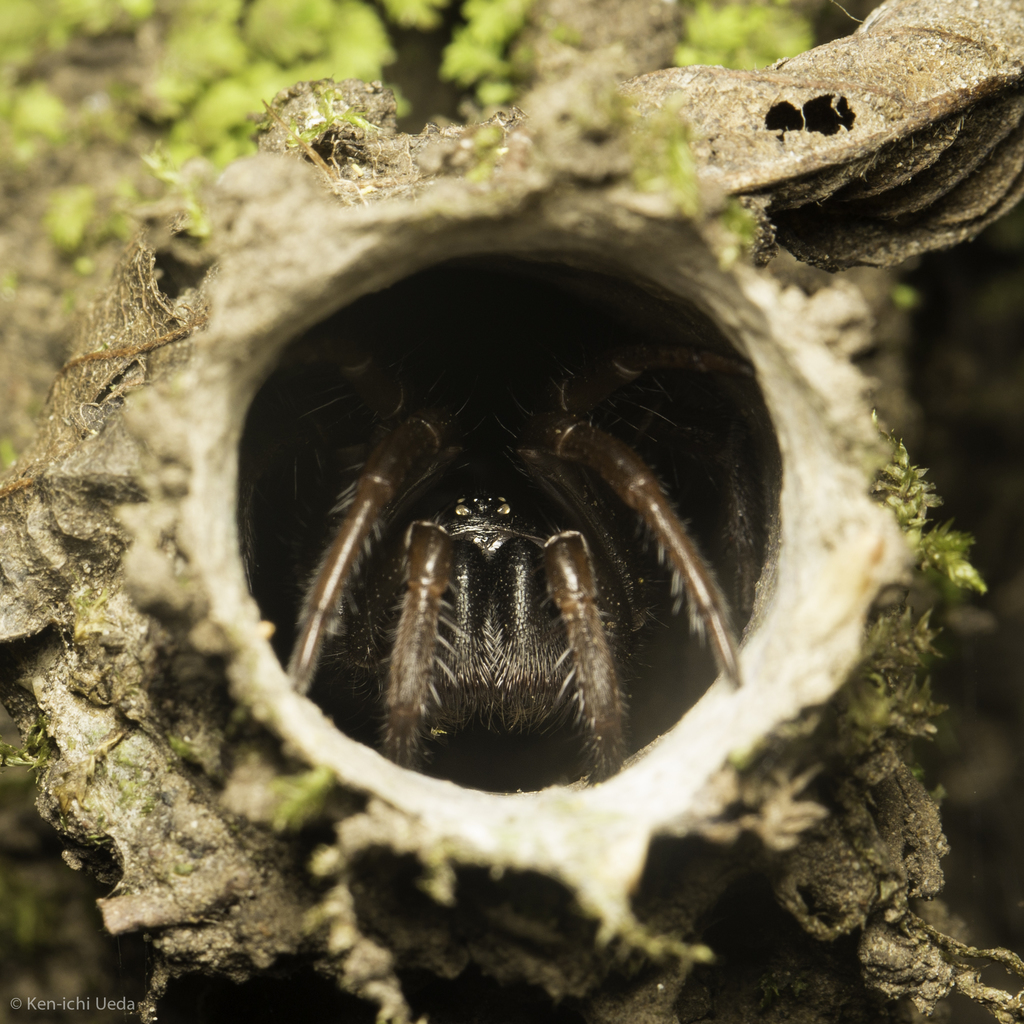
(c) Ken-ichi Ueda, some rights reserved (CC BY) · licence
Family: Antrodiaetidae · Class: Arachnida · Order: Araneae
Atypoides riversi (California Turret Spider) is a California animal in the Antrodiaetidae family.
The California turret spider is a medium-sized mygalomorph spider in the family Antrodiaetidae, commonly known as folding-door spiders. Adults typically measure 10-15 mm in body length, with females generally larger than males. The body is dark brown to black with a robust cephalothorax and abdomen. The species is distinguished by its folding trapdoor burrow construction and relatively long spinnerets compared to other mygalomorphs. Atypoides riversi is endemic to California, with a distribution that reflects complex biogeographical patterns. According to molecular genetic studies, the species exhibits significant cryptic diversity across its range, with multiple genetically distinct lineages that may represent separate species (Starrett & Hedin 2007). The spider occurs in various regions of California, including coastal areas, inland valleys, and mountainous terrain, though specific distributional boundaries remain incompletely documented. This species inhabits a variety of terrestrial environments, constructing burrows in well-drained soils. The burrows are typically located in areas with loose, sandy or clay-rich substrates that allow for effective excavation. Unlike some related species that build cork-like doors, California turret spiders construct collapsible, sock-like doors that fold inward when opened. Burrows may extend 15-30 cm deep and are often situated on slopes or flat areas with adequate drainage. California turret spiders are ambush predators that capture prey from the entrance of their burrows. They feed primarily on ground-dwelling arthropods, including beetles, ants, and other small invertebrates that venture near the burrow opening. The folding door mechanism allows for rapid prey capture while providing protection from predators and environmental extremes. Mating typically occurs when males leave their burrows to search for females, usually during fall or early winter months. Females lay eggs within silk-lined chambers inside their burrows, with spiderlings remaining in maternal burrows for extended periods. The conservation status of Atypoides riversi has not been formally assessed at federal or state levels. However, the species faces potential threats common to many ground-dwelling arthropods, including habitat modification, urbanization, and agricultural development. The discovery of multiple cryptic lineages within what was previously considered a single species suggests that some populations may have more restricted distributions than previously recognized, potentially elevating conservation concerns for individual lineages. Climate change may also impact this species through altered precipitation patterns and temperature regimes that affect soil moisture and burrow stability. Detailed ecological studies of California turret spiders remain limited, and much of their biology requires further investigation. The complex genetic structure revealed by recent molecular work indicates that this group represents an important example of cryptic speciation in California's diverse arachnid fauna, highlighting the need for additional taxonomic and conservation research.
Classification
Class: Arachnida · Order: Araneae · Family: Antrodiaetidae
Frequently asked questions
How is Atypoides riversi classified?
Atypoides riversi belongs to class Arachnida, order Araneae, family Antrodiaetidae.
What family does Atypoides riversi belong to?
Atypoides riversi is in the Antrodiaetidae family.
What is Atypoides riversi?
The California turret spider is a medium-sized mygalomorph spider in the family Antrodiaetidae, commonly known as folding-door spiders.
Is Atypoides riversi found in California?
Yes. Atypoides riversi is recorded in California in The California Species Project's catalogue.
More California species
This species has no close relatives in our California data — here are other species to explore.
Data from The California Species Project — 14,000+ California species with verified data from CNPS, CDFW, USFWS, and more.