Aurelia labiata
Greater Moon Jelly
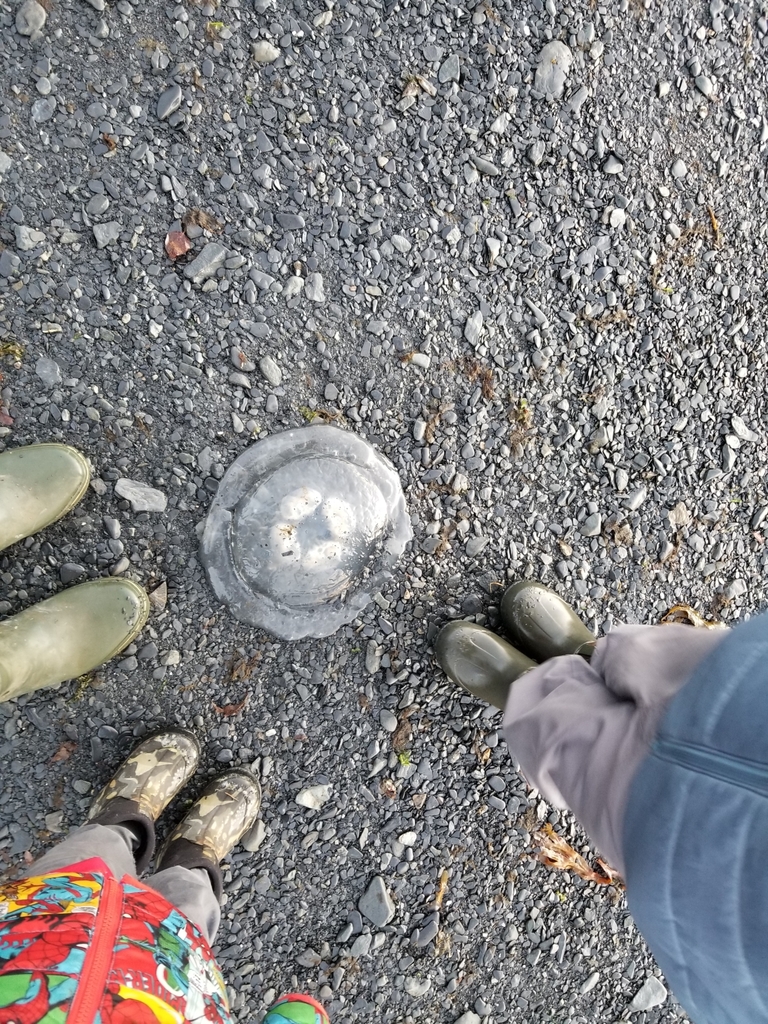
(c) Matt Muir, some rights reserved (CC BY) · licence
Family: Ulmaridae · Class: Scyphozoa · Order: Semaeostomeae
Aurelia labiata (Greater Moon Jelly) is a California animal in the Ulmaridae family.
The Greater Moon Jelly is a large scyphozoan jellyfish native to the northern Pacific Ocean. Bell diameter typically ranges from 10 to 40 centimeters (4 to 16 inches), though specimens can reach up to 60 centimeters (24 inches) across. The translucent, dome-shaped bell displays four distinctive horseshoe-shaped reproductive organs (gonads) visible through the mesoglea. The bell margin features numerous short tentacles, while four oral arms extend from the central mouth. Coloration varies from nearly transparent to pale blue or pinkish hues, with the gonads often appearing white, yellow, or purple. Aurelia labiata occurs throughout the northeastern Pacific, ranging from Alaska south to California. The species is commonly found in coastal waters, bays, and estuaries along the entire California coastline. Historical records document populations in San Francisco Bay, Monterey Bay, and Southern California coastal waters. The species demonstrates seasonal abundance patterns, with peak populations typically observed during late summer months. This jellyfish inhabits marine and estuarine environments, tolerating a wide range of salinity conditions from full seawater to brackish environments. Greater Moon Jellies are typically found in surface waters and the upper water column, though they can occur throughout the water column depending on prey availability and environmental conditions. They prefer areas with moderate water movement and are often associated with upwelling zones and nutrient-rich coastal waters. The species can tolerate temperatures ranging from approximately 6 to 31 degrees Celsius (43 to 88 degrees Fahrenheit). Greater Moon Jellies are planktivorous, feeding primarily on small crustaceans, fish larvae, and other zooplankton. They capture prey using nematocysts (stinging cells) located on their tentacles and oral arms. The species exhibits a typical cnidarian life cycle, alternating between a sessile polyp stage and the free-swimming medusa stage. Polyps undergo asexual reproduction through budding, while adult medusae reproduce sexually. Spawning typically occurs during warmer months, with fertilized eggs developing into planula larvae that settle and develop into polyps. Population dynamics show significant seasonal and interannual variation, often correlating with oceanographic conditions and prey availability. In San Francisco Bay monitoring programs, Aurelia labiata abundance fluctuates considerably, with the species sometimes representing a significant component of the gelatinous zooplankton biomass. Climate variability, including El Niño and La Niña events, influences population patterns through effects on water temperature, nutrient availability, and prey distribution. Currently, Aurelia labiata lacks federal or state conservation listing status. However, like many marine species, it faces potential threats from climate change, ocean acidification, and coastal development. The species serves as an important component of marine food webs, both as predator and prey. Blooms of moon jellies can impact fisheries and coastal ecosystems, while the jellies themselves provide food for sea turtles, ocean sunfish, and other marine predators.
Classification
Class: Scyphozoa · Order: Semaeostomeae · Family: Ulmaridae
Frequently asked questions
How is Aurelia labiata classified?
Aurelia labiata belongs to class Scyphozoa, order Semaeostomeae, family Ulmaridae.
What family does Aurelia labiata belong to?
Aurelia labiata is in the Ulmaridae family.
What is Aurelia labiata?
The Greater Moon Jelly is a large scyphozoan jellyfish native to the northern Pacific Ocean.
Is Aurelia labiata found in California?
Yes. Aurelia labiata is recorded in California in The California Species Project's catalogue.
Related species
Other California species in the same genus, family, or bioregion.
Data from The California Species Project — 14,000+ California species with verified data from CNPS, CDFW, USFWS, and more.