Autoplusia egenoides
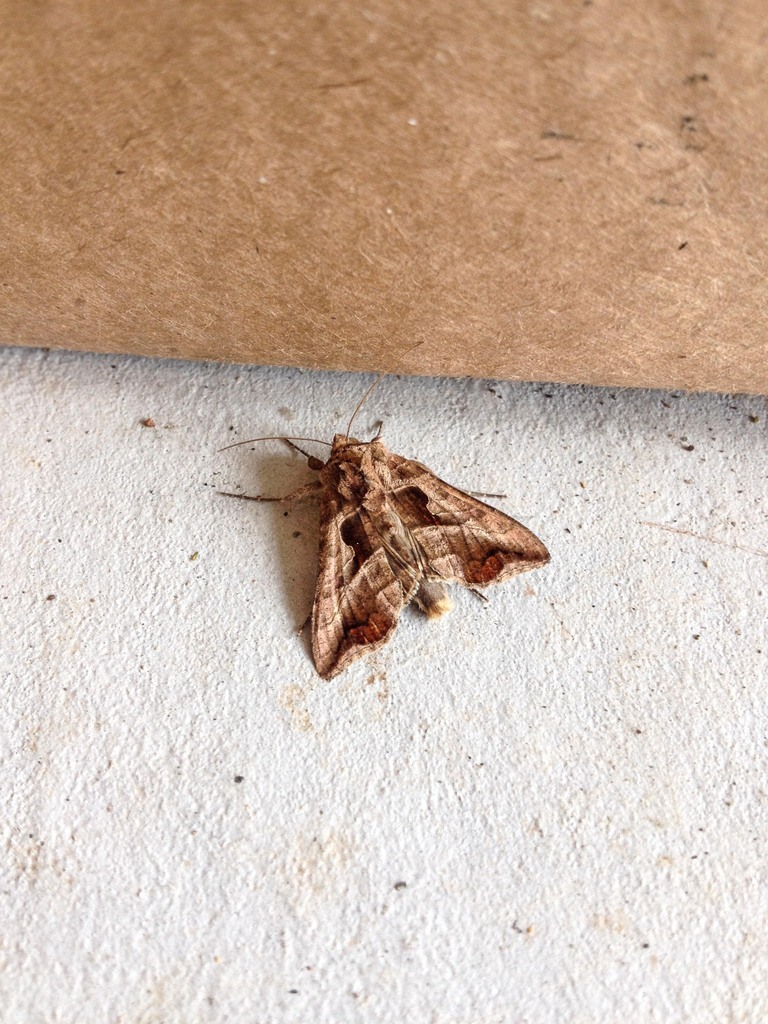
(c) Taji, some rights reserved (CC BY) · licence
Family: Noctuidae · Class: Insecta · Order: Lepidoptera
Autoplusia egenoides is a California animal in the Noctuidae family.
Autoplasia egenoides is a moth species in the family Noctuidae, subfamily Plusiinae. This species belongs to the genus Autoplasia, which comprises several North American noctuid moths characterized by their metallic wing markings and nocturnal habits. The species was originally described by taxonomists studying the diverse noctuid fauna of western North America. The adult moths display the typical plusiinae wing pattern with forewings that are brownish-gray to dark brown in coloration. Like other members of the genus, the forewings likely exhibit metallic silver or golden markings, though specific morphological details for this species require verification from specimen studies. The wingspan measurements and detailed wing pattern descriptions have not been comprehensively documented in readily accessible literature. Adults are presumed to be nocturnal, following the behavioral patterns typical of noctuidae moths. The geographic range of Autoplasia egenoides appears to be centered in western North America, though precise distribution boundaries remain unclear from available sources. The species may occur in California based on its taxonomic classification and the geographic patterns of related Autoplasia species, but specific locality records and county-level distributions require verification through museum collections and field surveys. Habitat preferences for this species have not been well-documented in available literature. Most Plusiinae moths are associated with specific host plants and occur in habitats ranging from coastal areas to mountainous regions. The elevation range, vegetation associations, and microhabitat requirements for Autoplasia egenoides remain to be thoroughly studied and documented. The life cycle and ecological behavior of Autoplasia egenoides follow the general pattern of noctuidae moths, with complete metamorphosis including egg, larval, pupal, and adult stages. The timing of adult flight periods, larval host plant relationships, and reproductive biology have not been specifically documented for this species. Most plusiinae moths have larvae that feed on herbaceous plants, and adults are attracted to artificial lights during nocturnal activity periods. The conservation status of Autoplasia egenoides has not been formally evaluated by state or federal agencies. The species does not appear on current endangered species lists or conservation priority rankings. Population trends, threat assessments, and conservation needs remain undetermined due to limited ecological and distributional data. Further research is needed to establish baseline population information, habitat requirements, and potential conservation concerns for this species.
Classification
Class: Insecta · Order: Lepidoptera · Family: Noctuidae
Frequently asked questions
How is Autoplusia egenoides classified?
Autoplusia egenoides belongs to class Insecta, order Lepidoptera, family Noctuidae.
What family does Autoplusia egenoides belong to?
Autoplusia egenoides is in the Noctuidae family.
What is Autoplusia egenoides?
Autoplasia egenoides is a moth species in the family Noctuidae, subfamily Plusiinae.
Is Autoplusia egenoides found in California?
Yes. Autoplusia egenoides is recorded in California in The California Species Project's catalogue.
Related species
Other California species in the same genus, family, or bioregion.
Data from The California Species Project — 14,000+ California species with verified data from CNPS, CDFW, USFWS, and more.