Autoplusia olivacea
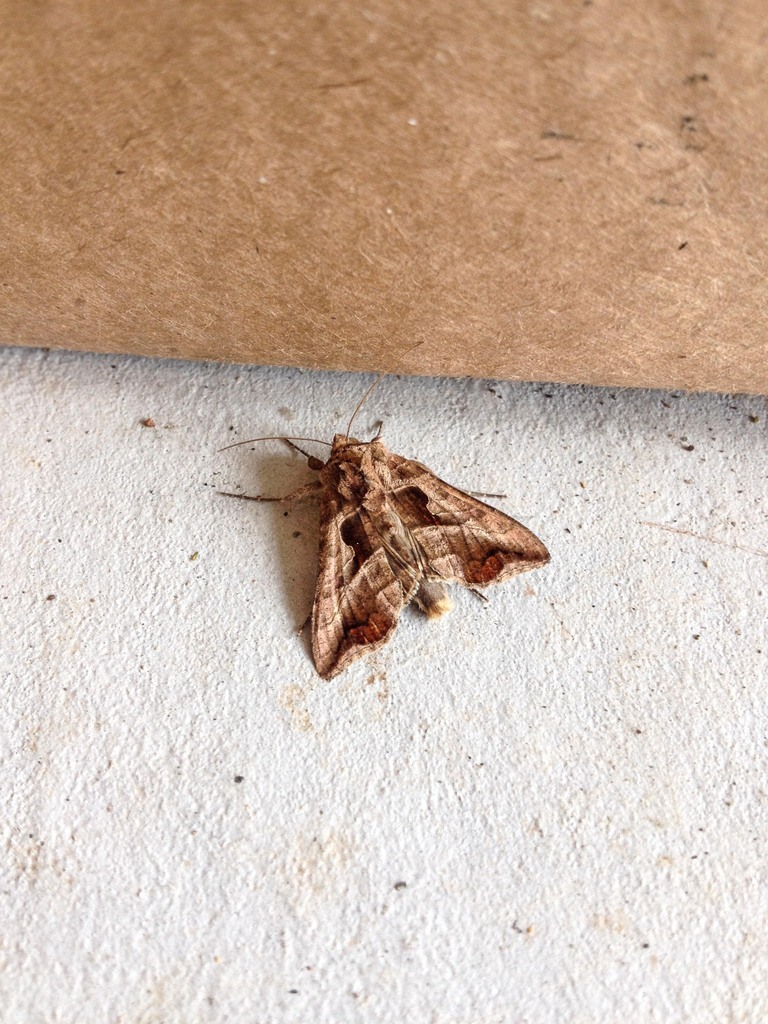
(c) Taji, some rights reserved (CC BY) · licence
Family: Noctuidae · Class: Insecta · Order: Lepidoptera
Autoplusia olivacea is a California animal in the Noctuidae family.
Autoplusia olivacea is a nocturid moth species in the subfamily Plusiinae, characterized by the metallic markings typical of looper moths in this group. Adults display forewings with a brownish-olive ground color, from which the species derives its scientific name. The forewings typically measure 15-18 mm in length and feature the distinctive silvery or golden metallic patches characteristic of Autoplusia species. The hindwings are pale gray to white with darkened margins. Males can be distinguished from females by their more feathery antennae and slightly smaller size. The species occurs in western North America, with records from California, Oregon, Washington, and British Columbia. In California, Autoplusia olivacea has been documented from coastal and inland regions, including the Central Valley and Sierra Nevada foothills. The species appears to have a relatively broad but patchy distribution, with populations often localized around suitable host plants. Historical records suggest the species was more widely distributed, though current population status remains poorly documented. Autoplusia olivacea inhabits a variety of open habitats including grasslands, meadows, agricultural areas, and disturbed sites. The species shows a preference for areas with abundant flowering plants that serve as nectar sources for adults. Elevation records range from sea level to approximately 1,500 meters (4,900 feet), though most observations occur below 1,000 meters. The habitat requirements appear closely tied to the presence of suitable larval host plants, which include various herbaceous species in the families Asteraceae and Fabaceae. Adult moths are primarily nocturnal and are attracted to artificial lights and flowering plants. Flight period extends from late spring through early fall, with peak activity typically occurring from June through August. Females deposit eggs singly on host plant leaves, where larvae develop as semi-loopers, characteristic of the plusiinae subfamily. Caterpillars feed on foliage and may complete development through multiple instars over 4-6 weeks. The species likely overwinters as pupae in soil or leaf litter, emerging as adults the following year. Autoplusia olivacea lacks formal conservation status at federal or state levels, and comprehensive population data are not available. Like many nocturnal Lepidoptera, the species faces potential threats from habitat loss due to agricultural intensification, urban development, and pesticide applications. Light pollution may also affect adult behavior and reproduction. The species' dependence on native plant communities makes it vulnerable to invasive species and habitat fragmentation. Climate change may alter the distribution of suitable habitat and host plants. Without targeted surveys, the current conservation status remains uncertain, highlighting the need for systematic monitoring of lesser-known moth species in California's diverse ecosystems.
Classification
Class: Insecta · Order: Lepidoptera · Family: Noctuidae
Frequently asked questions
How is Autoplusia olivacea classified?
Autoplusia olivacea belongs to class Insecta, order Lepidoptera, family Noctuidae.
What family does Autoplusia olivacea belong to?
Autoplusia olivacea is in the Noctuidae family.
What is Autoplusia olivacea?
Autoplusia olivacea is a nocturid moth species in the subfamily Plusiinae, characterized by the metallic markings typical of looper moths in this group.
Is Autoplusia olivacea found in California?
Yes. Autoplusia olivacea is recorded in California in The California Species Project's catalogue.
Related species
Other California species in the same genus, family, or bioregion.
Data from The California Species Project — 14,000+ California species with verified data from CNPS, CDFW, USFWS, and more.