Axion plagiatum
Twice-struck Lady Beetle
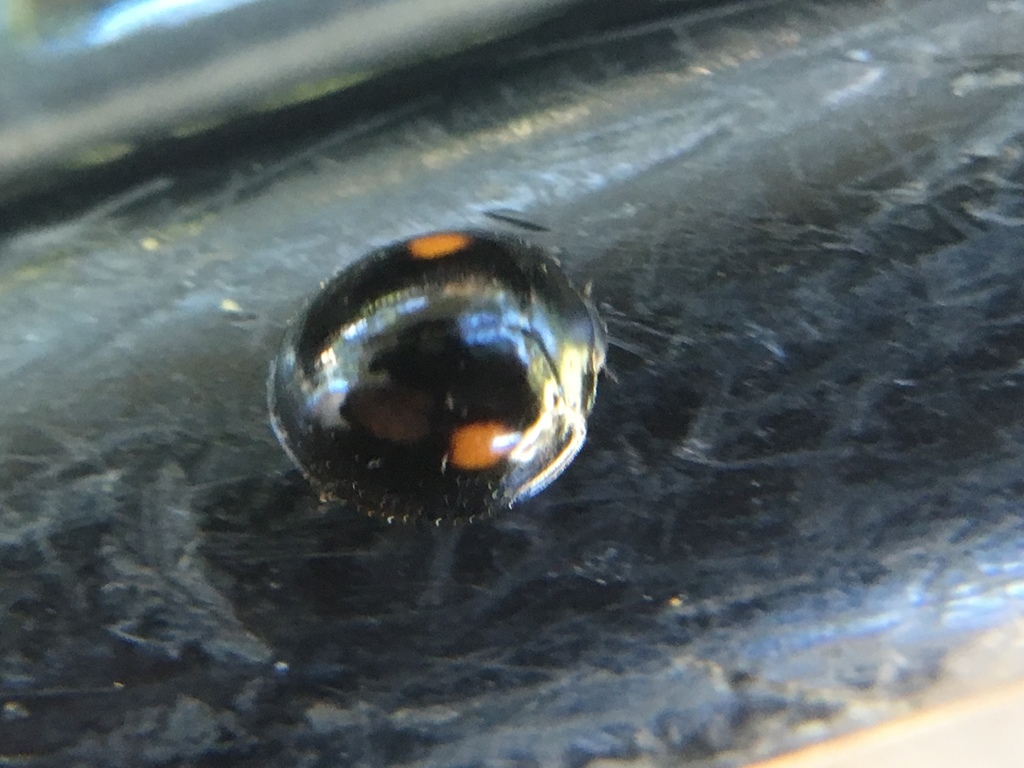
(c) Zinogre, some rights reserved (CC BY-SA) · licence
Family: Coccinellidae · Class: Insecta · Order: Coleoptera
Axion plagiatum (Twice-struck Lady Beetle) is a California animal in the Coccinellidae family.
The Twice-struck Lady Beetle is a small predatory beetle in the family Coccinellidae. As a member of the lady beetle family, this species exhibits the characteristic oval, dome-shaped body form typical of coccinellids, though specific measurements and detailed morphological descriptions have not been well documented in the available literature. This species occurs in North America, though its precise distribution and range limits require further documentation. According to NatureServe Explorer, Axion plagiatum has a global conservation rank of G5 (Secure), indicating stable populations across its range (NatureServe 2025). The species appears in the U.S. Fish and Wildlife Service taxonomic database, though it currently lacks federal conservation status designation. Specific habitat requirements for the Twice-struck Lady Beetle have not been thoroughly documented in scientific literature. Like most coccinellids, this species likely inhabits areas where prey species are abundant, potentially including gardens, agricultural areas, forests, and grasslands. Lady beetles generally require suitable overwintering sites such as leaf litter, rock crevices, or bark, though the specific microhabitat preferences of A. plagiatum remain unstudied. As a member of Coccinellidae, the Twice-struck Lady Beetle is presumed to be predatory, feeding primarily on soft-bodied insects such as aphids, scale insects, and other small arthropods. Lady beetles undergo complete metamorphosis, with eggs laid near prey colonies, larvae developing through multiple instars while actively feeding on prey, and pupation occurring on plant surfaces or in protected locations. Adults typically emerge in spring or early summer, though the specific phenology and reproductive biology of A. plagiatum have not been detailed in published studies. Most coccinellids are univoltine or bivoltine, producing one to two generations per year depending on climate and prey availability. The conservation status of the Twice-struck Lady Beetle appears stable based on its G5 ranking from NatureServe. Unlike many native beneficial insects, this species does not appear to face immediate conservation concerns. However, like other native lady beetles, A. plagiatum may be affected by habitat loss, pesticide applications, and competition from introduced coccinellid species. The widespread introduction of non-native lady beetles for biological control has created complex ecological interactions that may impact native species populations, though specific effects on A. plagiatum have not been studied. Detailed ecological studies of this species are lacking. Research on coccinellid natural enemies indicates that lady beetles face pressure from various pathogens, parasitoids, and other natural enemies, though their population-level impacts are generally limited (BugGuide contributors). The species would benefit from targeted research on its distribution, habitat requirements, prey preferences, and seasonal activity patterns to better understand its ecological role and conservation needs.
Classification
Class: Insecta · Order: Coleoptera · Family: Coccinellidae
Frequently asked questions
How is Axion plagiatum classified?
Axion plagiatum belongs to class Insecta, order Coleoptera, family Coccinellidae.
What family does Axion plagiatum belong to?
Axion plagiatum is in the Coccinellidae family.
What is Axion plagiatum?
The Twice-struck Lady Beetle is a small predatory beetle in the family Coccinellidae.
Is Axion plagiatum found in California?
Yes. Axion plagiatum is recorded in California in The California Species Project's catalogue.
Related species
Other California species in the same genus, family, or bioregion.
Data from The California Species Project — 14,000+ California species with verified data from CNPS, CDFW, USFWS, and more.