Axis axis
Axis Deer
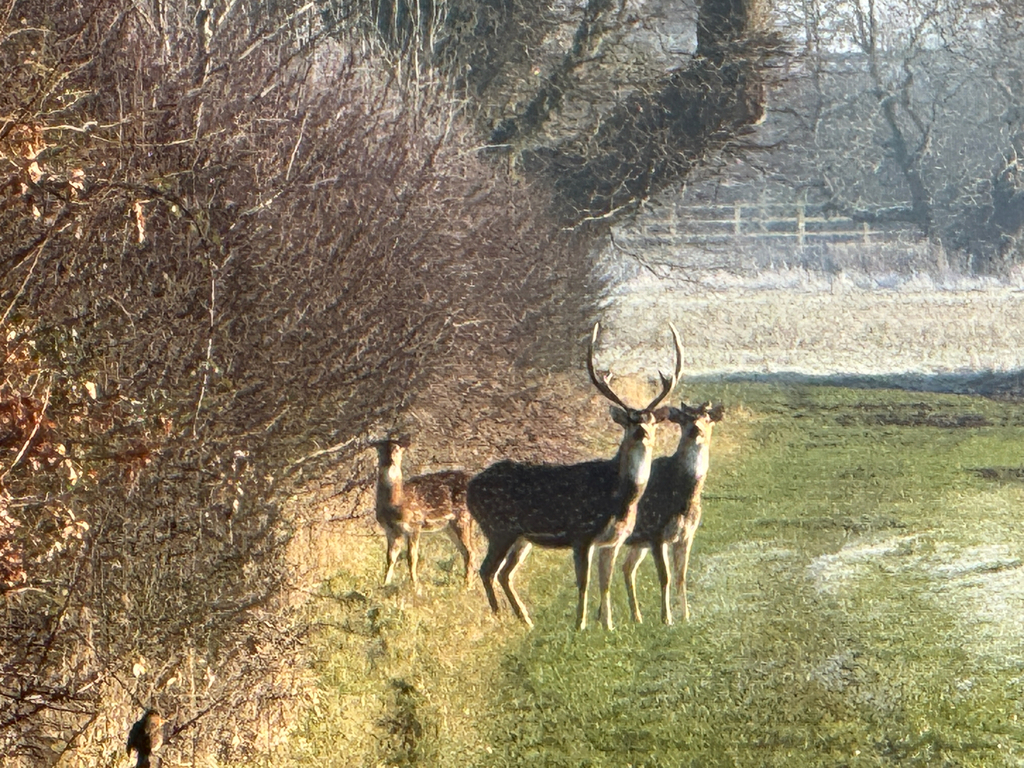
(c) William Stephens, some rights reserved (CC BY) · licence
Family: Cervidae · Class: Mammalia · Order: Artiodactyla
Axis axis (Axis Deer) is a California animal in the Cervidae family.
The axis deer, also known as the spotted deer or chital, is a medium-sized cervid native to the Indian subcontinent. Adult males measure 90 to 110 cm (35 to 43 inches) at shoulder height and weigh 75 to 100 kg (165 to 220 pounds), while females are smaller at 65 to 75 cm (26 to 30 inches) tall and 35 to 45 kg (77 to 99 pounds). The species displays pronounced sexual dimorphism, with males bearing three-tined antlers that can reach 75 cm (30 inches) in length. Both sexes exhibit a distinctive golden-brown coat marked with white spots arranged in longitudinal rows, though males develop darker coloration during breeding season. A prominent white throat patch and white underparts distinguish axis deer from other cervids. Axis deer are non-native to California, having been introduced from their native range in India, Nepal, Bhutan, Bangladesh, and Sri Lanka. Free-ranging populations have become established on several California islands and mainland locations. The species was first introduced to Point Reyes National Seashore in Marin County in 1947-1948, where a population persisted until eradication efforts in the 1990s. Currently, the largest California population occurs on the Hawaiian island of Molokai, while smaller populations exist in Texas and other states. Captive populations are maintained in zoos and private facilities throughout California. In their native habitat, axis deer occupy tropical and subtropical grasslands, savannas, and deciduous forests from sea level to 1,500 meters (4,900 feet) elevation. They prefer areas with open grasslands interspersed with woodland cover, requiring access to permanent water sources. In California's Mediterranean climate, introduced populations have adapted to coastal scrublands, oak woodlands, and grasslands. The species demonstrates high tolerance for various vegetation types but requires areas with adequate forage and water availability. Axis deer are primarily grazers, feeding on grasses, herbs, fallen fruits, and occasionally browse on shrubs and trees. They exhibit crepuscular activity patterns, being most active during dawn and dusk hours. Unlike many temperate deer species, axis deer can breed year-round in suitable climates, though peak breeding occurs during cooler months. Females give birth to a single spotted fawn after a gestation period of 210 to 225 days. Social structure consists of loose herds that may segregate by sex outside breeding season. As a non-native species in California, axis deer are not afforded protection under state or federal endangered species legislation. Management focuses on preventing establishment of new wild populations and controlling existing populations where they occur. The species' adaptability and reproductive potential make it a concern for native ecosystem integrity, as axis deer may compete with native ungulates and alter vegetation communities through browsing pressure. According to the California Department of Fish and Wildlife, permits are required for possession and transport of axis deer, and regulations prohibit release into the wild.
Classification
Class: Mammalia · Order: Artiodactyla · Family: Cervidae
Frequently asked questions
How is Axis axis classified?
Axis axis belongs to class Mammalia, order Artiodactyla, family Cervidae.
What family does Axis axis belong to?
Axis axis is in the Cervidae family.
What is Axis axis?
The axis deer, also known as the spotted deer or chital, is a medium-sized cervid native to the Indian subcontinent.
Is Axis axis found in California?
Yes. Axis axis is recorded in California in The California Species Project's catalogue.
Related species
Other California species in the same genus, family, or bioregion.
Data from The California Species Project — 14,000+ California species with verified data from CNPS, CDFW, USFWS, and more.