Aythya americana
Redhead
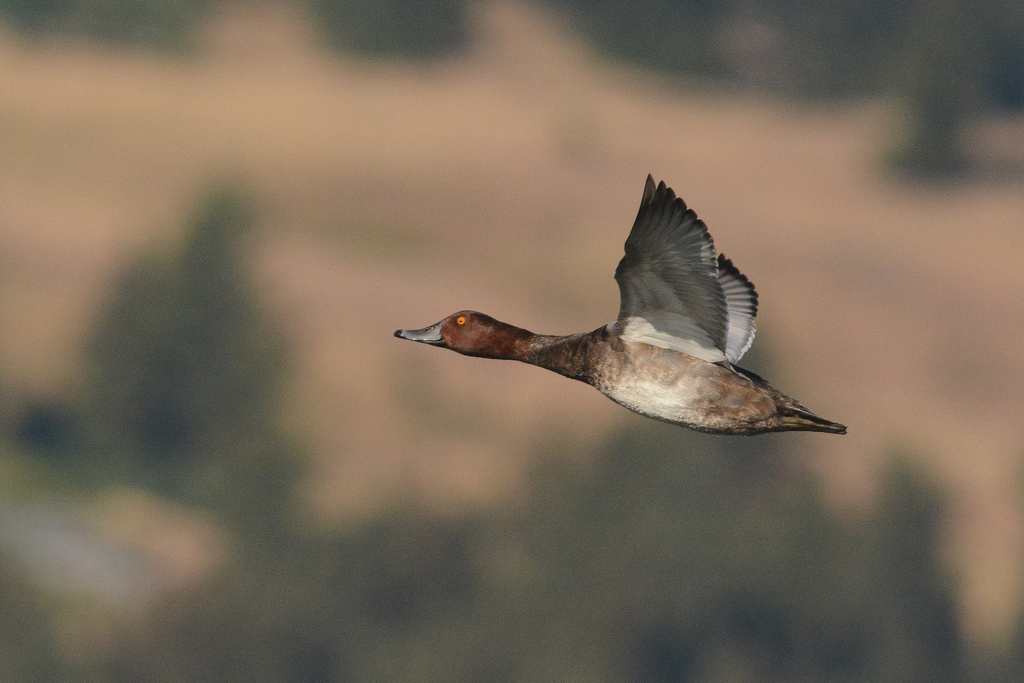
no rights reserved · CC0
Family: Anatidae · Class: Aves · Order: Anseriformes
Conservation status: G5 S3
Aythya americana (Redhead) is a California animal in the Anatidae family.
The Redhead (Aythya americana) is a medium-sized diving duck native to North America. Adult males measure 46-56 cm (18-22 inches) in length with a wingspan of 84-89 cm (33-35 inches), weighing 1.0-1.4 kg (2.2-3.1 pounds). Breeding males display a distinctive chestnut-red head and neck, black breast and tail coverts, and gray back and sides. The bill is blue-gray with a black tip. Females are brown overall with a darker crown and back, lighter sides, and the same blue-gray bill pattern. Both sexes show white wing stripes visible in flight. Non-breeding males resemble females but retain some gray coloration on the back. Redheads breed across the northern Great Plains, prairie pothole region, and parts of the intermountain west, extending into southern Canada. The species winters along the Atlantic, Pacific, and Gulf coasts, with significant populations in California's Central Valley, San Francisco Bay, and coastal lagoons. According to the North American Bird Conservation Initiative, the breeding range has contracted by approximately 40% since the 1960s, primarily due to habitat loss in prairie regions. During breeding season, Redheads inhabit prairie potholes, shallow marshes, and seasonal wetlands with emergent vegetation. Optimal nesting habitat includes areas with 50-75% emergent cover, particularly bulrush (Scirpus spp.) and cattail (Typha spp.) stands. Water depths of 0.3-1.5 meters (1-5 feet) are preferred for foraging. Wintering birds utilize coastal bays, estuaries, large lakes, and reservoirs, often in areas with submerged aquatic vegetation beds. Redheads are diving ducks that feed primarily on aquatic invertebrates during breeding season and shift to a more plant-based diet during migration and winter. The diet includes amphipods, chironomid larvae, snails, and seeds of pondweeds (Potamogeton spp.), wild celery (Vallisneria americana), and other submerged aquatic vegetation. Breeding occurs from May through July, with females constructing nests in dense emergent vegetation over water. Clutch size ranges from 6-15 eggs, with an incubation period of 24-28 days. Redheads are notable for their brood parasitism behavior, with females frequently laying eggs in nests of other waterfowl species, particularly Canvasback and other diving ducks. The species is not federally listed but is classified as G5 (globally secure) by NatureServe. Continental populations are estimated at 600,000-1,000,000 individuals, with numbers fluctuating based on prairie wetland conditions. The North American Waterfowl Management Plan identifies habitat loss as the primary conservation concern, with over 50% of prairie pothole breeding habitat lost to agricultural conversion. Climate change poses additional threats through altered precipitation patterns affecting wetland hydrology. Conservation efforts focus on wetland restoration through programs like the North American Waterfowl Management Plan and protection of key wintering areas in California's Central Valley.
Classification
Class: Aves · Order: Anseriformes · Family: Anatidae
Conservation status
G5 S3
Frequently asked questions
How is Aythya americana classified?
Aythya americana belongs to class Aves, order Anseriformes, family Anatidae.
What family does Aythya americana belong to?
Aythya americana is in the Anatidae family.
Is Aythya americana protected or of conservation concern?
Aythya americana carries the following status: G5 S3.
What is Aythya americana?
The Redhead (Aythya americana) is a medium-sized diving duck native to North America.
Is Aythya americana found in California?
Yes. Aythya americana is recorded in California in The California Species Project's catalogue.
Related species
Other California species in the same genus, family, or bioregion.
Data from The California Species Project — 14,000+ California species with verified data from CNPS, CDFW, USFWS, and more.