Aythya marila
Greater Scaup
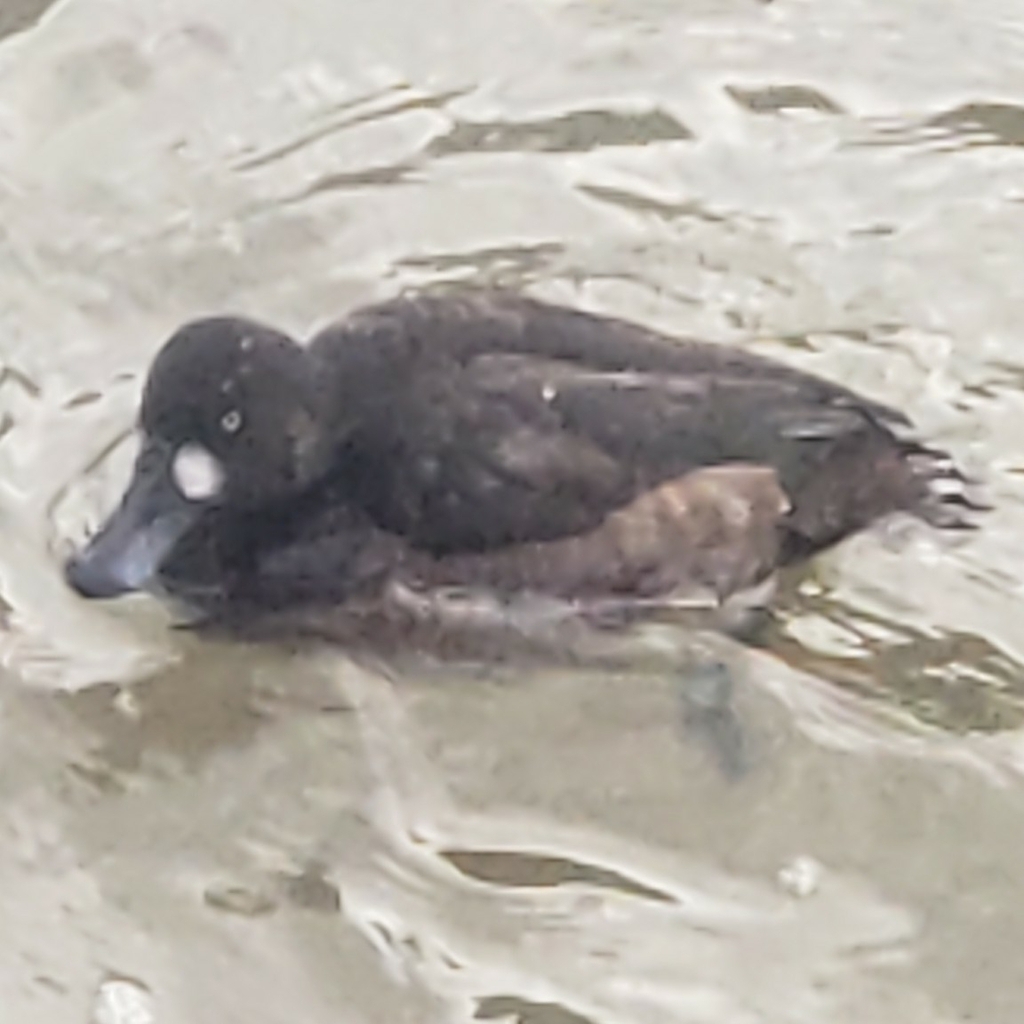
(c) Gavin Slater, some rights reserved (CC BY) · licence
Family: Anatidae · Class: Aves · Order: Anseriformes
Aythya marila (Greater Scaup) is a California animal in the Anatidae family.
The Greater Scaup is a medium-sized diving duck with pronounced sexual dimorphism in plumage. Males measure 43 to 51 cm (17 to 20 inches) in length and weigh 900 to 1,300 grams (2.0 to 2.9 pounds). During breeding season, males display a black head with greenish iridescence, black breast and rump, and white back and sides. Females are brown overall with a distinctive white patch at the base of the bill. Both sexes have blue-gray bills and yellow eyes. The species is distinguished from the closely related Lesser Scaup by its larger size, more rounded head profile, and the white wing stripe that extends onto the primaries. Greater Scaup breed across Alaska and northern Canada, with the majority of the North American population nesting in Alaska. The species winters along both Pacific and Atlantic coasts of North America. In California, Greater Scaup are regular winter visitors and migrants, present from October through April. They occur in coastal waters, large inland lakes, and reservoirs throughout the state. According to Christmas Bird Count data, the species is most numerous in San Francisco Bay, Monterey Bay, and coastal southern California waters. During winter in California, Greater Scaup inhabit marine environments including bays, estuaries, and nearshore coastal waters to depths of 8 meters (26 feet). They also use large freshwater bodies such as reservoirs and lakes, particularly those with extensive open water areas. The species shows preference for waters with sandy or muddy bottoms that support abundant benthic invertebrates. Salton Sea historically supported significant wintering populations, though numbers have declined with changing water levels and salinity. Greater Scaup are diving ducks that feed primarily on mollusks, crustaceans, aquatic insects, and small fish. They typically dive to depths of 1 to 3 meters (3 to 10 feet) but can reach depths up to 8 meters when necessary. The species forms large rafts during winter, sometimes numbering in the thousands. Breeding occurs on freshwater lakes and ponds in the boreal forest and Arctic tundra. Females construct nests on the ground near water, laying 8 to 11 olive-buff eggs between May and July. Incubation lasts 24 to 28 days, with females providing all parental care. Greater Scaup are not federally listed but have experienced continent-wide population declines. According to the North American Bird Conservation Initiative, the species has declined by approximately 40% since 1970. Breeding Bird Survey data indicate continued downward trends across much of the species' range. Primary threats include habitat loss on breeding grounds due to climate change and development, pollution in wintering areas, and lead poisoning from ingested fishing tackle. In California, populations face additional pressures from coastal development, water diversions affecting inland wintering sites, and disturbance from recreational activities in marine environments.
Classification
Class: Aves · Order: Anseriformes · Family: Anatidae
Frequently asked questions
How is Aythya marila classified?
Aythya marila belongs to class Aves, order Anseriformes, family Anatidae.
What family does Aythya marila belong to?
Aythya marila is in the Anatidae family.
What is Aythya marila?
The Greater Scaup is a medium-sized diving duck with pronounced sexual dimorphism in plumage.
Is Aythya marila found in California?
Yes. Aythya marila is recorded in California in The California Species Project's catalogue.
Related species
Other California species in the same genus, family, or bioregion.
Data from The California Species Project — 14,000+ California species with verified data from CNPS, CDFW, USFWS, and more.