Aythya valisineria
Canvasback
no rights reserved · CC0
Family: Anatidae · Class: Aves · Order: Anseriformes
Conservation status: G5 S2
Aythya valisineria (Canvasback) is a California animal in the Anatidae family.
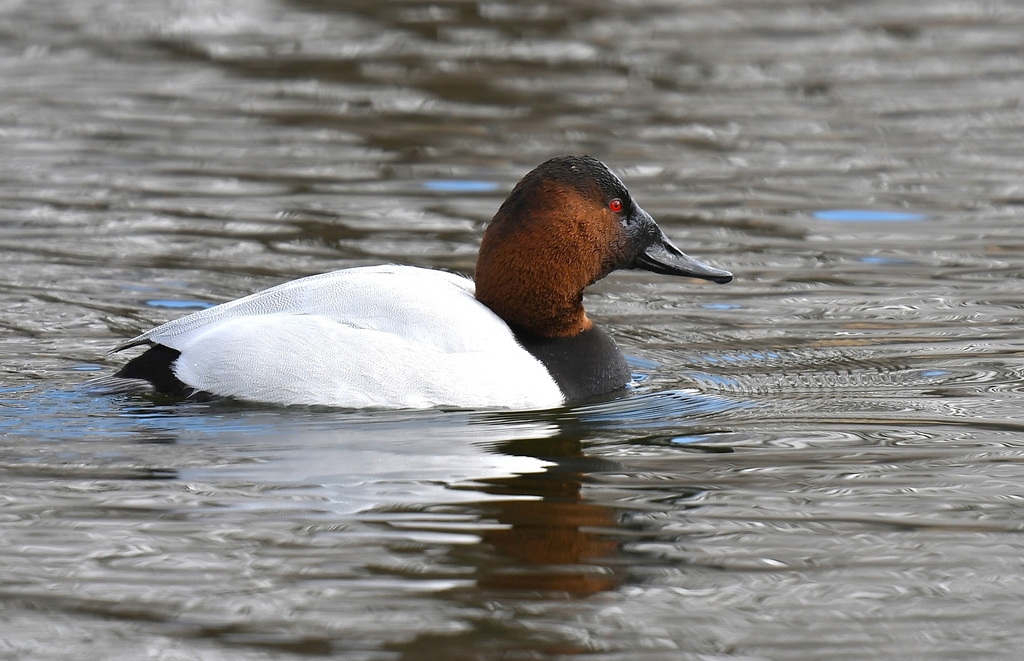
The Canvasback is a large diving duck with distinctive wedge-shaped profile and sloping head that merges seamlessly with its bill. Males measure 48-56 cm (19-22 inches) in length with a wingspan of 79-89 cm (31-35 inches), while females are slightly smaller at 46-53 cm (18-21 inches). Breeding males display a chestnut-red head and neck, black breast and tail coverts, and whitish back and sides that give the species its common name. The bill is black and distinctively long and sloping. Females and non-breeding males show brown heads and necks with grayish backs and lighter underparts. Both sexes have red eyes and dark gray legs. Canvasbacks breed primarily in the prairie pothole region of central North America, from Alaska through the northern Great Plains. In California, they are present primarily as wintering visitors and passage migrants from October through March. The species concentrates in the Central Valley, San Francisco Bay, and coastal lagoons during winter months. Historical breeding records exist for northeastern California, but current breeding populations are extremely limited or absent in the state. Wintering Canvasbacks favor large, deep freshwater lakes, reservoirs, and brackish bays where they can dive for preferred food sources. They typically inhabit waters 1-3 meters (3-10 feet) deep with abundant submerged aquatic vegetation. In California, significant wintering concentrations occur in Suisun Bay, San Pablo Bay, and Central Valley wildlife refuges including Sacramento and San Joaquin National Wildlife Refuges. The species shows strong site fidelity to traditional wintering areas. Canvasbacks are specialized diving ducks that feed primarily on submerged aquatic vegetation, particularly wild celery (Vallisneria americana), pondweeds, and other aquatic plants. They dive to depths of 1-3 meters using powerful legs positioned far back on their bodies. During breeding season, diet shifts to include more invertebrates such as chironomid larvae and amphipods. Breeding occurs from May through July on prairie wetlands, with females laying 6-9 olive-gray eggs in basket-like nests constructed over water in dense emergent vegetation. Incubation lasts 24-28 days, and ducklings fledge at 60-70 days. The Canvasback is not federally listed but is classified as a Species of Special Concern by various conservation organizations due to population declines linked to habitat loss. North American populations declined significantly during the 20th century due to drainage of prairie breeding habitats and drought cycles. According to the North American Bird Conservation Initiative, continental populations have shown some recovery since the 1980s following implementation of the North American Waterfowl Management Plan and wetland conservation programs. In California, the species maintains stable wintering populations, with Christmas Bird Count data indicating numbers fluctuate based on water conditions and food availability. Climate change poses potential future threats through altered precipitation patterns affecting both breeding and wintering habitats.
Classification
Class: Aves · Order: Anseriformes · Family: Anatidae
Conservation status
G5 S2
Frequently asked questions
How is Aythya valisineria classified?
Aythya valisineria belongs to class Aves, order Anseriformes, family Anatidae.
What family does Aythya valisineria belong to?
Aythya valisineria is in the Anatidae family.
Is Aythya valisineria protected or of conservation concern?
Aythya valisineria carries the following status: G5 S2.
What is Aythya valisineria?
The Canvasback is a large diving duck with distinctive wedge-shaped profile and sloping head that merges seamlessly with its bill.
Is Aythya valisineria found in California?
Yes. Aythya valisineria is recorded in California in The California Species Project's catalogue.
Related species
Other California species in the same genus, family, or bioregion.
Data from The California Species Project — 14,000+ California species with verified data from CNPS, CDFW, USFWS, and more.