Baccha cognata
American Dainty
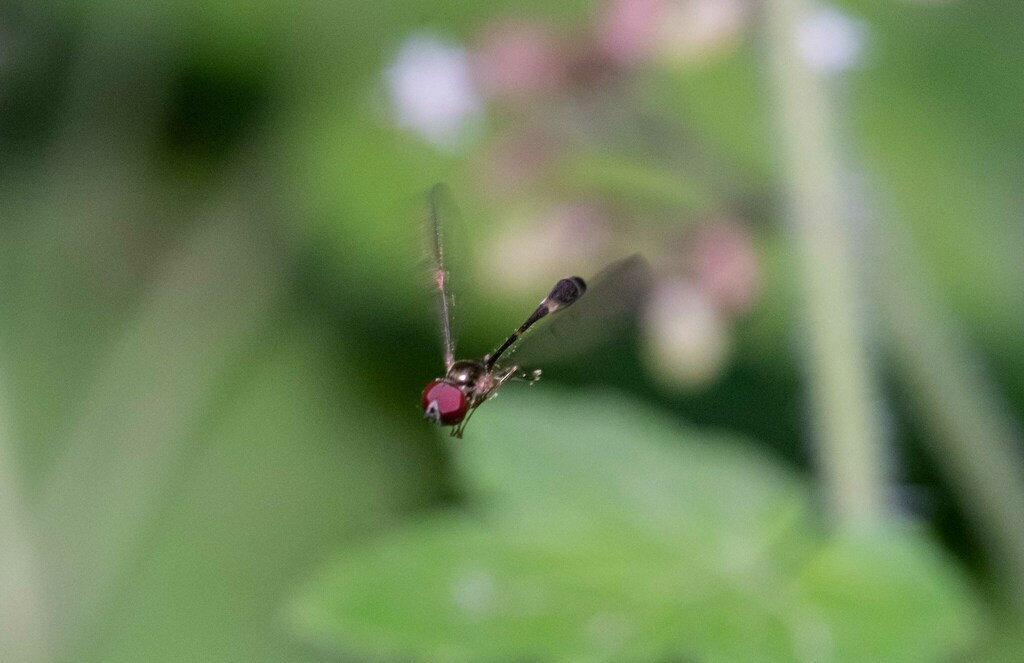
(c) Jeremiah Degenhardt, some rights reserved (CC BY) · licence
Family: Syrphidae · Class: Insecta · Order: Diptera
Baccha cognata (American Dainty) is a California animal in the Syrphidae family.
The American Dainty (Baccha cognata) is a small hover fly in the family Syrphidae, subfamily Syrphinae. This species exhibits the characteristic slender, wasp-like appearance typical of the genus Baccha, with a narrow waist and elongated abdomen. Adults display yellow and black coloration patterns that provide Batesian mimicry of wasps, offering protection from predators. Sexual dimorphism is present, with females typically larger and more robust than males. The species measures approximately 6-10 millimeters in length, with clear wings that may show slight amber tinting. Baccha cognata occurs throughout much of North America, with its range extending from southern Canada south into the United States. The species has been documented across multiple western states, including California, Oregon, and other Pacific Coast regions. Distribution records from BugGuide indicate occurrences in Douglas County, Oregon, suggesting the species may be more widespread in the Pacific Northwest than previously documented (BugGuide 2010). In California, specific county-level distribution data remains limited, though the species likely occurs in suitable habitats throughout the state. The species inhabits diverse environments including woodlands, forest edges, gardens, and areas with abundant flowering plants. Adults are commonly found in association with aphid colonies, as their larvae are predatory on these soft-bodied insects. Habitat preferences include locations with mixed vegetation providing both nectar sources for adults and aphid prey for developing larvae. The species shows tolerance for human-modified environments and may be found in agricultural areas, parks, and suburban gardens where aphids are present. Adult American Dainty flies are active during warmer months, typically from late spring through early fall. Adults feed primarily on nectar and pollen from various flowering plants, serving as minor pollinators. Mating behavior involves aerial courtship displays typical of hover flies. Females deposit eggs singly near aphid colonies on plant stems and leaves. The larvae are aphidophagous, meaning they feed exclusively on aphids, making them beneficial biological control agents. Larvae are pale, maggot-like, and move through aphid colonies consuming prey. Development from egg to adult typically requires several weeks, with multiple generations possible per year in favorable climates. Adults demonstrate the characteristic hovering flight behavior of syrphid flies, remaining stationary in mid-air before darting to new locations. Baccha cognata currently holds no federal or state conservation listing status. According to NatureServe, the species maintains a global conservation rank of G4G5, indicating it is apparently secure to secure globally (NatureServe 2022). This ranking suggests stable populations with no immediate conservation concerns. The species' ability to utilize human-modified habitats and its role as an aphid predator may contribute to its stability. However, like many beneficial insects, populations could be affected by widespread pesticide use, habitat fragmentation, and climate change impacts on prey species availability. No specific conservation measures are currently in place for this species, though general habitat preservation and reduced pesticide use in agricultural and urban environments would benefit both the species and its ecological services.
Classification
Class: Insecta · Order: Diptera · Family: Syrphidae
Frequently asked questions
How is Baccha cognata classified?
Baccha cognata belongs to class Insecta, order Diptera, family Syrphidae.
What family does Baccha cognata belong to?
Baccha cognata is in the Syrphidae family.
What is Baccha cognata?
The American Dainty (Baccha cognata) is a small hover fly in the family Syrphidae, subfamily Syrphinae.
Is Baccha cognata found in California?
Yes. Baccha cognata is recorded in California in The California Species Project's catalogue.
Related species
Other California species in the same genus, family, or bioregion.
Data from The California Species Project — 14,000+ California species with verified data from CNPS, CDFW, USFWS, and more.