Bactra verutana
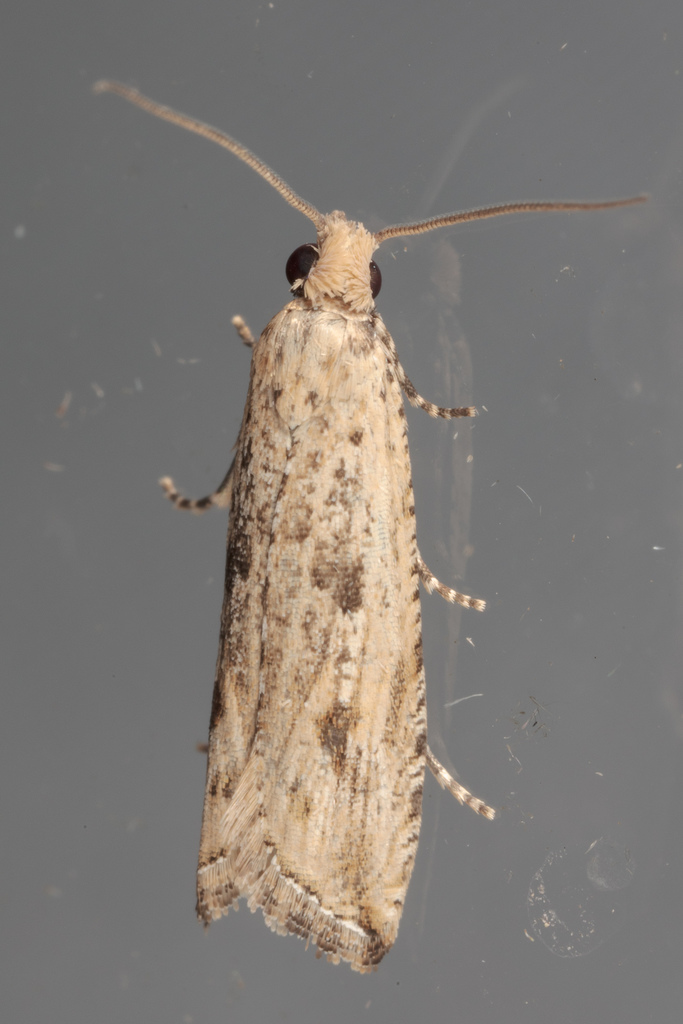
(c) Victor Engel, some rights reserved (CC BY) · licence
Family: Tortricidae · Class: Insecta · Order: Lepidoptera
Bactra verutana is a California animal in the Tortricidae family.
Bactra verutana is a small moth species in the family Tortricidae, commonly known as leafroller moths. This species belongs to a genus of microlepidoptera typically measuring 8-15 mm in wingspan when fully developed. Adult moths display the characteristic tortricid wing pattern with forewings that are generally brown to gray in coloration, often with darker crossbands or mottled markings that provide camouflage against bark and vegetation. The hindwings are typically paler, ranging from whitish to light gray. Like other Bactra species, B. verutana exhibits sexual dimorphism, with males often having more pronounced wing markings and slightly smaller overall size compared to females. The range and distribution of Bactra verutana within California remains poorly documented in the scientific literature. Most Bactra species are associated with specific host plants and have relatively restricted distributions tied to the availability of suitable larval food sources. The genus Bactra is represented in North America by several species, with some being more widely distributed while others show narrow endemic ranges. Habitat requirements for B. verutana likely center around the presence of appropriate host plants, as is typical for tortricid moths. Many Bactra species are associated with herbaceous plants in wetland margins, grasslands, or disturbed areas. The larvae typically feed within rolled or folded leaves, creating characteristic feeding shelters that give the family its common name of leafroller moths. Adults are most active during twilight hours and may be attracted to artificial lights. The life cycle of Bactra verutana follows the typical tortricid pattern of complete metamorphosis. Larvae are likely the primary feeding stage, creating leaf rolls or other shelters while consuming plant tissue. Pupation probably occurs within the larval feeding site or in nearby leaf litter. Adult flight periods for California Bactra species typically occur during spring and summer months, though specific timing varies by species and elevation. Mating likely involves pheromone communication, as is common throughout the Tortricidae family. The conservation status of Bactra verutana is not well established due to limited survey data and taxonomic uncertainty within the genus. Many microlepidoptera species remain understudied, making assessment of population trends and conservation needs challenging. Potential threats to tortricid moths include habitat loss from development and agriculture, invasive plant species that may displace native host plants, and pesticide applications in agricultural and urban areas. Climate change may also affect the distribution of both the moths and their host plants, potentially altering suitable habitat availability. Further taxonomic work and field surveys are needed to better understand the distribution, ecology, and conservation status of this species within California's diverse lepidopteran fauna.
Classification
Class: Insecta · Order: Lepidoptera · Family: Tortricidae
Frequently asked questions
How is Bactra verutana classified?
Bactra verutana belongs to class Insecta, order Lepidoptera, family Tortricidae.
What family does Bactra verutana belong to?
Bactra verutana is in the Tortricidae family.
What is Bactra verutana?
Bactra verutana is a small moth species in the family Tortricidae, commonly known as leafroller moths.
Is Bactra verutana found in California?
Yes. Bactra verutana is recorded in California in The California Species Project's catalogue.
Related species
Other California species in the same genus, family, or bioregion.
Data from The California Species Project — 14,000+ California species with verified data from CNPS, CDFW, USFWS, and more.