Bagisara buxea
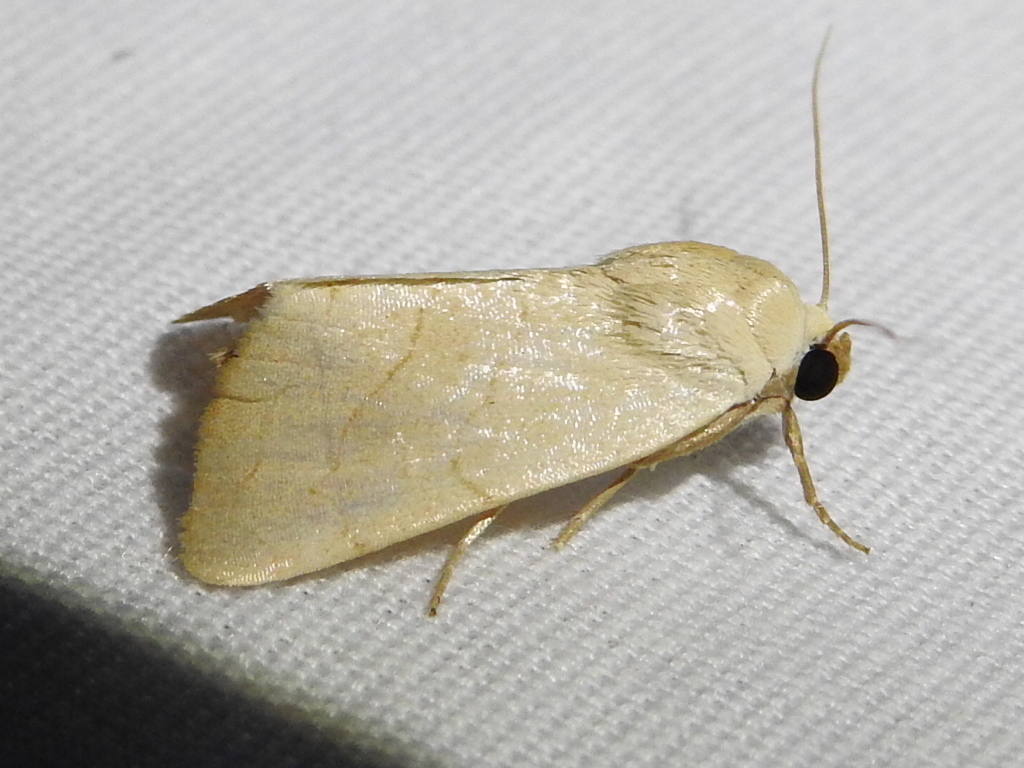
(c) Sam Kieschnick, some rights reserved (CC BY) · licence
Family: Noctuidae · Class: Insecta · Order: Lepidoptera
Bagisara buxea is a California animal in the Noctuidae family.
Bagisara buxea is a moth species in the family Noctuidae, commonly known as owlet moths or cutworm moths. This species belongs to a diverse family containing over 11,000 described species worldwide. The taxonomic classification places it within the order Lepidoptera, which encompasses all butterflies and moths. Limited information is available regarding the physical characteristics of Bagisara buxea. Like other members of the Noctuidae family, it likely exhibits the typical moth body plan with a robust thorax, feathery or thread-like antennae, and wings adapted for nocturnal flight. Most noctuid moths display cryptic coloration patterns that provide camouflage during daytime rest periods, though specific details about the wing patterns, size, and distinguishing features of B. buxea require further documentation. The geographic range and distribution of Bagisara buxea remain poorly documented in current literature. No verified records establish its presence in California or other specific regions. The species may have a restricted range, as is common among many lesser-known noctuid species, or it may represent a taxonomic entity requiring further verification and study. Habitat preferences for Bagisara buxea are not well-established in available sources. Noctuidae species typically inhabit diverse environments ranging from forests and grasslands to agricultural areas and urban settings. Many species in this family are associated with specific host plants during their larval stage, though the particular plant associations for B. buxea have not been documented. The larvae of noctuid moths commonly feed on herbaceous plants, shrubs, or trees, with feeding habits varying significantly among species. The behavioral ecology and life history of Bagisara buxea lack comprehensive documentation. Most noctuid moths are nocturnal, with adults active during evening and nighttime hours when they seek mates and nectar sources. The typical life cycle includes egg, larval (caterpillar), pupal, and adult stages, with the duration varying based on species and environmental conditions. Mating behaviors, flight periods, overwintering strategies, and reproductive patterns specific to B. buxea require additional research. The conservation status of Bagisara buxea cannot be determined due to insufficient data on its distribution, population size, and ecological requirements. The species lacks federal or state listing status, and no IUCN Red List assessment appears to exist. This absence of conservation information is common among many invertebrate species, particularly moths, which often receive limited research attention compared to more conspicuous taxa. The potential threats to this species, if any exist, remain unidentified without knowledge of its habitat requirements and geographic range. Further taxonomic verification, distribution surveys, and ecological studies would be necessary to assess any conservation needs for Bagisara buxea.
Classification
Class: Insecta · Order: Lepidoptera · Family: Noctuidae
Frequently asked questions
How is Bagisara buxea classified?
Bagisara buxea belongs to class Insecta, order Lepidoptera, family Noctuidae.
What family does Bagisara buxea belong to?
Bagisara buxea is in the Noctuidae family.
What is Bagisara buxea?
Bagisara buxea is a moth species in the family Noctuidae, commonly known as owlet moths or cutworm moths.
Is Bagisara buxea found in California?
Yes. Bagisara buxea is recorded in California in The California Species Project's catalogue.
Related species
Other California species in the same genus, family, or bioregion.
Data from The California Species Project — 14,000+ California species with verified data from CNPS, CDFW, USFWS, and more.