Balaenoptera acutorostrata
Minke Whale
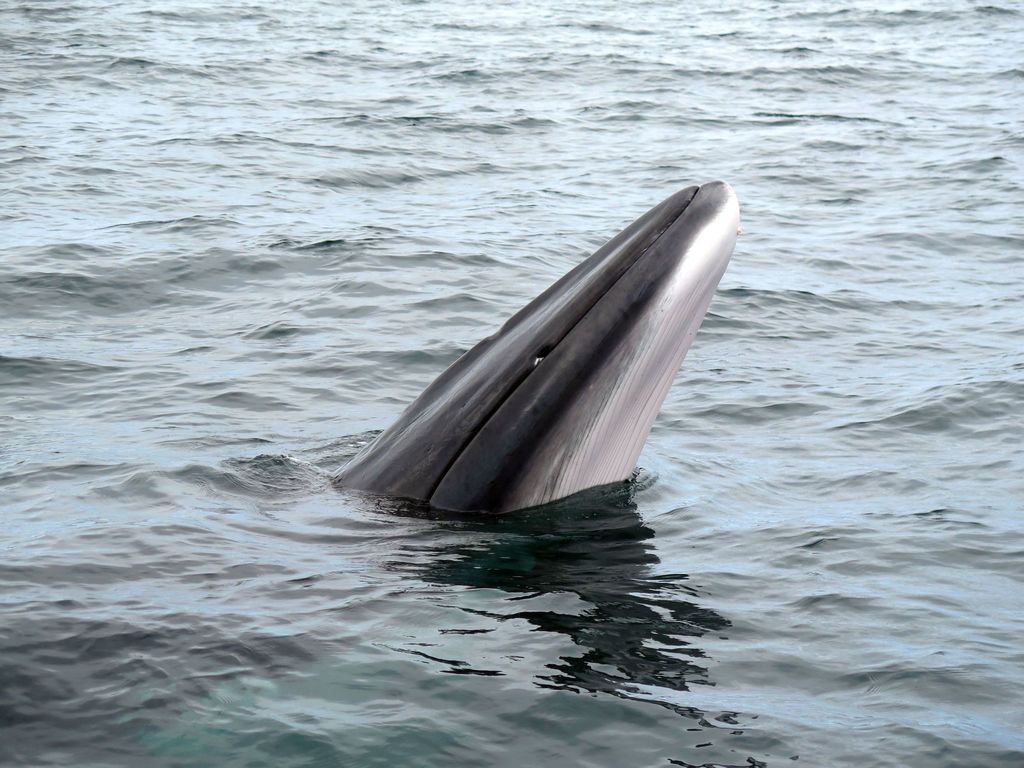
(c) Nils, some rights reserved (CC BY) · licence
Family: Balaenopteridae · Class: Mammalia · Order: Artiodactyla
Balaenoptera acutorostrata (Minke Whale) is a California animal in the Balaenopteridae family.
The minke whale is the smallest member of the rorqual whale family, with adults typically measuring 7 to 10 meters (23 to 33 feet) in length and weighing 4 to 10 tons. Females are slightly larger than males. The body is streamlined and torpedo-shaped, with a pointed rostrum (snout) and a relatively tall, falcate (sickle-shaped) dorsal fin positioned about two-thirds back along the body. The dorsal surface is dark gray to black, while the ventral surface is white. A distinctive white band across the pectoral fins is present in North Atlantic populations, though this feature is less prominent or absent in North Pacific populations. The species has 50 to 70 ventral throat grooves that extend to approximately the navel, allowing the throat to expand during feeding. Minke whales have a cosmopolitan distribution, occurring in all major oceans from polar to tropical waters. In the North Pacific, they range from the Bering and Chukchi Seas south to near the equator. Along the California coast, minke whales are present year-round, with peak abundance typically observed from May through October. They occur in both nearshore and offshore waters, from the continental shelf to deep oceanic areas. Population estimates for the North Pacific stock range from 25,000 to 30,000 individuals, based on surveys conducted by NOAA Fisheries. Minke whales inhabit a variety of marine environments, from shallow coastal waters less than 200 meters deep to oceanic waters exceeding 3,000 meters in depth. They show a preference for areas with high prey density, including upwelling zones, seamounts, and continental shelf breaks. The species exhibits seasonal migration patterns, generally moving to higher latitudes during summer feeding periods and to lower latitudes for breeding and calving. Minke whales are lunge feeders, using their expandable throat grooves to engulf large volumes of water and prey. Their diet consists primarily of small schooling fish such as anchovies, sardines, and herring, as well as krill and copepods. They typically feed alone or in small groups of two to three individuals. Breeding occurs in warmer waters during winter months, with a gestation period of approximately 10 to 11 months. Females give birth to a single calf every one to two years. Calves measure about 2.8 meters (9 feet) at birth and nurse for four to six months. Minke whales are not currently listed under the Endangered Species Act and are considered a species of least concern by the International Union for Conservation of Nature. The North Pacific population appears stable based on recent assessments by NOAA Fisheries. However, the species faces ongoing threats including ship strikes, entanglement in fishing gear, ocean noise pollution, and climate change effects on prey distribution. Commercial whaling historically reduced populations, but most stocks have shown recovery since the implementation of international whaling moratoriums. Norway, Iceland, and Japan continue limited commercial or scientific whaling of minke whales under international regulations.
Classification
Class: Mammalia · Order: Artiodactyla · Family: Balaenopteridae
Frequently asked questions
How is Balaenoptera acutorostrata classified?
Balaenoptera acutorostrata belongs to class Mammalia, order Artiodactyla, family Balaenopteridae.
What family does Balaenoptera acutorostrata belong to?
Balaenoptera acutorostrata is in the Balaenopteridae family.
What is Balaenoptera acutorostrata?
The minke whale is the smallest member of the rorqual whale family, with adults typically measuring 7 to 10 meters (23 to 33 feet) in length and weighing 4 to 10 tons.
Is Balaenoptera acutorostrata found in California?
Yes. Balaenoptera acutorostrata is recorded in California in The California Species Project's catalogue.
Related species
Other California species in the same genus, family, or bioregion.
Data from The California Species Project — 14,000+ California species with verified data from CNPS, CDFW, USFWS, and more.