Balaenoptera borealis
Sei whale
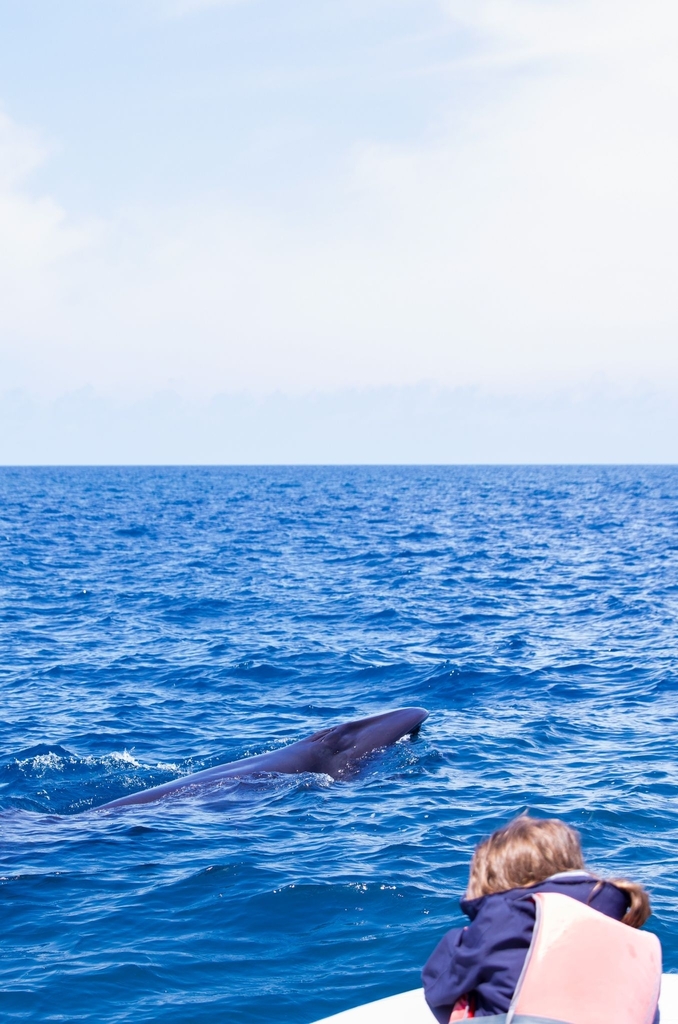
(c) Sidonio Paes, some rights reserved (CC BY) · licence
Family: Balaenopteridae · Class: Mammalia · Order: Artiodactyla
Conservation status: Endangered
Balaenoptera borealis (Sei whale) is a California animal in the Balaenopteridae family.
The sei whale is the third-largest rorqual whale species, reaching lengths of 12 to 19 meters (39 to 62 feet) and weights of 20 to 30 metric tons. Adults display a dark bluish-gray coloration on the dorsal surface with lighter gray or white ventral coloring. The species is characterized by a relatively tall, falcate dorsal fin positioned approximately two-thirds back along the body, and 32 to 60 ventral pleats extending from the throat to just past the flippers. Sei whales possess 300 to 400 baleen plates per side, which are black with fine white or gray fringes. Sei whales inhabit global oceans including waters off California and Hawaii, as documented in U.S. federal listings. In the North Pacific, they range from subtropical waters to the Bering Sea, with seasonal migrations between feeding and breeding areas. Off California, sei whales are typically observed in deep offshore waters beyond the continental shelf, particularly in areas of high productivity. The species demonstrates a preference for temperate and subpolar waters, generally avoiding tropical regions and ice-covered areas. These whales occupy pelagic environments, preferring deep oceanic waters typically deeper than 200 meters. Sei whales are associated with areas of high zooplankton and small schooling fish concentrations, often following upwelling zones and oceanographic fronts. They feed primarily at or near the surface, utilizing both lunge feeding and continuous ram feeding techniques depending on prey density. Sei whales are opportunistic feeders with a diet consisting primarily of copepods, euphausiids, and small schooling fish including anchovies, sardines, and mackerel. Unlike other rorquals, sei whales can switch between skimming surface waters for small prey and lunge feeding on larger prey aggregations. Breeding occurs in warmer waters during winter months, with a gestation period of approximately 11 to 13 months. Females typically give birth to a single calf every two to three years. Calves measure approximately 4.5 meters (15 feet) at birth and nurse for six to nine months. The sei whale was listed as endangered under the Endangered Species Act in 1970, with protections extending to all populations wherever found. Commercial whaling severely depleted sei whale populations throughout the 20th century, with an estimated 238,000 individuals killed globally. Current North Pacific population estimates suggest approximately 8,600 to 9,100 individuals, representing a fraction of pre-whaling abundance. Primary threats include ship strikes, entanglement in fishing gear, ocean noise pollution, and climate change impacts on prey distribution. Recovery efforts focus on reducing anthropogenic threats and monitoring population trends through acoustic and visual surveys.
Classification
Class: Mammalia · Order: Artiodactyla · Family: Balaenopteridae
Conservation status
Endangered
Frequently asked questions
How is Balaenoptera borealis classified?
Balaenoptera borealis belongs to class Mammalia, order Artiodactyla, family Balaenopteridae.
What family does Balaenoptera borealis belong to?
Balaenoptera borealis is in the Balaenopteridae family.
Is Balaenoptera borealis protected or of conservation concern?
Balaenoptera borealis carries the following status: Endangered.
What is Balaenoptera borealis?
The sei whale is the third-largest rorqual whale species, reaching lengths of 12 to 19 meters (39 to 62 feet) and weights of 20 to 30 metric tons.
Is Balaenoptera borealis found in California?
Yes. Balaenoptera borealis is recorded in California in The California Species Project's catalogue.
Related species
Other California species in the same genus, family, or bioregion.
Data from The California Species Project — 14,000+ California species with verified data from CNPS, CDFW, USFWS, and more.