Balaenoptera physalus
Fin whale
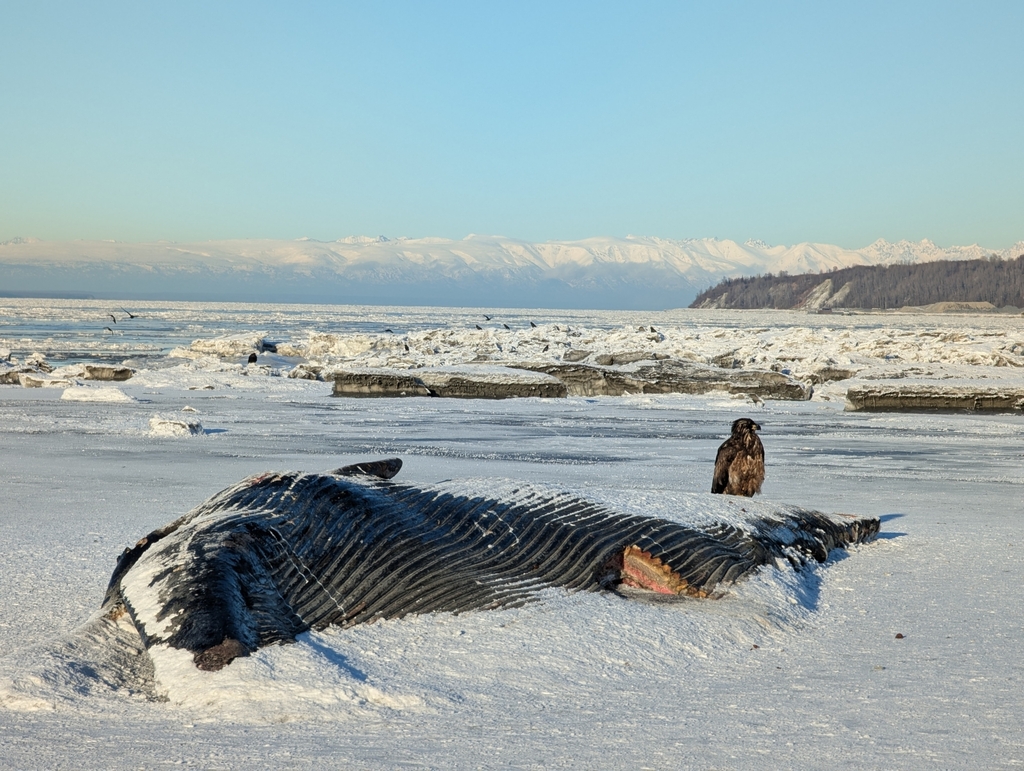
(c) Matt Muir, some rights reserved (CC BY) · licence
Family: Balaenopteridae · Class: Mammalia · Order: Artiodactyla
Conservation status: Endangered
Balaenoptera physalus (Fin whale) is a California animal in the Balaenopteridae family.
The fin whale is the second-largest whale species in the world, reaching lengths of 18 to 24 meters (59 to 79 feet) and weights of 40 to 80 tons. Adults display a distinctive asymmetrical coloration pattern, with the lower right jaw and right baleen plates appearing white or light gray, while the left side remains dark gray to black. The dorsal surface is dark gray to brownish-black, transitioning to white on the ventral surface. A prominent dorsal fin, positioned in the posterior third of the body, rises 60 centimeters (24 inches) and curves backward. The species possesses 50 to 100 ventral throat pleats that extend from the lower jaw to beyond the flippers, allowing expansion during feeding. Fin whales inhabit all major oceans worldwide, including waters off California and Hawaii. In the North Pacific, the species ranges from the Chukchi Sea south to Central America. California populations are present year-round, with concentrations observed in productive upwelling areas along the continental shelf and slope. The species occurs from nearshore waters to the open ocean, typically in depths exceeding 200 meters (656 feet). Fin whales prefer temperate and polar waters but migrate to warmer regions for breeding. They inhabit both coastal and pelagic environments, showing preference for areas with high prey density. In California waters, they frequent upwelling zones where cold, nutrient-rich water supports abundant krill populations. The species demonstrates seasonal movement patterns, with some populations migrating between feeding and breeding areas. Fin whales are filter feeders that primarily consume euphausiid krill, small schooling fish including herring and sardines, and copepods. They employ lunge feeding behavior, accelerating toward prey concentrations with mouths open to engulf large volumes of water and prey. Breeding occurs during winter months in lower latitudes, with females giving birth to single calves after an 11 to 12-month gestation period. Calves measure 6 to 6.5 meters (20 to 21 feet) at birth and nurse for 6 to 7 months. Sexual maturity occurs between 6 to 10 years of age. Fin whales can live 80 to 90 years. The fin whale has been listed as endangered under the Endangered Species Act since 1970. According to NOAA Fisheries, North Pacific populations were severely depleted by commercial whaling operations that killed an estimated 46,000 individuals between 1947 and 1987. Current population estimates suggest approximately 50,000 to 90,000 fin whales in the North Pacific, representing a fraction of pre-whaling numbers. Primary threats include ship strikes, entanglement in fishing gear, underwater noise pollution, climate change effects on prey distribution, and potential pollution impacts. The species remains protected under the Marine Mammal Protection Act, and California Department of Fish and Wildlife notes that fin whales are not currently tracked by the California Natural Diversity Database.
Classification
Class: Mammalia · Order: Artiodactyla · Family: Balaenopteridae
Conservation status
Endangered
Frequently asked questions
How is Balaenoptera physalus classified?
Balaenoptera physalus belongs to class Mammalia, order Artiodactyla, family Balaenopteridae.
What family does Balaenoptera physalus belong to?
Balaenoptera physalus is in the Balaenopteridae family.
Is Balaenoptera physalus protected or of conservation concern?
Balaenoptera physalus carries the following status: Endangered.
What is Balaenoptera physalus?
The fin whale is the second-largest whale species in the world, reaching lengths of 18 to 24 meters (59 to 79 feet) and weights of 40 to 80 tons.
Is Balaenoptera physalus found in California?
Yes. Balaenoptera physalus is recorded in California in The California Species Project's catalogue.
Related species
Other California species in the same genus, family, or bioregion.
Data from The California Species Project — 14,000+ California species with verified data from CNPS, CDFW, USFWS, and more.