Balanophyllia elegans
Orange Cup Coral
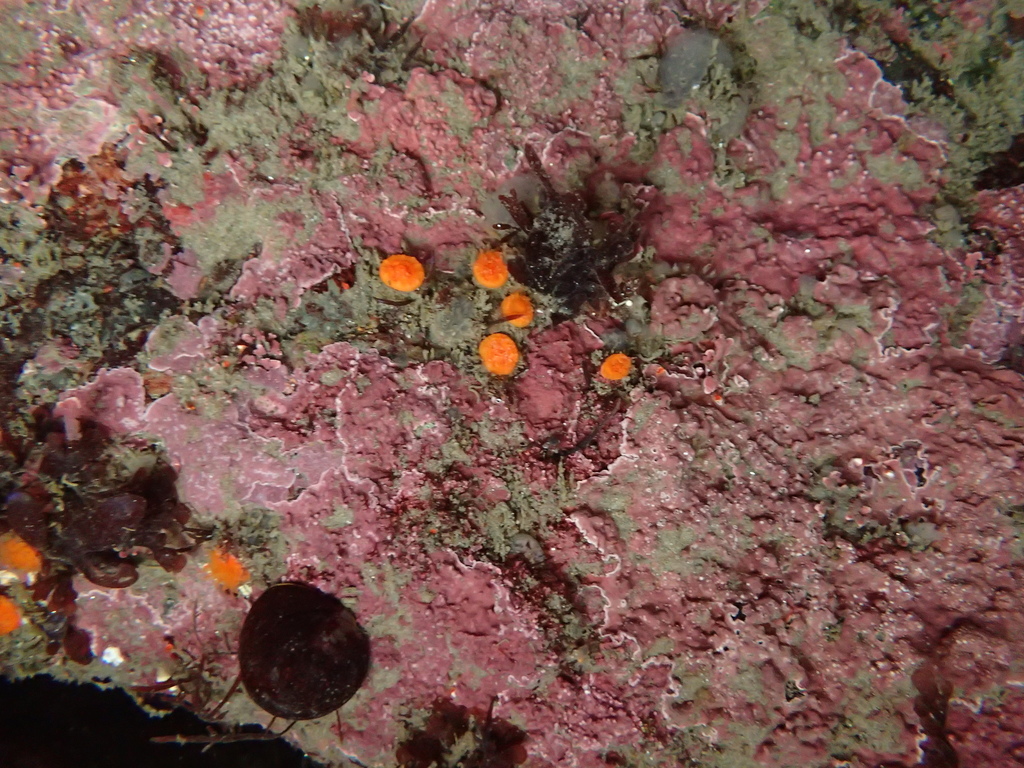
(c) Allison Gong, some rights reserved (CC BY) · licence
Family: Dendrophylliidae · Class: Anthozoa · Order: Scleractinia
Balanophyllia elegans (Orange Cup Coral) is a California animal in the Dendrophylliidae family.
Balanophyllia elegans, commonly known as the orange cup coral or orange stony coral, is a species of solitary hard coral in the family Dendrophylliidae. This azooxanthellate coral forms individual polyps rather than colonial structures typical of many coral species. Each polyp consists of a cylindrical or cup-shaped calcium carbonate skeleton topped by a soft tissue crown bearing tentacles. The distinctive orange coloration gives this species its common name, though color intensity can vary among individuals and populations. The orange cup coral occurs along the northeastern Pacific coast from central California to Southeast Alaska. In California, populations are documented in rocky intertidal and subtidal zones, including locations such as Carmel Pinnacles State Marine Reserve in Carmel Bay. The species extends northward through Oregon, Washington, and into Alaskan waters, where it reaches its northern limit in Sitka Sound, Southeast Alaska (NOAA Technical Memorandum AFSC-146). This coral inhabits rocky substrates in marine environments, typically attaching to hard surfaces such as rock faces, overhangs, and cave walls. Orange cup corals are found from the lower intertidal zone to subtidal depths, where they occupy areas with adequate water circulation. The species thrives in temperate marine waters along exposed coastlines and in protected bays where rocky substrate is available for attachment. As an azooxanthellate coral, B. elegans lacks symbiotic zooxanthellae algae and therefore relies entirely on capturing prey for nutrition. The coral feeds by extending its tentacles to capture planktonic organisms and small particles from the water column. Like other anthozoans, orange cup corals may be either gonochoric (separate sexes) or hermaphroditic. Mature gametes develop within the body cavity and are released through the mouth during spawning events. The species produces planktonic larvae that settle on suitable hard substrates to begin new colonies. While not currently listed under federal or state endangered species legislation, orange cup corals face potential threats from ocean acidification, which affects the ability of calcifying organisms to build and maintain their calcium carbonate skeletons. Research conducted by NOAA's Alaska Fisheries Science Center has identified the need to assess calcification rates and survival of Pacific coast corals under changing ocean chemistry conditions. Climate change-related temperature increases and altered oceanographic conditions may also impact this species' distribution and reproductive success. The coral's attachment to rocky substrates makes it vulnerable to physical disturbance from coastal development, anchor damage, and intense storm events. As a filter-feeding organism, water quality degradation from pollution and sedimentation can also negatively affect feeding success and overall health of orange cup coral populations.
Classification
Class: Anthozoa · Order: Scleractinia · Family: Dendrophylliidae
Frequently asked questions
How is Balanophyllia elegans classified?
Balanophyllia elegans belongs to class Anthozoa, order Scleractinia, family Dendrophylliidae.
What family does Balanophyllia elegans belong to?
Balanophyllia elegans is in the Dendrophylliidae family.
What is Balanophyllia elegans?
Balanophyllia elegans, commonly known as the orange cup coral or orange stony coral, is a species of solitary hard coral in the family Dendrophylliidae.
Is Balanophyllia elegans found in California?
Yes. Balanophyllia elegans is recorded in California in The California Species Project's catalogue.
More California species
This species has no close relatives in our California data — here are other species to explore.
Data from The California Species Project — 14,000+ California species with verified data from CNPS, CDFW, USFWS, and more.