Balanus nubilus
Giant Acorn Barnacle
(c) LJ Moore-McClelland, some rights reserved (CC BY) · licence
Family: Balanidae · Class: Maxillopoda · Order: Sessilia
Balanus nubilus (Giant Acorn Barnacle) is a California animal in the Balanidae family.
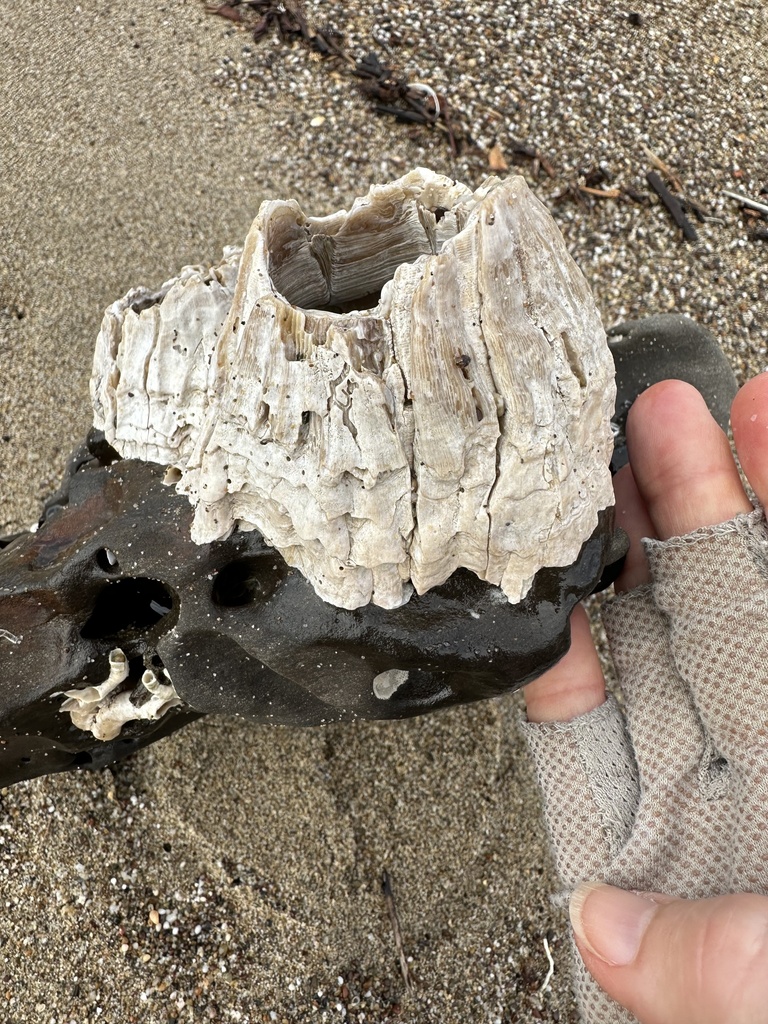
The giant acorn barnacle (Balanus nubilus) is the largest barnacle species found along the Pacific coast of North America. Adults can reach diameters of 15 centimeters (6 inches) and heights of 7.5 centimeters (3 inches), making it substantially larger than other acorn barnacles in the region. The species has a conical shell composed of six thick, white to grayish calcium carbonate plates that form a volcano-like structure. The operculum consists of four movable plates that can close tightly to protect the soft body parts inside. Balanus nubilus ranges along the Pacific coast from Alaska to Baja California, Mexico. In California, the species occurs from the Oregon border south to Point Conception, with populations documented in rocky intertidal and subtidal environments. The species is particularly abundant in northern California waters, including areas around the Farallon Islands and Monterey Bay. Giant acorn barnacles have also been observed at Reading Rock State Marine Reserve, where they inhabit rocky reefs at depths ranging from the low intertidal zone to approximately 80 meters (262 feet) below the surface. This species inhabits rocky substrates in both intertidal and subtidal zones, typically attached to hard surfaces such as rocks, pier pilings, and other barnacles. Giant acorn barnacles prefer areas with strong water movement and high nutrient availability. In the intertidal zone, they occupy the mid to low zones where they experience regular submersion. Subtidally, they are found on rocky reefs and kelp forest environments where currents provide consistent food delivery. The species can tolerate a wide range of salinity conditions but requires marine or near-marine environments. As filter feeders, giant acorn barnacles extend feathery cirri (modified legs) from their shells to capture plankton, small crustaceans, and organic particles from the water column. They are most active during high tide when submerged, retracting their feeding appendages and closing their opercular plates when exposed to air during low tide. Reproduction occurs through cross-fertilization, as individuals are hermaphroditic but cannot self-fertilize. Spawning typically occurs from late spring through early fall, with larvae undergoing several planktonic stages before settling and metamorphosing into juvenile barnacles. The species can live for several decades under optimal conditions. Balanus nubilus is not currently listed under federal or state endangered species acts. However, populations face threats from ocean acidification, which affects their ability to build and maintain calcium carbonate shells. Coastal development, pollution, and increased boat traffic can impact habitat quality and introduce invasive species that compete for space and resources. Climate change may alter ocean temperatures and current patterns, potentially affecting food availability and reproductive success. The species serves as an important component of rocky intertidal and subtidal ecosystems, providing habitat structure for other marine organisms and serving as prey for sea stars, crabs, and fish.
Classification
Class: Maxillopoda · Order: Sessilia · Family: Balanidae
Frequently asked questions
How is Balanus nubilus classified?
Balanus nubilus belongs to class Maxillopoda, order Sessilia, family Balanidae.
What family does Balanus nubilus belong to?
Balanus nubilus is in the Balanidae family.
What is Balanus nubilus?
The giant acorn barnacle (Balanus nubilus) is the largest barnacle species found along the Pacific coast of North America.
Is Balanus nubilus found in California?
Yes. Balanus nubilus is recorded in California in The California Species Project's catalogue.
Related species
Other California species in the same genus, family, or bioregion.
Data from The California Species Project — 14,000+ California species with verified data from CNPS, CDFW, USFWS, and more.