Baphala pallida
Pale Baphala
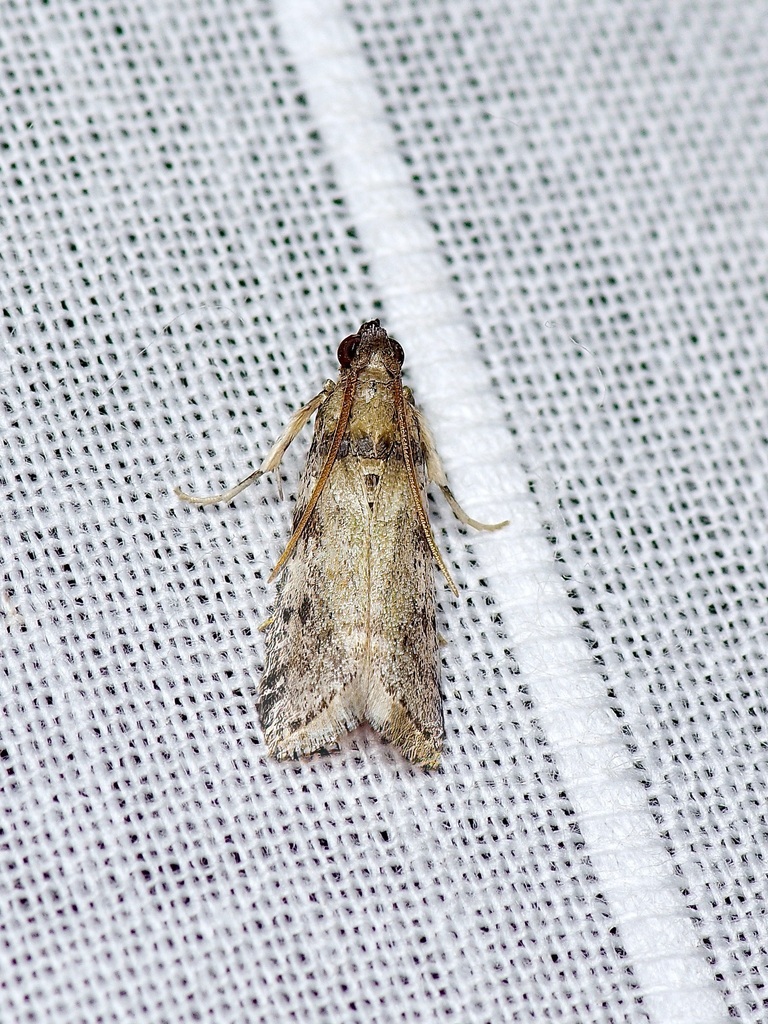
(c) Michelle W. (鍾偉瑋), some rights reserved (CC BY) · licence
Family: Pyralidae · Class: Insecta · Order: Lepidoptera
Baphala pallida (Pale Baphala) is a California animal in the Pyralidae family.
Baphala pallida is a small pyralid moth in the family Pyralidae, subfamily Phycitinae. This species belongs to the cactus-feeding group within the tribe Phycitini and is assigned Hodges number 5965 in the taxonomic catalog of North American Lepidoptera. Adults are characterized by pale coloration, as indicated by the specific epithet "pallida," though detailed morphological descriptions remain limited in the scientific literature. The species occurs across a broad range in North America, with documented records from Florida north to New York. In Florida, specimens have been collected in Miami-Dade County, specifically near Florida City along Route 9336 (BugGuide 2015). The species has been documented as far north as New York, where it is listed as a Species of Greatest Conservation Need in the state's 2015 Wildlife Action Plan due to factors including abundance and population trends (New York State 2015). Baphala pallida inhabits diverse environments across its range, though specific habitat preferences have not been thoroughly documented. Collection records indicate the species can be found from sea level locations in southern Florida to various elevations throughout its distribution. The moth has been attracted to ultraviolet and mercury vapor lights during nocturnal surveys, suggesting typical pyralid behavior patterns. A specimen was photographed at a UV black light setup in November 2013 in Florida, indicating activity during fall months (BugGuide 2015). As a member of the cactus-feeding group within Phycitinae, Baphala pallida likely has ecological associations with cacti or related plant species, though specific host plant relationships have not been definitively established. The subfamily Phycitinae contains numerous species with larvae that bore into plant stems, fruits, or seeds, and many species in this group are associated with arid-adapted vegetation. Adult flight periods appear to extend into late fall based on collection records, though comprehensive phenology data across the species' range remains undocumented. The conservation status of Baphala pallida has not been formally assessed at the federal level, and the species lacks designated protection under the Endangered Species Act. However, its inclusion on New York's Species of Greatest Conservation Need list suggests potential conservation concerns in portions of its range. The 2015 evaluation process that resulted in this designation considered current population status and trends, though specific population data for this species are not publicly available. Detailed biological studies of Baphala pallida remain limited despite its broad distribution. Critical knowledge gaps exist regarding specific host plant relationships, larval biology, population dynamics, and response to environmental changes. The species represents one of many pyralid moths that require additional research to understand their ecological roles and conservation needs. Community contributions through platforms like BugGuide and BAMONA provide valuable distribution data, but comprehensive ecological studies would enhance understanding of this species' biology and inform potential conservation strategies.
Classification
Class: Insecta · Order: Lepidoptera · Family: Pyralidae
Frequently asked questions
How is Baphala pallida classified?
Baphala pallida belongs to class Insecta, order Lepidoptera, family Pyralidae.
What family does Baphala pallida belong to?
Baphala pallida is in the Pyralidae family.
What is Baphala pallida?
Baphala pallida is a small pyralid moth in the family Pyralidae, subfamily Phycitinae.
Is Baphala pallida found in California?
Yes. Baphala pallida is recorded in California in The California Species Project's catalogue.
Related species
Other California species in the same genus, family, or bioregion.
Data from The California Species Project — 14,000+ California species with verified data from CNPS, CDFW, USFWS, and more.