Bartramia longicauda
Upland Sandpiper
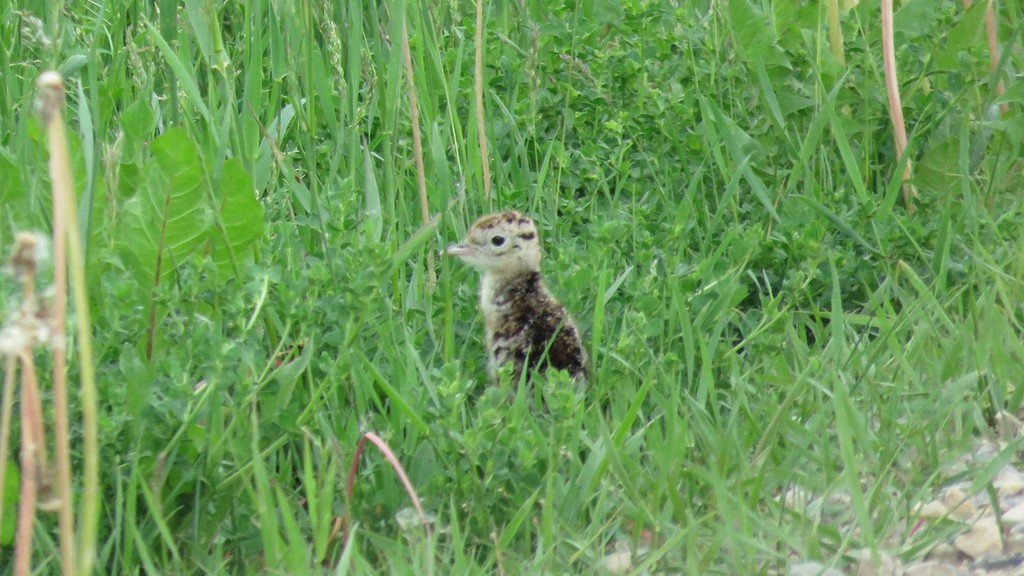
(c) Dan MacNeal, some rights reserved (CC BY) · licence
Family: Alcidae · Class: Aves · Order: Charadriiformes
Bartramia longicauda (Upland Sandpiper) is a California animal in the Alcidae family.
The Upland Sandpiper is a medium-sized shorebird that inhabits grasslands rather than aquatic environments typical of its family. Adults measure 28 to 32 cm (11 to 12.6 inches) in length with a wingspan of 50 to 60 cm (20 to 24 inches), weighing 110 to 180 grams (3.9 to 6.3 ounces). The species displays a mottled brown and buff plumage with dark streaking on the upperparts and crown. The underparts are pale buff with dark barring on the flanks. Notable features include a relatively small head, long thin neck, and disproportionately long legs. The bill is straight, relatively short for a sandpiper at 27 to 30 mm, and yellow with a dark tip. Historically, Upland Sandpipers bred across much of North America's Great Plains and prairies, including portions of California. The species has experienced significant range contraction since the late 1800s. Current breeding range extends from Alaska through central Canada and the northern Great Plains states. In California, the species was historically documented as a breeding bird in northeastern counties, particularly in the Modoc Plateau region. According to eBird and Christmas Bird Count data, the species now occurs primarily as a rare migrant in California, with most recent records from the Central Valley and coastal areas during spring and fall passage. Breeding habitat consists of native grasslands, restored prairies, and agricultural areas with mixed grass-forb communities. The species requires areas with moderately tall grass (15 to 60 cm) interspersed with shorter areas for foraging. Elevation preferences in historical California breeding areas ranged from 900 to 1,500 meters (2,950 to 4,920 feet). During migration, birds utilize similar grassland habitats as well as agricultural fields, particularly those with alfalfa, hay, and grain crops. Upland Sandpipers are insectivorous, feeding primarily on grasshoppers, crickets, beetles, and moth larvae. The species employs a run-and-stop foraging technique, moving quickly through grass before pausing to capture prey. Breeding occurs from May through July, with peak nesting in June. Females construct ground nests in grass clumps, laying 4 buff-colored eggs with brown spots. Incubation lasts 21 to 27 days, and young fledge 30 to 31 days after hatching. The species is known for its distinctive flight displays and vocalizations during breeding season, including aerial songs performed while gliding with wings held above the back. The Upland Sandpiper is not federally listed but has experienced substantial population decline across its range. North American Breeding Bird Survey data indicate a 66% decline between 1966 and 2015. Primary threats include conversion of native grasslands to agriculture, intensive farming practices, and habitat fragmentation. In California, the species' breeding population was likely eliminated due to widespread conversion of native grasslands in the late 1800s and early 1900s. Current conservation efforts focus on grassland restoration and management of remaining prairie habitats in core breeding areas.
Classification
Class: Aves · Order: Charadriiformes · Family: Alcidae
Frequently asked questions
How is Bartramia longicauda classified?
Bartramia longicauda belongs to class Aves, order Charadriiformes, family Alcidae.
What family does Bartramia longicauda belong to?
Bartramia longicauda is in the Alcidae family.
What is Bartramia longicauda?
The Upland Sandpiper is a medium-sized shorebird that inhabits grasslands rather than aquatic environments typical of its family.
Is Bartramia longicauda found in California?
Yes. Bartramia longicauda is recorded in California in The California Species Project's catalogue.
Related species
Other California species in the same genus, family, or bioregion.
Data from The California Species Project — 14,000+ California species with verified data from CNPS, CDFW, USFWS, and more.