Bassariscus astutus nevadensis
Nevada Ringtail
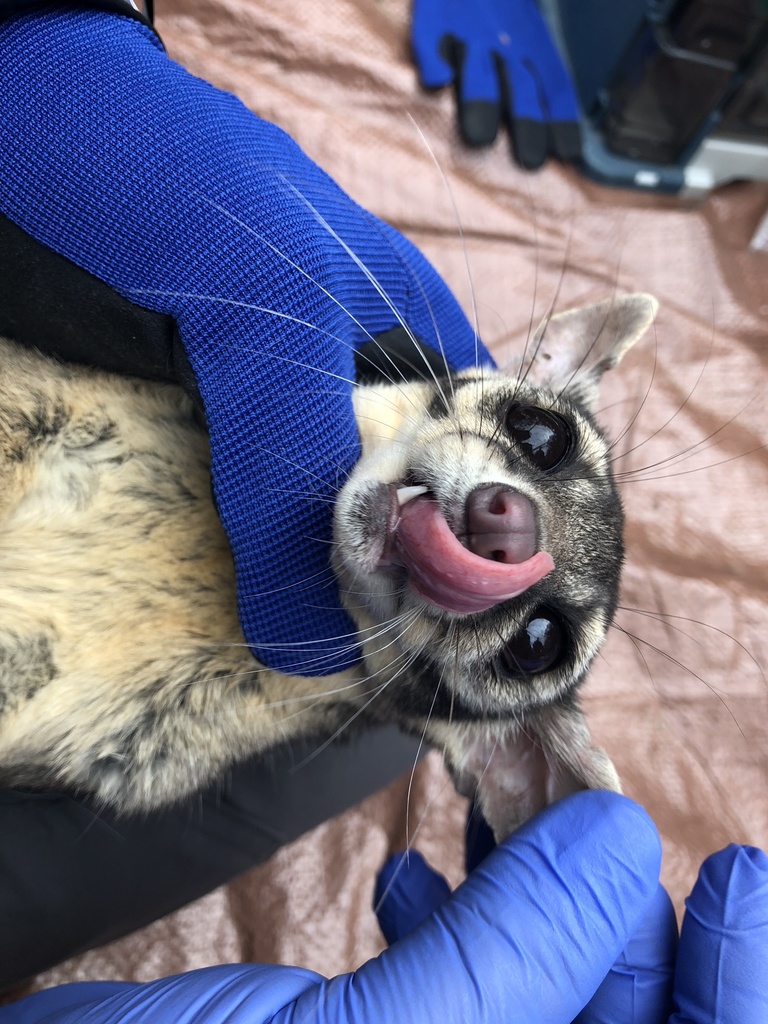
(c) Amelia Tauber, some rights reserved (CC BY) · licence
Family: Procyonidae · Class: Mammalia · Order: Carnivora
Conservation status: G5TNR SNR
Bassariscus astutus nevadensis (Nevada Ringtail) is a California animal in the Procyonidae family.
The Nevada ringtail (Bassariscus astutus nevadensis) is a subspecies of the ringtail, a small carnivorous mammal in the family Procyonidae. Adults typically measure 61-81 cm (24-32 inches) in total length, including a distinctive black and white banded tail that comprises roughly half the body length. Body weight ranges from 0.8-1.5 kg (1.8-3.3 pounds). The species displays a cat-like appearance with large dark eyes, prominent pointed ears, and a fox-like face. The pelage is grayish-brown dorsally with lighter buff or whitish underparts. The most distinctive feature is the long, bushy tail marked with 14-16 alternating black and white bands. The Nevada ringtail occurs throughout much of Nevada and extends into adjacent portions of California, Utah, and Arizona. This subspecies represents the northern and eastern populations of ringtails in the Great Basin region. The range encompasses desert mountain ranges, pinyon-juniper woodlands, and rocky canyon systems across the Mojave and Great Basin deserts. In California, the subspecies is primarily found in the eastern Sierra Nevada, White Mountains, and desert ranges of Inyo and Mono counties. This subspecies inhabits rocky terrain including canyon walls, talus slopes, cliff faces, and boulder fields (Animal Diversity Web). Preferred habitats include semi-arid country, desert scrublands, pinyon-juniper woodlands, and riparian zones along desert washes. Nevada ringtails require rocky denning sites such as caves, rock crevices, hollow trees, or abandoned buildings. They are typically found at elevations ranging from 1,200-2,400 meters (4,000-8,000 feet) in mountainous desert regions. Water sources are important habitat components, though the species can obtain moisture from prey. Nevada ringtails are primarily nocturnal and solitary except during breeding season. They are excellent climbers, using their semi-retractable claws and flexible joints to navigate steep rocky terrain. The diet consists mainly of small mammals including woodrats, mice, and ground squirrels, supplemented by birds, reptiles, amphibians, insects, and fruits when available. Breeding occurs from February through May, with females producing litters of 1-5 young after a gestation period of approximately 51-54 days. Young remain in the den for about 10 weeks before becoming independent. The Nevada ringtail lacks formal conservation status listings at federal or state levels. The global rank of G5TNR (subspecies not ranked) indicates the full species is secure but this particular subspecies has not been formally assessed. Primary threats include habitat fragmentation from development, mining activities, and recreational disturbance of denning sites. Climate change may affect prey availability and water sources in desert habitats. The subspecies appears to maintain stable populations across much of its range, though specific population data is limited. Protection of rocky habitat and maintenance of connectivity between mountain ranges supports conservation of this desert-adapted carnivore.
Classification
Class: Mammalia · Order: Carnivora · Family: Procyonidae
Conservation status
G5TNR SNR
Frequently asked questions
How is Bassariscus astutus nevadensis classified?
Bassariscus astutus nevadensis belongs to class Mammalia, order Carnivora, family Procyonidae.
What family does Bassariscus astutus nevadensis belong to?
Bassariscus astutus nevadensis is in the Procyonidae family.
Is Bassariscus astutus nevadensis protected or of conservation concern?
Bassariscus astutus nevadensis carries the following status: G5TNR SNR.
What is Bassariscus astutus nevadensis?
The Nevada ringtail (Bassariscus astutus nevadensis) is a subspecies of the ringtail, a small carnivorous mammal in the family Procyonidae.
Is Bassariscus astutus nevadensis found in California?
Yes. Bassariscus astutus nevadensis is recorded in California in The California Species Project's catalogue.
Related species
Other California species in the same genus, family, or bioregion.
Data from The California Species Project — 14,000+ California species with verified data from CNPS, CDFW, USFWS, and more.