Bassariscus astutus octavus
Southern California Ringtail
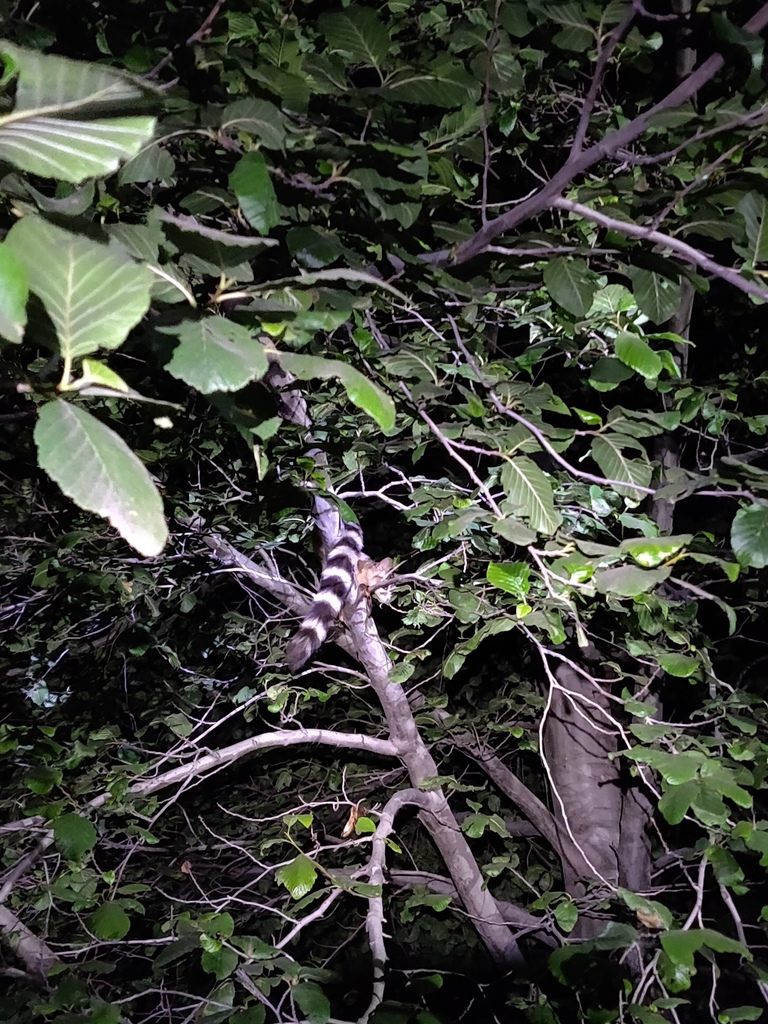
no rights reserved · CC0
Family: Procyonidae · Class: Mammalia · Order: Carnivora
Conservation status: G5T3 S3
Bassariscus astutus octavus (Southern California Ringtail) is a California animal in the Procyonidae family.
The Southern California ringtail (Bassariscus astutus octavus) is a subspecies of the ringtail, a small carnivorous mammal in the family Procyonidae. This nocturnal species measures 61-81 cm (24-32 inches) in total length, with approximately half of that length consisting of its distinctive black and white banded tail. Adults weigh 870-1,400 grams (1.9-3.1 pounds). The body is covered in grayish-brown fur with a pale underside, while the bushy tail displays 14-16 alternating black and white rings. Large, dark eyes and prominent ears reflect adaptations for nighttime activity. The Southern California ringtail is endemic to southern California, representing one of several recognized subspecies of Bassariscus astutus. This subspecies occurs primarily in the mountainous regions of southern California, including areas of the Sierra Nevada, Coast Ranges, and Peninsular Ranges. The species belongs to the order Carnivora, suborder Caniformia, and is closely related to raccoons and coatis within the Procyonidae family. Ringtails inhabit rocky terrain in chaparral, oak woodland, pine-oak forests, and desert regions. They prefer areas with abundant rock crevices, hollow trees, or abandoned buildings for denning sites. The species occurs from near sea level to elevations exceeding 1,400 meters (4,600 feet), adapting to diverse habitat types from coastal scrub to montane forests. Critical habitat features include water sources and complex terrain providing both foraging opportunities and escape cover. As opportunistic omnivores, ringtails consume a varied diet including small mammals, birds, insects, fruits, and berries. They are skilled climbers, using semi-retractable claws and ankle joints that can rotate 180 degrees to navigate steep rock faces and tree trunks. Mating occurs from February through May, with females giving birth to 2-4 young after a 51-54 day gestation period. Young remain with the female for approximately 10 months, reaching sexual maturity at 10-12 months of age. Ringtails are typically solitary except during the breeding season. The Southern California ringtail carries a global rank of G5T3, indicating the full species is secure but this particular subspecies is vulnerable (NatureServe 2022). This species is included on the California Department of Fish and Wildlife's Special Animals List. While not federally or state listed, the subspecies faces ongoing habitat pressures from urban development, habitat fragmentation, and wildfire in southern California's rapidly developing landscapes. Climate change may further stress populations through altered precipitation patterns affecting water availability and prey species. The subspecies benefits from protection within national forests and state parks throughout its range, though comprehensive population monitoring remains limited. Conservation efforts focus on maintaining habitat connectivity and protecting key denning areas in the face of continued urban expansion.
Classification
Class: Mammalia · Order: Carnivora · Family: Procyonidae
Conservation status
G5T3 S3
Frequently asked questions
How is Bassariscus astutus octavus classified?
Bassariscus astutus octavus belongs to class Mammalia, order Carnivora, family Procyonidae.
What family does Bassariscus astutus octavus belong to?
Bassariscus astutus octavus is in the Procyonidae family.
Is Bassariscus astutus octavus protected or of conservation concern?
Bassariscus astutus octavus carries the following status: G5T3 S3.
What is Bassariscus astutus octavus?
The Southern California ringtail (Bassariscus astutus octavus) is a subspecies of the ringtail, a small carnivorous mammal in the family Procyonidae.
Is Bassariscus astutus octavus found in California?
Yes. Bassariscus astutus octavus is recorded in California in The California Species Project's catalogue.
Related species
Other California species in the same genus, family, or bioregion.
Data from The California Species Project — 14,000+ California species with verified data from CNPS, CDFW, USFWS, and more.