Bassariscus astutus raptor
Northern California Ringtail
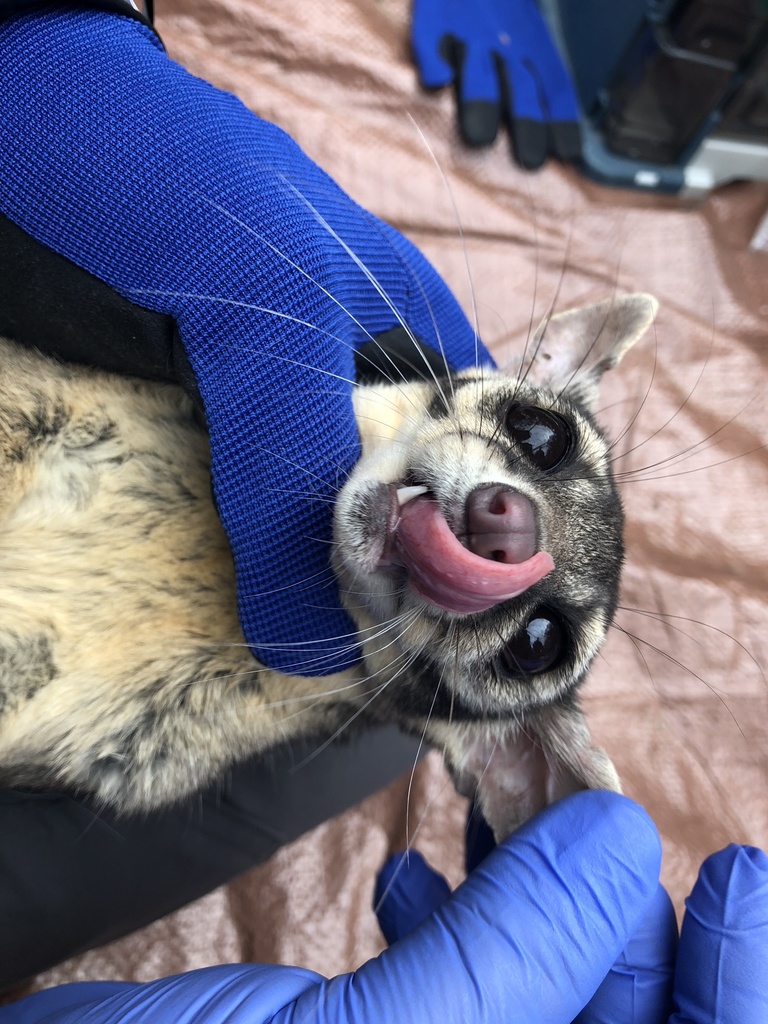
(c) Amelia Tauber, some rights reserved (CC BY) · licence
Family: Procyonidae · Class: Mammalia · Order: Carnivora
Conservation status: G5TNR SNR
Bassariscus astutus raptor (Northern California Ringtail) is a California animal in the Procyonidae family.
The Northern California ringtail (Bassariscus astutus raptor) is a subspecies of the ringtail, a small carnivorous mammal in the family Procyonidae. This subspecies represents one of several geographic forms of ringtail found across western North America. Adult ringtails typically measure 30 to 42 centimeters (12 to 17 inches) in body length, with their distinctive black-and-white banded tail adding another 31 to 44 centimeters (12 to 17 inches). They weigh between 0.9 to 1.5 kilograms (2 to 3.3 pounds). The species displays a fox-like appearance with large eyes, prominent ears, and a pointed snout. The fur is grayish-brown above and whitish below, while the tail features 14 to 16 alternating black and white bands. The Northern California ringtail subspecies occurs in northern California, though specific distributional boundaries distinguishing it from other ringtail subspecies are not well documented in available literature. Ringtails generally inhabit rocky areas, canyons, and forested regions throughout much of the western United States and Mexico. In California, the species is found from sea level to approximately 2,400 meters (7,900 feet) elevation. Ringtails occupy diverse habitats including oak woodlands, chaparral, coniferous forests, and riparian areas. They show strong preference for rocky terrain with caves, crevices, or hollow trees for denning sites. According to research referenced in conservation documents, ringtails demonstrate specific home range patterns and habitat preferences in riparian forests, with studies conducted in California providing insights into their spatial ecology (Lacy 1983). The species requires access to water sources and areas with adequate prey availability. Ringtails are primarily nocturnal and solitary outside of breeding season. They are excellent climbers, capable of rotating their hind feet 180 degrees to descend headfirst from trees and rock faces. Their diet consists of small mammals, birds, insects, fruits, and other plant materials, varying seasonally with prey availability. Breeding occurs from February through May, with females producing litters of 1 to 4 young after a gestation period of approximately 51 to 54 days. Young remain in the den for several weeks before becoming independent. The conservation status of the Northern California ringtail subspecies specifically has not been assessed separately from the species as a whole. The species Bassariscus astutus is generally considered stable across its range and is not federally listed. However, local populations may face pressures from habitat loss, fragmentation, and human development. The subspecies appears in various habitat conservation plans throughout California, suggesting it receives consideration in regional conservation planning efforts. More research is needed to determine the specific conservation needs and population status of this northern California subspecies distinct from other ringtail populations.
Classification
Class: Mammalia · Order: Carnivora · Family: Procyonidae
Conservation status
G5TNR SNR
Frequently asked questions
How is Bassariscus astutus raptor classified?
Bassariscus astutus raptor belongs to class Mammalia, order Carnivora, family Procyonidae.
What family does Bassariscus astutus raptor belong to?
Bassariscus astutus raptor is in the Procyonidae family.
Is Bassariscus astutus raptor protected or of conservation concern?
Bassariscus astutus raptor carries the following status: G5TNR SNR.
What is Bassariscus astutus raptor?
The Northern California ringtail (Bassariscus astutus raptor) is a subspecies of the ringtail, a small carnivorous mammal in the family Procyonidae.
Is Bassariscus astutus raptor found in California?
Yes. Bassariscus astutus raptor is recorded in California in The California Species Project's catalogue.
Related species
Other California species in the same genus, family, or bioregion.
Data from The California Species Project — 14,000+ California species with verified data from CNPS, CDFW, USFWS, and more.