Bassariscus astutus willetti
Palo Verde Mountains Ringtail
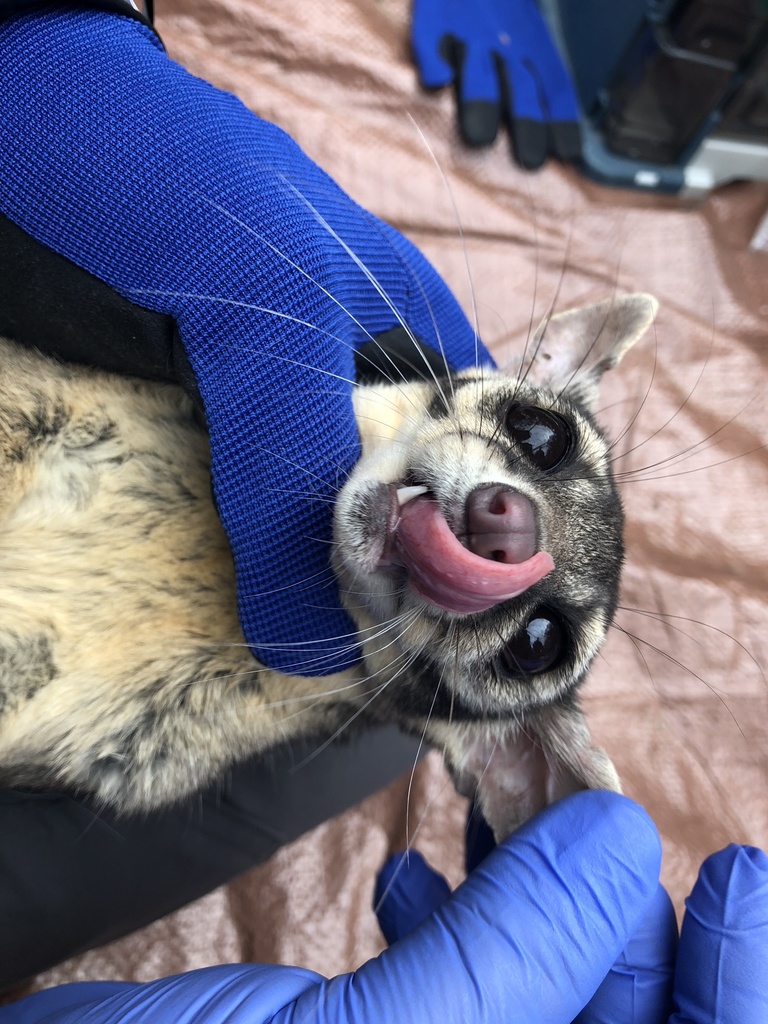
(c) Amelia Tauber, some rights reserved (CC BY) · licence
Family: Procyonidae · Class: Mammalia · Order: Carnivora
Conservation status: G5T2 S2
Bassariscus astutus willetti (Palo Verde Mountains Ringtail) is a California animal in the Procyonidae family.
The Palo Verde Mountains ringtail (Bassariscus astutus willetti) is a subspecies of the ringtail, a small carnivorous mammal in the family Procyonidae. Adults measure 61 to 97 centimeters (24 to 38 inches) in total length, with the distinctive black-and-white banded tail comprising approximately half of the total body length. The body is slender and cat-like, weighing 0.9 to 1.5 kilograms (2 to 3.3 pounds). The pelage is pale grayish-brown dorsally with buff-colored underparts. Large, dark eyes and prominent ears reflect adaptations for nocturnal activity. The tail displays 14 to 16 alternating black and white bands, ending in a black tip. This subspecies is endemic to the arid mountains and desert regions of southeastern California, with its range centered in the Palo Verde Mountains of Riverside County. The subspecies also occurs in portions of Imperial County and extends into adjacent areas of Arizona and Baja California, Mexico. Historical records indicate a broader distribution within the Colorado Desert region, but current populations appear more restricted to suitable rocky habitat within this range. Palo Verde Mountains ringtails inhabit rocky desert terrain, including boulder fields, cliff faces, and canyon systems within Sonoran Desert communities. They occur at elevations ranging from approximately 150 to 1,200 meters (500 to 4,000 feet). Vegetation in occupied habitats typically includes palo verde, ironwood, ocotillo, various cacti species, and desert shrubs. Rocky crevices, caves, and abandoned buildings provide essential denning sites, as these animals require protected locations for daytime roosting. Ringtails are primarily nocturnal and solitary, emerging at dusk to forage. They are omnivorous opportunists, feeding on small mammals, birds, insects, fruits, and occasionally reptiles and amphibians. Their diet varies seasonally based on prey availability. Breeding occurs from February through May, with females producing one to four young after a gestation period of approximately 45 to 50 days. Young remain in dens for several weeks before beginning to accompany adults on foraging trips. Adults are territorial, with males maintaining larger home ranges than females. The Palo Verde Mountains ringtail has a Global/State Rank of G5T2 S2, indicating the subspecies is imperiled in California with a high risk of extinction due to restricted range and declining populations. While the species Bassariscus astutus remains widespread across western North America, this particular subspecies faces threats from habitat loss, fragmentation, and degradation in the Colorado Desert region. Urban development, recreational vehicle use, and mining activities have impacted suitable rocky habitat. Climate change poses additional concerns, as increased temperatures and altered precipitation patterns in the arid Southwest may further stress populations (NatureServe 2025). The subspecies' restricted range and specialized habitat requirements make it particularly vulnerable to environmental changes and human disturbances.
Classification
Class: Mammalia · Order: Carnivora · Family: Procyonidae
Conservation status
G5T2 S2
Frequently asked questions
How is Bassariscus astutus willetti classified?
Bassariscus astutus willetti belongs to class Mammalia, order Carnivora, family Procyonidae.
What family does Bassariscus astutus willetti belong to?
Bassariscus astutus willetti is in the Procyonidae family.
Is Bassariscus astutus willetti protected or of conservation concern?
Bassariscus astutus willetti carries the following status: G5T2 S2.
What is Bassariscus astutus willetti?
The Palo Verde Mountains ringtail (Bassariscus astutus willetti) is a subspecies of the ringtail, a small carnivorous mammal in the family Procyonidae.
Is Bassariscus astutus willetti found in California?
Yes. Bassariscus astutus willetti is recorded in California in The California Species Project's catalogue.
Related species
Other California species in the same genus, family, or bioregion.
Data from The California Species Project — 14,000+ California species with verified data from CNPS, CDFW, USFWS, and more.