Bassariscus astutus yumanensis
Yuma Ringtail
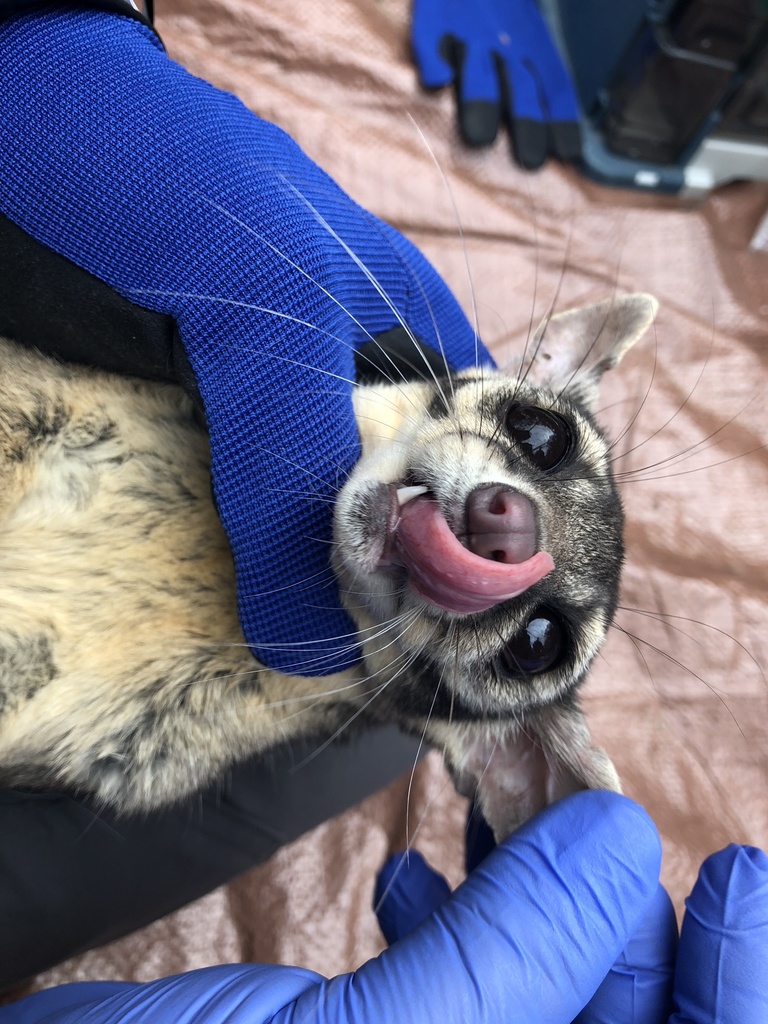
(c) Amelia Tauber, some rights reserved (CC BY) · licence
Family: Procyonidae · Class: Mammalia · Order: Carnivora
Conservation status: G5TU S2
Bassariscus astutus yumanensis (Yuma Ringtail) is a California animal in the Procyonidae family.
The Yuma Ringtail (Bassariscus astutus yumanensis) is a subspecies of the North American ringtail, a small carnivorous mammal in the family Procyonidae. Adults measure approximately 61-81 cm (24-32 inches) in total length, with the distinctive black-and-white banded tail accounting for roughly half of this length. The body weight ranges from 0.9-1.4 kg (2-3 pounds). The pelage is grayish-brown dorsally with a paler ventral surface. The tail displays alternating black and white rings, typically 14-16 bands total. Large, prominent ears and dark facial markings around the eyes distinguish this subspecies from other ringtail populations. The Yuma Ringtail occurs in extreme southeastern California, primarily in Imperial and eastern Riverside counties. The subspecies extends into adjacent areas of Arizona, Nevada, and northwestern Mexico. Within California, populations are documented in the Colorado River valley and associated desert mountain ranges, including areas near the Salton Sea and desert washes extending westward into the Peninsular Ranges. This subspecies inhabits desert and semi-desert environments, particularly rocky areas with adequate shelter. Preferred habitats include desert washes, rocky outcrops, cliff faces, and boulder fields that provide denning sites in crevices and caves. Yuma Ringtails also utilize riparian corridors along the Colorado River and its tributaries, where vegetation provides additional food resources and cover. Elevation ranges from below sea level near the Salton Sea to approximately 1,200 meters (4,000 feet) in desert mountain areas. Yuma Ringtails are nocturnal and semi-arboreal, with exceptional climbing abilities aided by semi-retractable claws and flexible ankle joints that allow 180-degree rotation. They are omnivorous opportunists, feeding on small mammals, birds, eggs, insects, fruits, and berries. Hunting occurs primarily in trees and rocky terrain, with individuals covering territories of 4-20 hectares depending on resource availability. Breeding occurs once annually, typically from February to May. After a gestation period of 51-54 days, females produce litters of 2-4 young in den sites located in rock crevices or tree cavities. The Yuma Ringtail receives protection under California law, as the entire genus Bassariscus is designated as Fully Protected under the California Fish and Game Code. The subspecies has a state ranking of S2, indicating it is imperiled in California with 6-20 occurrences or few remaining individuals. Primary threats include habitat loss from urban development, water diversions affecting riparian corridors, and recreational activities in desert areas. Climate change may exacerbate water scarcity in already arid habitats. While not federally listed, the subspecies' limited California range and specialized habitat requirements make it vulnerable to continued population decline. Conservation efforts focus on protecting critical habitat areas and maintaining water sources in desert ecosystems.
Classification
Class: Mammalia · Order: Carnivora · Family: Procyonidae
Conservation status
G5TU S2
Frequently asked questions
How is Bassariscus astutus yumanensis classified?
Bassariscus astutus yumanensis belongs to class Mammalia, order Carnivora, family Procyonidae.
What family does Bassariscus astutus yumanensis belong to?
Bassariscus astutus yumanensis is in the Procyonidae family.
Is Bassariscus astutus yumanensis protected or of conservation concern?
Bassariscus astutus yumanensis carries the following status: G5TU S2.
What is Bassariscus astutus yumanensis?
The Yuma Ringtail (Bassariscus astutus yumanensis) is a subspecies of the North American ringtail, a small carnivorous mammal in the family Procyonidae.
Is Bassariscus astutus yumanensis found in California?
Yes. Bassariscus astutus yumanensis is recorded in California in The California Species Project's catalogue.
Related species
Other California species in the same genus, family, or bioregion.
Data from The California Species Project — 14,000+ California species with verified data from CNPS, CDFW, USFWS, and more.