Batia lunaris
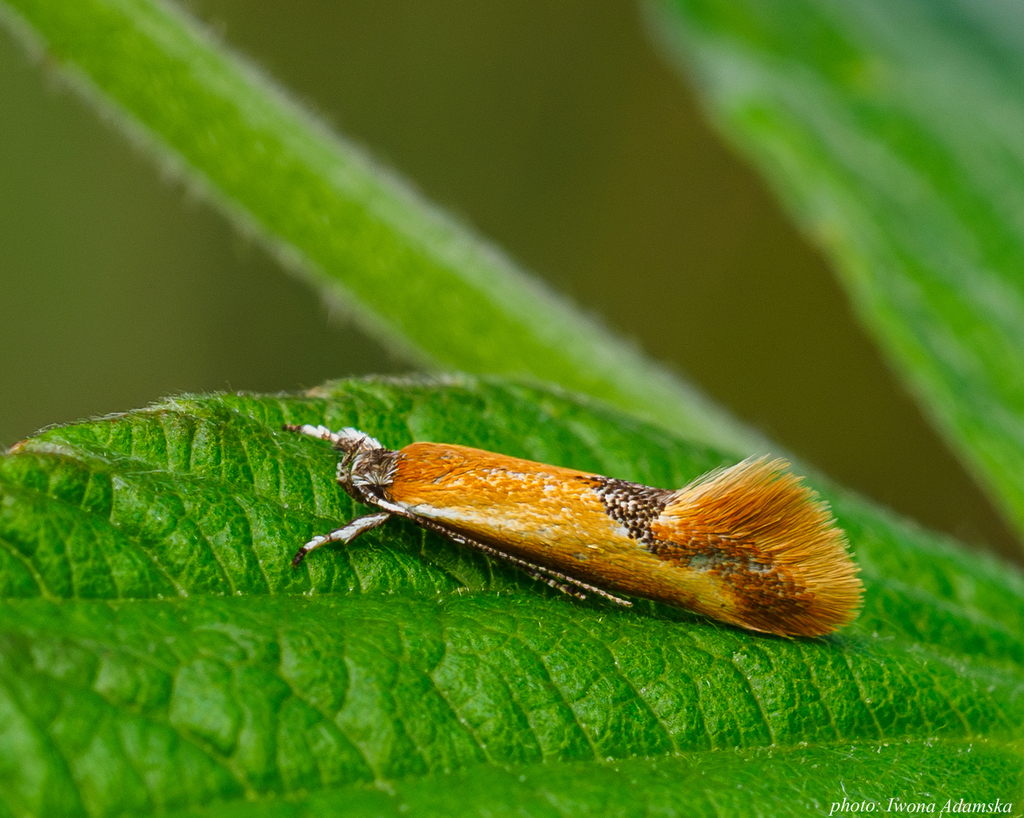
(c) iwonaadamska, some rights reserved (CC BY) · licence
Family: Oecophoridae · Class: Insecta · Order: Lepidoptera
Batia lunaris is a California animal in the Oecophoridae family.
Batia lunaris is a small moth in the family Oecophoridae, commonly known as concealer moths. Adult moths typically measure 8 to 12 millimeters in wingspan, with forewings displaying a characteristic brown and cream coloration pattern. The forewings feature distinctive pale crescentic markings that give the species its name 'lunaris,' referring to moon-like shapes. The hindwings are typically pale brown to grayish-brown with reduced markings. Adults possess thread-like antennae and hold their wings roof-like over the body when at rest. Batia lunaris has been recorded from various locations across North America, including California. The species appears to have a western distribution, with documented occurrences in coastal and inland regions of California, though specific county-level distribution data remains limited in published literature. The species may occur more broadly across western North America, but comprehensive range mapping requires additional survey work. This moth inhabits diverse environments including coastal scrub, chaparral, oak woodlands, and mixed coniferous forests. Adults have been collected at elevations ranging from sea level to approximately 1,500 meters in mountainous regions. The species appears to favor areas with abundant native vegetation and may be associated with specific plant communities, though detailed habitat requirements remain poorly documented. Larvae likely develop within plant material, possibly as detritus feeders or in association with fungal growth on decaying organic matter. Like other Oecophoridae, Batia lunaris larvae are concealed feeders, likely developing within rolled leaves, plant debris, or fungal material. Adults are primarily nocturnal and are attracted to artificial lights during evening hours. Flight periods appear to extend from late spring through early fall, with peak activity during summer months. The species likely produces one generation per year in most areas, though this aspect of its biology requires confirmation through detailed life cycle studies. Mating behavior and larval host plant associations remain largely undocumented. Batia lunaris lacks formal conservation status designations at federal, state, or international levels. As with many microlepidopteran species, population trends and conservation needs are poorly understood due to limited systematic survey data. The species faces potential threats common to native moths, including habitat loss from urban development, altered fire regimes, invasive plant species, and climate change impacts on plant communities. Light pollution may affect adult behavior and reproductive success. Conservation of native plant communities and maintenance of natural habitat connectivity likely benefit this species, though specific management recommendations require additional ecological research. The species exemplifies the knowledge gaps that exist for many smaller moth species in California's diverse lepidopteran fauna.
Classification
Class: Insecta · Order: Lepidoptera · Family: Oecophoridae
Frequently asked questions
How is Batia lunaris classified?
Batia lunaris belongs to class Insecta, order Lepidoptera, family Oecophoridae.
What family does Batia lunaris belong to?
Batia lunaris is in the Oecophoridae family.
What is Batia lunaris?
Batia lunaris is a small moth in the family Oecophoridae, commonly known as concealer moths.
Is Batia lunaris found in California?
Yes. Batia lunaris is recorded in California in The California Species Project's catalogue.
Related species
Other California species in the same genus, family, or bioregion.
Data from The California Species Project — 14,000+ California species with verified data from CNPS, CDFW, USFWS, and more.